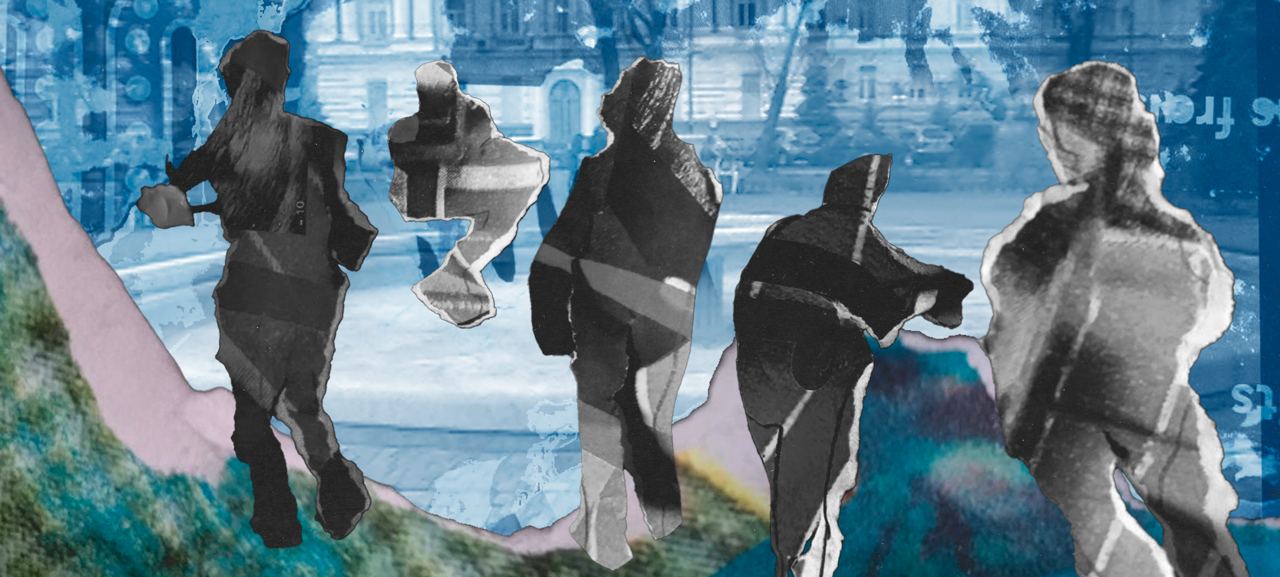
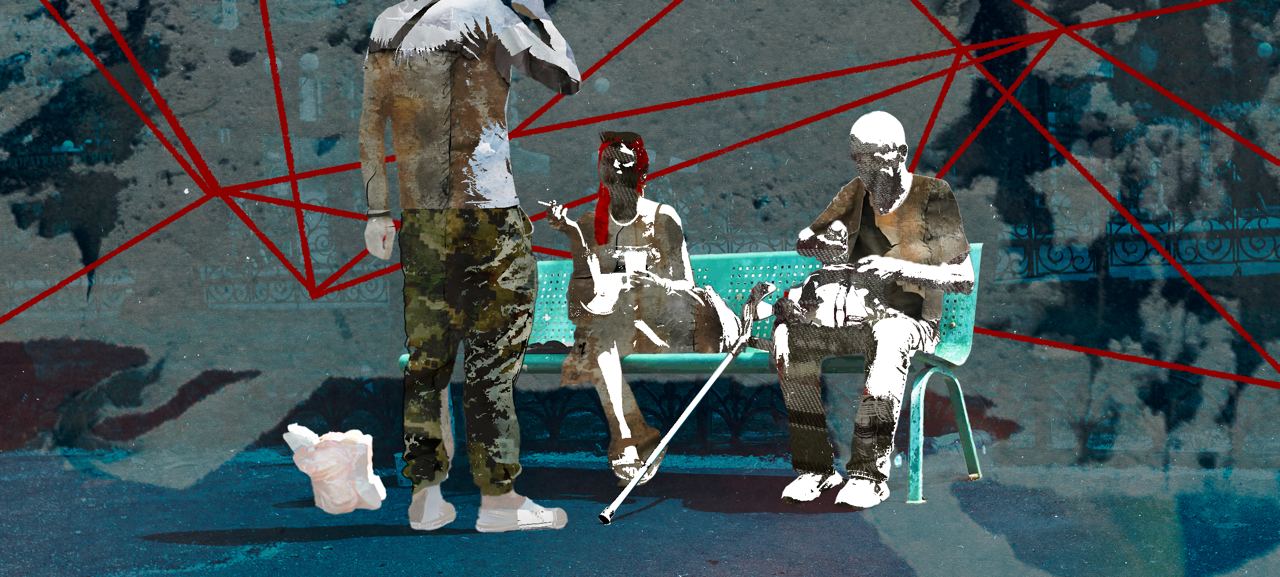
People who have had no direct experience of homelessness, or who have not encountered it close enough to feel its impact, often tend to perceive it as something distant, alien, threatening, incomprehensible and, almost always, chaotic or disorganized. We are used to imagining homeless people as blending into the urban landscape: becoming its unappealing but familiar feature, appearing like ghosts, thoughtless ‘wanderers’ who are either sheltering from the cold under several layers of heavy blankets on benches, or moving listlessly through the city with no apparent destination.
This is how this particular world is often portrayed in the media, and in some cases even in a portion of classical academic research. People living on the street are reduced to the image of the desocialized — those who have fallen out of ‘normal life’ and must either return to it at the cost of enormous effort, or remain mere silhouettes lost in the indifferent gazes of passers-by.
By contrast, in more recent urban studies, homelessness is increasingly viewed not as chaos and disorganization but as a distinct environment with its own internal structure, norms, and hierarchies. This is shown above all by ethnographic studies. Even in situations of extreme instability, social ties and roles are preserved and reproduced, forming fairly stable social orders. In the street environment, for example, groups and pairs emerge, along with shared resources such as a ‘obshchak’ or ‘common fund’.
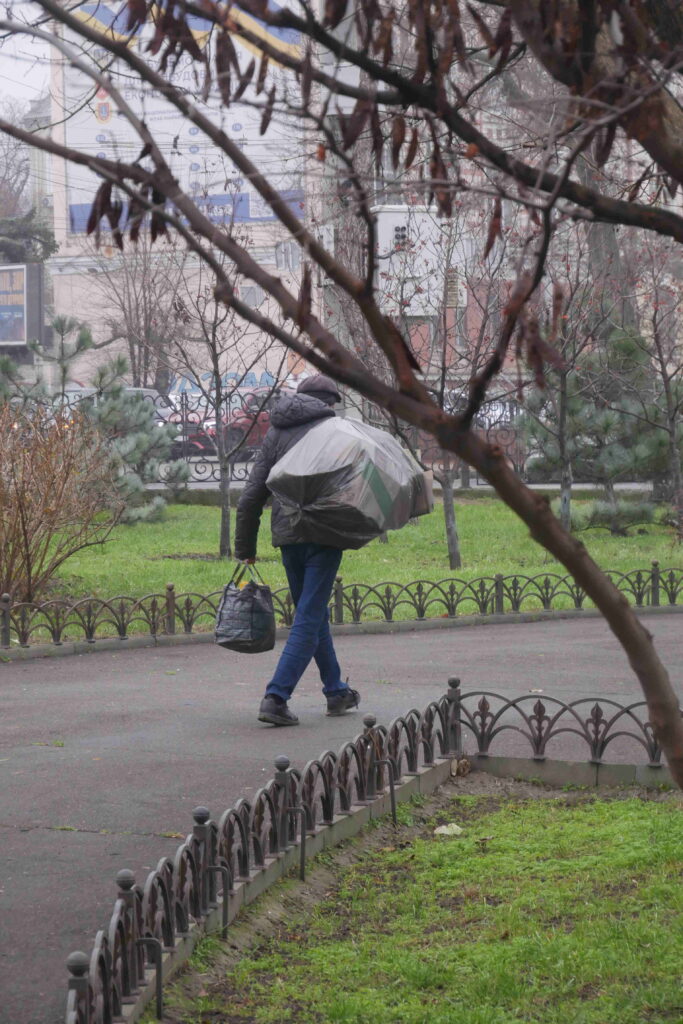
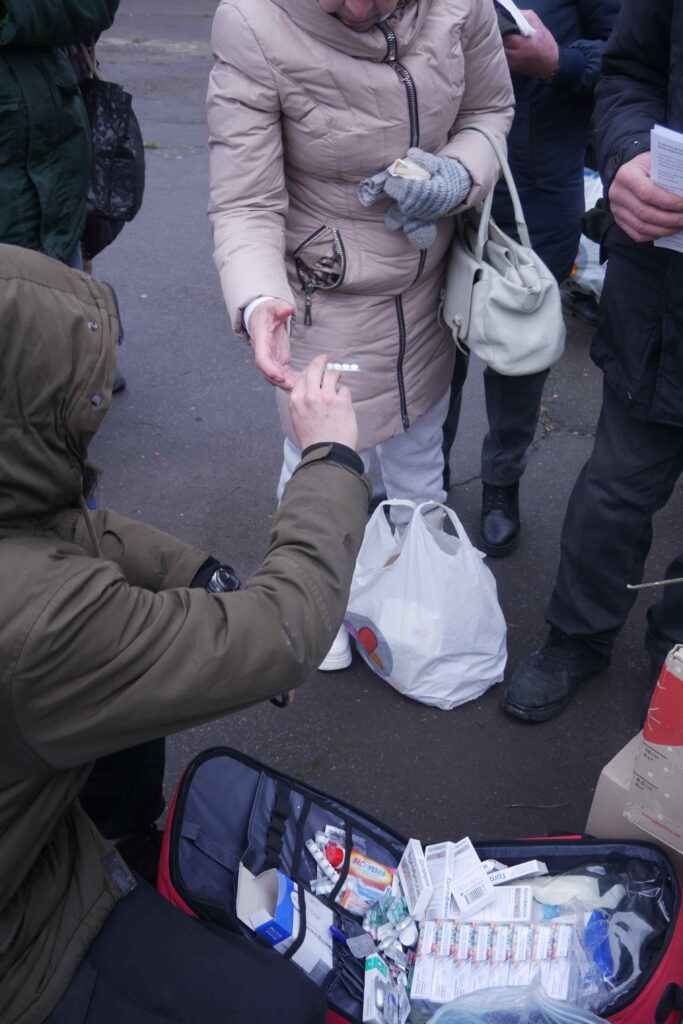
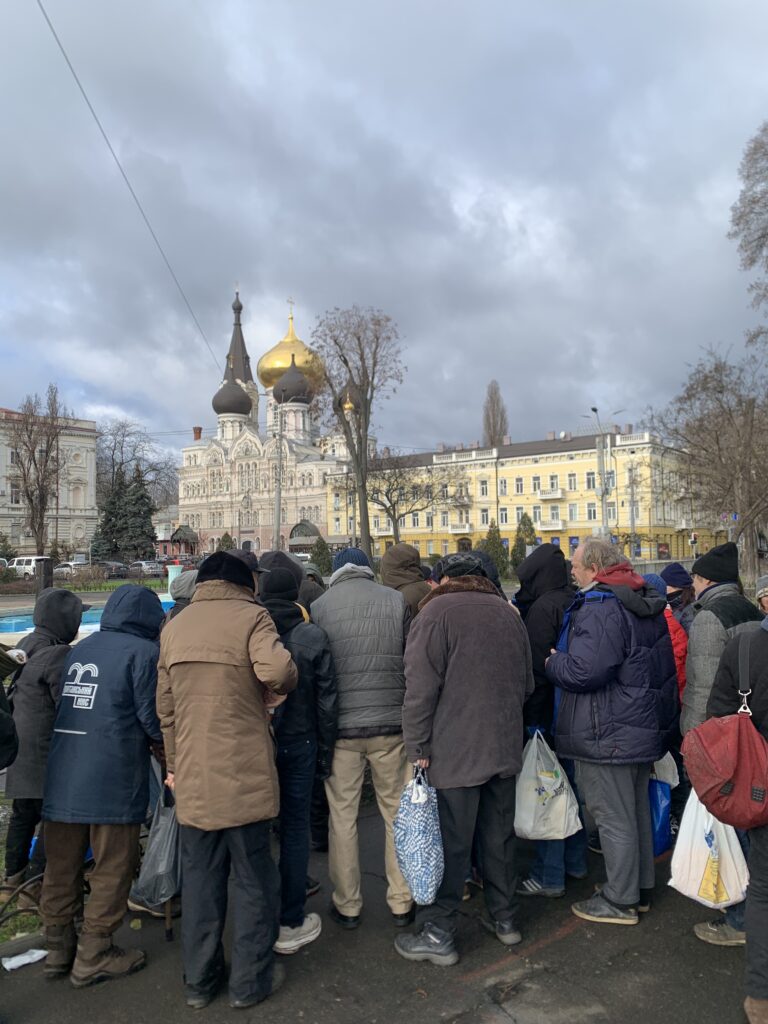
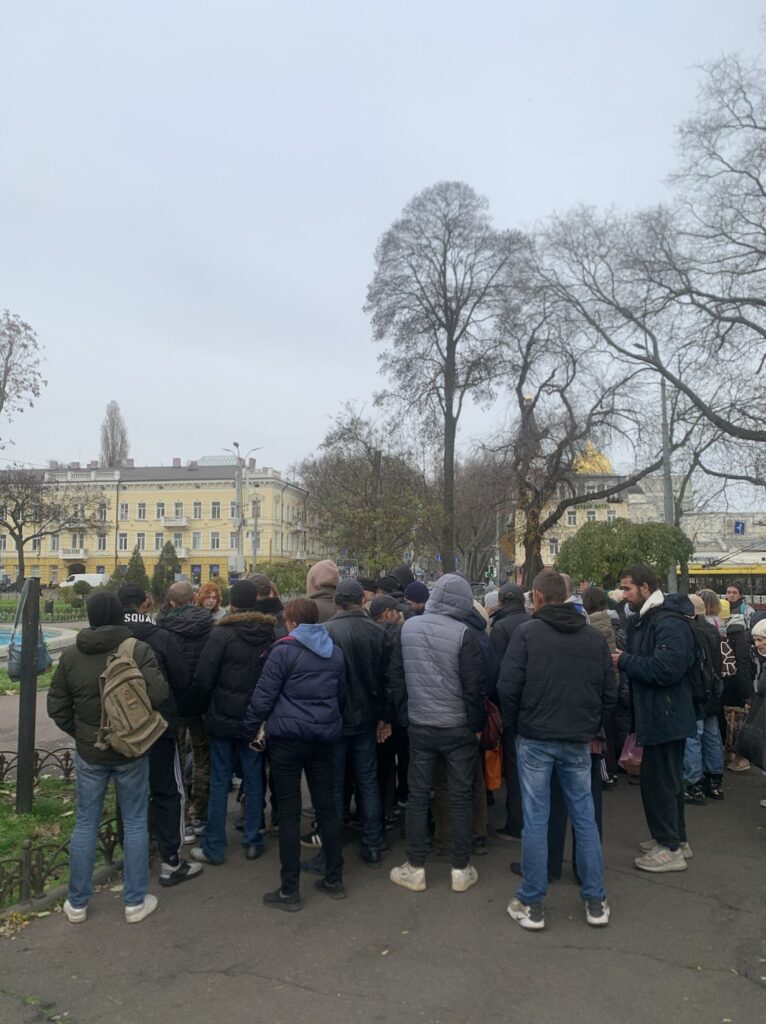
As part of my activist work with homeless people in Odesa, I participate every Sunday in hygiene, medical, and other outreach efforts. Thanks to my regular presence at these distribution points, more trusting relationships gradually developed between us: I saw some of the people over an extended period, spoke with some in the queues and after the distributions, and conducted individual interviews with others. I recorded some of the conversations on a voice recorder with the interviewees’ consent, whilst others I noted down or reconstructed from memory immediately after the interaction. My activist experience showed that everyday life on the street is nor reducible to mere survival. It has its own internal structure: people recognize ‘their own,’ assess one another, build relationships, support some and reject others.
Homelessness Beyond the Logic of Chaos
As a sociologist Anastasiia Riabchuk notes, homelessness in Ukraine long remained a subject of interest only to a handful of researchers. Furthermore, the vast majority of existing publications are situated at the intersection of sociology and social work, focusing on the practical aspects of assisting the homeless rather than on an in-depth theoretical or qualitative analysis of the phenomenon (Riabchuk, 2013). The situation is further complicated by a lack of reliable statistics, which limits the possibilities for a systematic study of homelessness. As a result, in the Ukrainian context, almost no in-depth studies—including ethnographic ones—exist that would allow for a more detailed analysis of homelessness.
Contemporary foreign sociologists increasingly treat homelessness as a specifically organized social world (Snow & Anderson, 1993; Besozzi, 2021; Wacquant, 2008). In this context, symbolic interactionism is one of the key theoretical approaches, allowing homelessness to be analyzed as a process of social interaction rather than merely as a consequence of structural factors (Mead, 1934; Goffman, 1959).
Within this approach, people appear as active agents who construct meanings, roles, and conceptions of themselves and others. Accordingly, homeless people should also be regarded as participants in and reproducers of their own world (Snow & Anderson, 1993).
With this in mind, Pierre Bourdieu’s field theory can be applied to the analysis of the street environment of homeless people. It is based on the premise that social life consists of relatively autonomous spaces of struggle, in which participants occupy different positions depending on the extent and type of resources, or forms of capital, that they possess. Each field has its own rules of the game, notions of value and criteria for recognition. Therefore, what confers status in one social space does not necessarily carry the same weight in another.
If we regard the ‘world of the homeless’ in the city as a distinct social space with its own rules, resources, status distinctions, and hierarchies, it can be described as a local field (Bourdieu, 1986).
The local field of homelessness is probably not entirely autonomous in the classical Bourdieusian sense, since it depends to a significant extent on broader economic, institutional, and urban structures. At the same time, a stable order exists within this space. For instance, it is important for homeless people to know where they can spend the night safely, where to get food or assistance, with whom to maintain contact, whom to trust, and whom it is better to avoid. Equally important are the rules of coexistence that must be followed: sharing what one finds with one’s immediate circle, not begging in areas ‘reserved’ for other homeless people, and not stealing from those with whom one befriends.
Field theory has already been applied in research on marginalized environments. In particular, the Norwegian sociologists Victor Shammas and Sveinung Sandberg propose the concept of the ‘street field’ for analyzing marginalized and criminalized street environments (Shammas & Sandberg, 2015). Even earlier, Sandberg had used the concept of ‘street capital’ to analyze young male migrants who were selling cannabis in one of Oslo’s neighborhoods. He demonstrated that, in the absence of legitimate resources from wider society, such as stable employment, education, and family support, it is ‘street capital’ that becomes a resource for survival, recognition and status (Sandberg & Pedersen, 2009).
A similar logic is applied by the anthropologist Loïc Wacquant, who, in his work on life in American ghettos and French suburbs, demonstrates that under conditions of urban poverty, inequality is linked to varying levels of social capital. Less integrated people have weaker social ties, which limits their chances of survival (Wacquant, 2008).
Thus, the street environment of homeless people can be analyzed through the transformation and specific forms of existence of capitals within their local space, i.e. the street. Economic capital here may manifest as access to food, alcohol, or a place to sleep; social capital as ties with other homeless people or aid providers; cultural capital as survival experience or knowledge of informal rules; and symbolic capital as respect or reputation.
The significance of ‘street capitals’ remains tied to this field: what may grant a person authority or access to resources on the street is often not recognized as valuable in wider society. In this sense, such capitals cannot be converted and do not open up opportunities for social mobility.
To understand this logic, one must first take a closer look at the ‘street world’. I will therefore go on to examine how it functions in everyday life through informal rules and ways of coexisting.
The Street Environment as an Organized Space
The everyday life of homeless people is structured around recurring routes, places, and routine activities. Begging, collecting recyclables, searching for food and places to spend the night form a specific ‘geography of survival’ (Zeneidi-Henry, 2002). According to sociologist Michel Parazelli, the routinization of these practices serves the function of ‘ontological security’, providing a minimum level of stability in unstable living conditions (Parazelli, 2002).
The everyday life of people living on the streets is organized around several key objectives, which are not mutually exclusive:
- meeting material needs (food, money, safety);
- restoring physical wellbeing (sleep, hygiene);
- sociability (communication, interaction with others) (Besozzi, 2021).
In Odesa, too, a distinctive pattern of street life among the homeless can be observed, particularly in relation to access to resources. One of the key gathering points for the homeless is the city’s central railway station, where one can spend the night for a small fee and also beg during the day. Location near the station, where food distribution points and medical aid centers are concentrated, is also important components of the social infrastructure. In particular, these include the Rosa Vitriv Square, Starosinna Square, Kulykove Pole, Preobrazhensky Park, and the Chornobyl Memorial, all of which are situated within a radius of approximately one kilometer.
Within this space, people form different kinds of attachments to places. Some homeless people adopt unstable strategies, meaning they do not stay in one place but move between different locations. For example, during the warmer months they spend the night in various squares and parks near the railway station, whilst in the colder months they use night shelters or abandoned buildings. This is the strategy adopted by Artur, a young man with five years’ experience of living on the streets. At the same time, these movements are not random: the set of places between which homeless people move is usually limited and relatively fixed.
Other homeless people, by contrast, develop more established everyday practices linked to a permanent place of residence. This is illustrated by the example of Tymur, who has been living in a manhole in one of Odesa’s districts for six years now. As well as having a stable place to live, he has a clearly established daily routine: in particular, he regularly visits the Second Christian Cemetery, where he has access to water and hygiene facilities, and during the day or in the evening he works as a general laborer on building sites or collects recyclable materials.
‘I’ve been living in a manhole for six years now… Have you ever once seen me come here [to the food and hygiene distribution point—ed.] dirty or stinking? I go to the Second Cemetery every morning — either in daytime or in the morning. I wash up, shave, and so on.’
This demonstrates the existence of individually developed strategies for organizing everyday life, even within extremely unstable living conditions.
Trust and Distrust
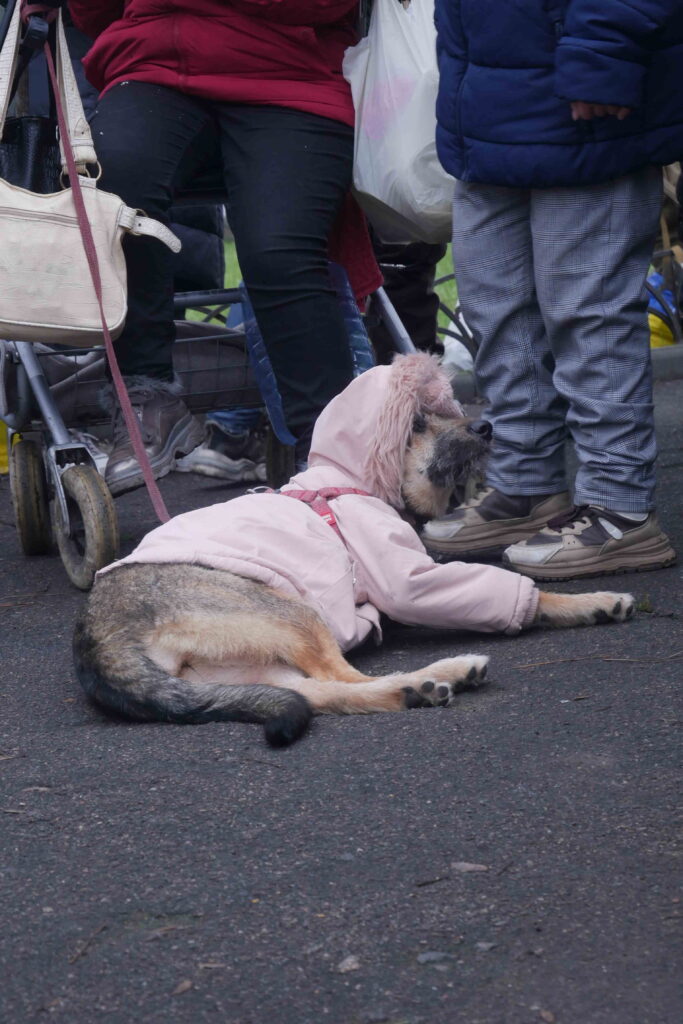
Observing homeless people, one can notice that they regularly cross paths with one another in parks, square gardens, at food distribution points, in night shelters, or in refuges. Such spatial proximity fosters the development of interpersonal bonds and the formation of more or less stable relationships in the form of pairs and groups.
Interactions are usually limited to the level of ‘acquaintances’ or ‘comrades’ and are rarely described as friendship, which indicates a limited level of trust. Their contact often amounts to brief exchanges such as ‘hello–goodbye’, as noted by Serhii, a homeless person with over ten years’ experience of living on the streets.
At the same time, there are exceptions where homeless people describe their relationships in family terms such as ‘brother,’ ‘sister,’ ‘father,’ and so on, indicating stronger and longer-lasting bonds. Such ties, although less common, fulfill important psychological and social functions and are described by researchers as a ‘surrogate family’ (Parazelli, 2002).
For example, Viktoriia, who spends the summer living with a group of homeless people in a tent on the beach, refers to the other women in her circle as ‘sisters.’ Zhora, who spends most of his time in the square park near the railway station, uses similar terms and describes the woman he lives with as a ‘sister’ or ‘daughter.’
Under conditions of material hardship, mutual awareness of one another’s lives fosters relationships of interdependence. This is evident in everyday social interactions: homeless people serve as a source of support, communication, and the exchange of food, money or important information, including gossip, for one another (Besozzi, 2021). At the same time, these interactions are ambivalent, as they combine both solidarity and conflicts arising from competition or the appropriation of resources. Generally speaking, the formation or breakdown of alliances, as well as the emergence or resolution of conflicts, depend to a large extent on what resources each individual can offer at any given moment. For example, Artur said that he stopped living with a friend after losing, due to his medical condition, the ability to contribute to their shared expenses on food and drugs, which led to a conflict and the breakdown of their relationship.
‘No, I’m on my own now. I’ve already figured out who I am and who I’m with, and that’s it, that was enough… I was used because they knew I always had money. Somewhere I had to be tricked into paying for a meal, or buying cigarettes or salt [slang term for a synthetic drug—ed.]’
Forms of Social Organization
Researchers have repeatedly attempted to classify the internal forms of organization amongst the homeless people. In particular, anthropologist Megan Ravenhill, within the framework of the concept of the ‘culture of homelessness’ in the UK, identified various subcultures linked to the use of alcohol, drugs, or attendance at different aid centers. She noted that people unite on the basis of shared substance use or cohabitation.
In addition, the researcher draws attention to individuals in the street environment who do not form stable groups: ‘loners’—isolated individuals who avoid social contact—and ‘drifters’—mobile individuals who temporarily engage in interactions but do not settle into them (Ravenhill, 2003).
A similar structure is described by the French sociologist Thibaut Besozzi, who, on the basis of ethnographic research, identified typical positions in the street environment: established groups, pairs (binomials), intermediaries, as well as peripheral and isolated individuals (Besozzi, 2021).
Among the Odesa homeless people we spoke to, and their immediate circle, formations similar to those described above can be identified. Although they require certain clarifications given the local context.
Groups. Some of those interviewed (Oleh, Serhii, Viktoriia) had experience of prolonged membership of relatively stable groups of homeless people numbered more than three. Characteristics of such groups include spending time together, mutual support, and a certain degree of internal organization. At the same time, cohabitation is not a prerequisite for their existence: members may spend the night in different places, but they interact regularly and spend a significant amount of time together.
‘It’s easier if you’re in a group… Everyone might sleep, spend the night, in different ways, in different places. But in the morning, they still get together. Work together, eat together, rest together, and everything else… Whatever problems arise, they solve them together. It could be, I don’t know, figuring out where to find something to eat, something like that. All that sort of thing. But not just that,’ says Oleh.
‘It’s a sort of protection, and so on. They already know that no one will come after them or anything like that. By the way, it’s even more convenient for the three of them to do something, some “hauls.” Yes, they found something there together — in short, they chipped in, sat down, ate and shared it, that sort of thing,’ says Tymur.
The formation of such groups often occurs on the basis of shared practices, particularly the use of alcohol or narcotic substances. Being part of a group is particularly helpful for those who have fewer opportunities to survive on their own because of their health condition or a lack of social skills.
Pairs. Some homeless people form pairs as a distinct form of social interaction. Among those interviewed, Artur and a companion were living as a pair, as was Serhii, who at the time of the interview was living with a friend in a semi-abandoned building. However, it is more common for heterogeneous pairs to form (male and female). Such relationships are unstable, as they can break down due to inequality and the dominance of one partner over the other.
‘Mostly it’s a man and a woman, couples. They (the women) probably think he’ll protect them. And they cling to the man, even though he often beats them,’ says Artur.
Intermediaries. These are individuals who have an extensive network of social ties and are well acquainted with other members of the street community. They have usually been on the streets for longer, which has enabled them to build up a network of contacts and knowledge of the scene. They fulfill important functions: they preserve the ‘collective memory’, ensure the circulation of information and link different groups together (Besozzi, 2021).
Among the people we communicate with, Zhora could be placed in this category. He doesn’t have a regular group of friends, but he fits in easily with different groups, is able to interact in pairs, and maintains a wide circle of contacts.
Peripheral. These are more detached participants in the street environment, who have a limited circle of contacts and a lower level of integration. These are often people with shorter or intermittent experience of living on the streets, whose social connections are temporary and unstable in nature and are formed on an ad hoc basis, for example, in the context of shared substance use, small-scale exchanges, or shared work.
On the one hand, this position may be linked to the availability of individual resources that allow a person to remain apart from group life. In this sense, it is more often found among younger, physically healthy men who can survive without constant group support. An example of this type of peripheral status is Tymur, who has chosen to live independently:
‘No, I’m better off on my own. Because, you see, when you’re hanging out with this crowd, no matter what, you’ll end up getting drunk; no matter what, you’ll start again, collecting scrap metal and cardboard – that’s not for me, personally. It’s so much easier for me this way: I went to work from 8 to 6, and that’s it, I’ve already got my money.’
On the other hand, this peripheral existence may not be a strategy for autonomy, but rather a forced situation caused by stigmatization, conflicts with one’s former social circle, or limited acceptance from other members of the street community. A vivid example is Rosa, a Romani woman who lived for a long time in the square park near the railway station. For various reasons, she was unable to integrate into the Romani community: according to her, after a conflict with her former husband, she had to leave her previous social circle and no longer maintains contact with anyone from it. At the same time, her integration into other groups of homeless people is complicated by the stigma associated with her Roma background.
Isolated individuals. People who have almost no social ties, who do not interact (or interact very little) with either other homeless people or the wider community, yet remain recognisable within the street community.
Individual cases of isolation may be linked both to personal characteristics (particularly mental health conditions) and to a deliberate strategy of risk avoidance. In particular, some women may choose to remain isolated as a means of protection against violence, exploitation or other threats associated with participation in group interactions (Besozzi, 2021).
Status and Hierarchies
If homelessness is interpreted through the lens of Erving Goffman’s theory of stigmatization, it becomes clear that social categories not only describe people but also influence their identity, self-perception, and interactions (Goffman, 1963). Within the realm of homelessness, people occupy different positions depending on their recognition, influence, and access to resources. These positions are formed, in particular, through the assignment and use of certain labels. These are applied both from outside and within the group itself: for example, labels such as ‘alcoholic’ or ‘drug addict’ are used as means of assessment not only by ‘outside’ society but also in interactions amongst the homeless themselves (Ravenhill, 2003).
Overall, the hierarchy within the homeless community is neither stable nor formally established, yet it manifests itself in everyday interactions. Broadly speaking, within this hierarchy one can distinguish ‘higher’ positions — those who are respected, whom others turn to for help or advice, who have experience or influence over others, and so on — and ‘lower’ positions associated with stigmatization, dependency, and isolation.
For example, respondents draw a distinction between ‘bomzhi [bums]’ and “homeless people.” Vitalii, who has lived on the streets for around ten years now, notes that there are “two major differences” between these terms. This distinction is not merely descriptive but also hierarchical in nature. In particular, the category ‘bomzh’ is usually associated with stigmatised perceptions, whereas the term ‘homeless’ is used as a more neutral or even legitimate designation.
Factors Shaping Informal Status
First, a factor that serves as an indicator of status and a means of symbolic distancing from ‘lower’ positions is physical appearance. Respondents repeatedly emphasized that it is precisely one’s appearance that allows a person’s position in the street environment to be quickly identified. Some homeless people, notably Tymur, emphasize the importance of maintaining one’s appearance as a way of distancing oneself from stigmatized groups. Being recognized as someone who is not identified as homeless serves as a significant symbolic resource for them:
‘There are those who look after themselves, and there are real “slobs.” You can’t even go near someone like that — they smell awful and are dressed in a mess. Appearance is important… Because lots of people tell me: nobody would guess you’re homeless. I say: I know. If I don’t look after myself, I’ll end up just like them, and that’s it, but I don’t want that.’
Oleh also points out that a neat appearance, which demonstrates self-control, can be a way of earning respect in the street environment.
‘There are people who simply spit on themselves, quite literally. If you’ve spat on yourself, that’s it. And others will spit on you too,’ says Oleh.
Second, the experience of living on the streets plays an important role. People who have lived in this environment for longer tend to have a higher status, as they are more familiar with its rules and have more social connections. The length of time spent on the streets gradually translates into a reputation, which, in turn, builds trust among others. Megan Ravenhill referred to this as an ‘inverse hierarchy’: in her study, higher status was often held not by those homeless people who possessed ‘classic’ resources, but by those who had a longer and more complex history of survival, particularly severe trauma or serious illness, which served as a kind of ‘marks of resilience’ (Ravenhill, 2003).
At the same time, as Oleh notes, ‘seniority’ alone is not enough, because the quality of that experience also matters, in particular the ability to survive ‘effectively’ and maintain a certain level of self-control.
‘It’s about a kind of wisdom, I guess, something like that, about experience. But if people listen to someone, it means they know… Well, yes, it means they have more experience, have been through more situations in life. The thing is, when you live on the streets, experience builds up very quickly. If you’re on the streets and look normal, live normally, eat normally, it means you’ve built up that experience very quickly.’
The so-called ‘capital of autochthony’ also plays a distinct role — a concept proposed by Jean-Noël Retière and developed by Nicolas Renahy, which describes a specific type of ‘local advantage’ in social relations, that is, the degree to which an individual is rooted in a specific space and environment (Renahy, 2005). In the context of street life, this means that those who are “one of their own” (i.e. well known to others, long-term inhabitants of a particular location and integrated into local networks) have significant advantages over newcomers.
In this context, more experienced participants in the environment play an important role in passing on knowledge to newcomers, that is, familiarizing them with everyday survival strategies. Tymur notes that he himself once went through this process: he learnt from those more knowledgeable than himself, and later began to pass on that knowledge to others. In this way, there is a cyclical reproduction of experience, in which knowledge serves as a resource and the foundation for establishing authority.
‘Look at her (points to a young woman who looks lost). She’s new here. She doesn’t know how to do any of this. And that’s it. Well, what’s she going to do? Where’s she going to go? She needs to be taught so she can survive… Or maybe not taught, just shown…. Honestly, I used to say that… So, Sanyaba and I were together, and Sanyaba says to me: let’s go over there. I look — he’s in the alfator [garbage bin — ed.]. And I step aside. I was embarrassed, honestly. That went on for about a year and a half, I reckon. He says: ‘Tymur, I used to be just like you at first, I was embarrassed too, thought it was a bit of a shame and all that. But then I realized that here, in Odesa, people don’t care who you are, what you are, and so on.’
Third, recognizability matters. Those who know more people, have connections and engage with other homeless people or those outside the community tend to occupy more integrated and often higher positions.
‘Why do people respect me? What do you mean, why! Half of Odesa knows me—every dog knows me,’ says Vitalii.
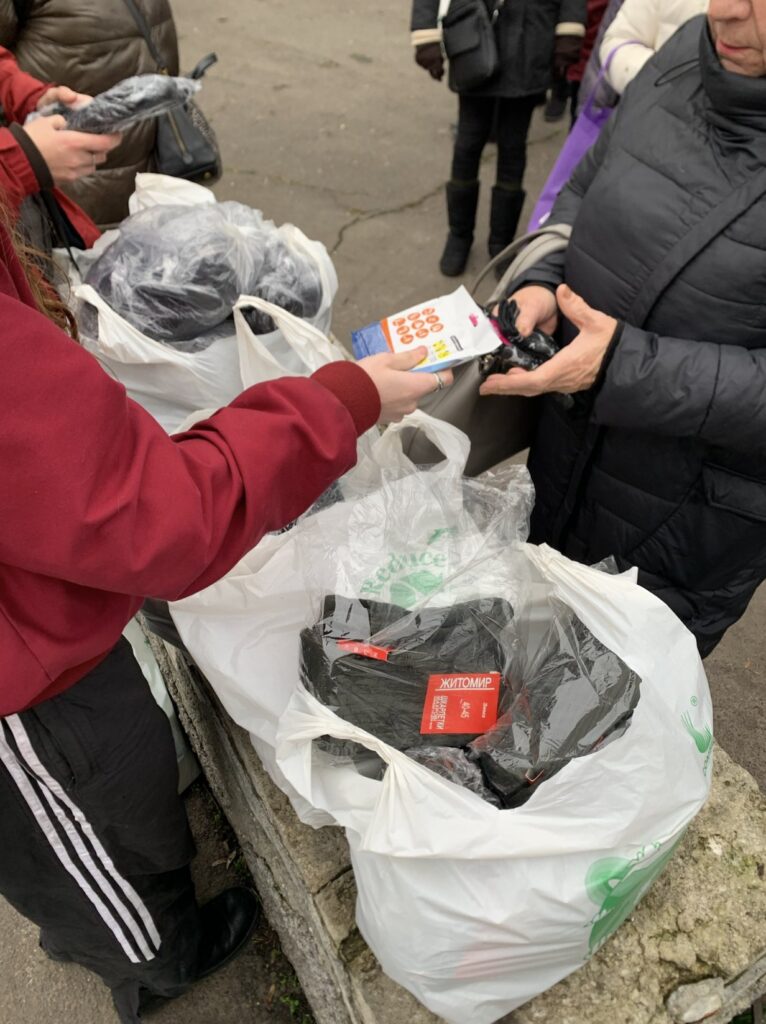
Kostiantyn, an activist and former social worker, notes that when aid is being distributed and a queue forms, being recognized within the community plays an important role, as it directly influences access to resources, particularly in terms of who other homeless people are willing to let go ahead in line to receive aid.
‘It’s precisely an opportunity to get this aid before others, more often than not… Well, yes, people who know everyone can often get to the front of the queue, as it were. Or somehow ensure that one of their acquaintances also receives aid earlier.’
Respondents emphasize that people who act as ‘connectors’, particularly those who engage easily, maintain communication, and create a positive emotional atmosphere within various groups, find it easier to build social connections. This, in turn, helps to raise their status. Conversely, people who are more shy or less sociable find it harder to establish and maintain these connections. They compensate for their lack of ‘eloquence’ with other strategies, such as participating in groups where interaction is mediated by a sense of collective belonging.
‘If a person is shy and can’t communicate much, as they say, and all that, they still get along with someone. If they’re part of a group, it means others will help them figure things out,’ says Oleh.
One important resource is access to material goods and the ability to distribute them (money, food, places to sleep, alcohol, drugs, etc.). The ability to share resources, or conversely to control them, enables the establishment of relationships of dependency. Serhii, a homeless man who had experience of shared living in an abandoned building, notes that the person who was held in the highest regard and effectively acted as the ‘leader’ in his case controlled the so-called ‘obshchak’ — a communal fund consisting of food, alcohol and other resources collected throughout the day. It was this person who distributed the resources, in particular providing support to those who had failed to find or earn anything during the day.
‘Well, if someone’s walked around all day and hasn’t earned anything, and then they come and they’re hungry. And the person with the most authority will take something and give them a share: here, you’ll have some tomorrow — you’ll share. And that’s it. In other words, they’ll share it out fairly. They end up with… ‘obshchak’—whoever brings what, and then it all stays with him; he always has something. Tomorrow I won’t have any—I’ll give food. It’s money, it’s things—it’s all in the ‘obshchak’. Products—all of it.’
No less important is physical resource — above all, strength and the capacity for violence, which can provide both security and the opportunity to dominate others. This is what the researcher of marginality, Thomas Sauvadet, called ‘combat capital’ (Sauvadet, 2006).
At the same time, it is not only actual physical strength as such that matters, but also the ability to project the image of a strong or potentially dangerous person. For example, according to Kostiantyn, Oleh, who had lived in the shelter for only a short time, despite lacking any marked physical strength, often resorted to symbolic gestures, such as raising his walking stick or shouting at others. People often listened to Oleh and regarded him as the ‘leader’ of the group. Another homeless man, Mamuka, caused fear amongst those around him due to his appearance and involvement in criminal activity. He was perceived as dangerous, which secured him a privileged position: not only other homeless people but also social workers let him go first during food distribution.
Finally, status depends on compliance with the community’s informal norms. Among the most important, respondents highlighted the following: a ban on theft, a willingness to share resources, mutual assistance, especially towards the ‘weaker’ members, and maintaining a presentable appearance. Violation of these norms can lead to sanctions, in particular a loss of trust, which may result in exclusion from the group or the isolation of individuals; in some cases, violence may even be used against them.
For example, Serhii describes the group’s internal dynamics as being based on the obligation to share resources and contribute to the collective ‘obshchak’. According to him, refusing to do so can lead to exclusion from the group:
‘That’s if he secretly eats what he brought, hides it, and doesn’t say a word. I mean, if you’ve brought something – you’ve got your own share, that’s different… If you don’t have anything tomorrow, they’ll give you something to eat, to wear, to smoke, and to drink. But if you keep everything to yourself, you won’t get anything tomorrow either; you’ll be kicked out.’
Gender and age are also factors influencing status. Observations suggest that people at the extremes of the age spectrum — both the very young and the elderly — rarely occupy high positions in the informal hierarchy; by contrast, people of a more ‘intermediate’ age are more likely to become figures of authority.
Gender differences are significant: women in the street environment are often in a more vulnerable position and are frequently included in pairs with men or in groups that both provide some protection while also reproducing relationships of dependency. In such interactions, women often occupy subordinate positions, carry out a significant proportion of the daily work (care, organising daily life), and may also be subjected to exploitation and violence.
Viktoriia explained that she had to carry out a significant part of the everyday work in the tent, particularly cleaning; Rosa, even without being part of a stable group or pair, regularly looked after men in the park, who in turn mocked her. She herself attributed such practices to gender norms — ‘because she is a woman’. At the same time, the influence of gender is not strictly fixed. In the street environment, there are instances where women occupy more autonomous or even dominant positions: according to Oleh, some women acted as informal leaders of groups of homeless people.
Vulnerability as a Resource
Vulnerability in the street environment can act not only as a limitation, but also as a specific resource in accessing help. In particular, Vitalii notes that people with visible physical disabilities are more likely to receive alms:
‘You could say it’s even a little easier for them. They earn even more. Because you can see they have a walking stick, people give them even more money.’
This is not to say that their situation is better overall — on the contrary, people with disabilities face more serious difficulties in terms of survival, particularly due to limited access to medical care (Riabchuk, 2013). However, in interactions with passers-by or volunteers, their visible vulnerability can translate into greater amounts of assistance.
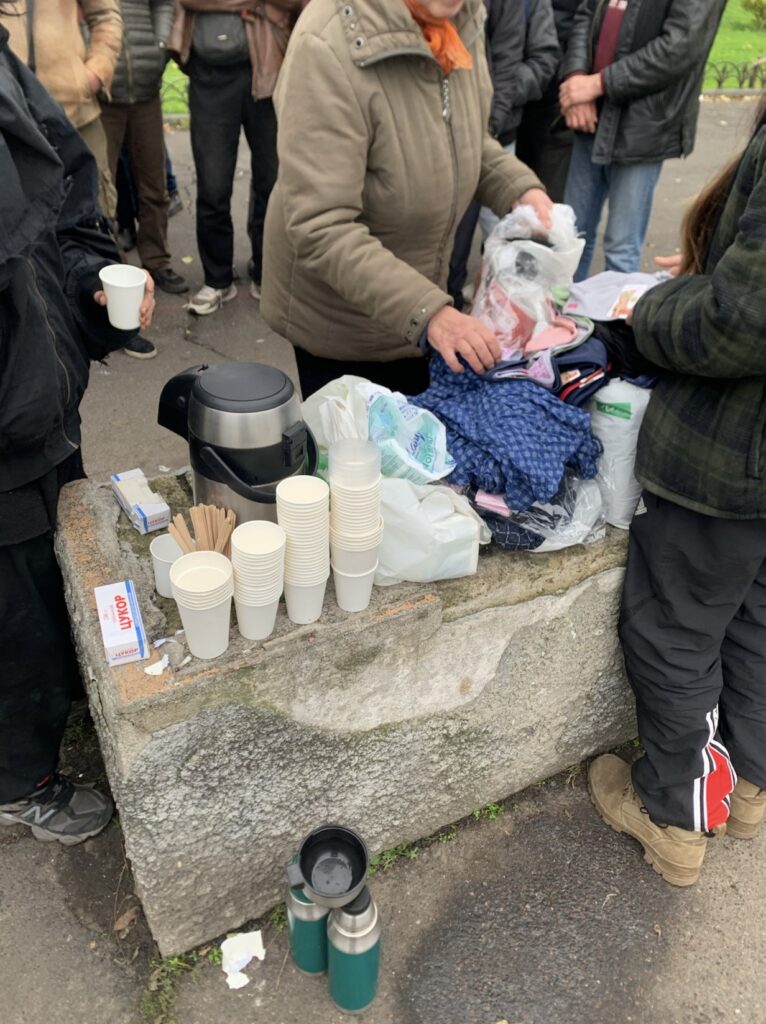
A similar logic is evident in institutionalized practices of resource allocation: in some situations, women or people with disabilities may be given priority when assistance is provided. For example, at the weekly distribution of hygiene products in the Rosa Vitriv Square, it is precisely these groups who are let through first. In response to such rules, some members of the community may attempt to circumvent them, in particular by imitating physical limitations, for example by using a walking stick.
Indeed, the social historian Lionel Rose, who analyzed the survival strategies of people living on the streets of Britain from 1815 onwards, notes that the homeless relied to a large extent on their ability to ‘stage’ vulnerability through their clothing or behavior. In this way, they recreated recognizable images of victims, such as a wounded soldier from the Napoleonic Wars (Rose, 1988).
One’s own life experience and past vulnerability can be used as a resource to obtain support. Kostiantyn, describing the experience of Rosa, who often found herself isolated due to stereotypes, notes:
‘She often, so to speak, plays on people’s pity by recalling her past, how she was beaten, and what a difficult childhood she had. In this way, she receives various forms of help: it might be food, a top-up on her bank account or other forms of support. In other words, she knows how to use the facts of her life story to secure a certain kind of help for herself. I think you could call that eloquence.’
This example echoes research by Shelley Cook and Rachel Hole on rough sleeping in Canada. The authors show that access to support depends on the ability to present one’s needs in a way that is ‘acceptable’ to support services. Participants described this as the need to appear ‘homeless, but not too homeless’: vulnerable enough to receive support, but not so stigmatized as to be rejected (Cook & Hole, 2020). In other words, they argue, vulnerability becomes a resource precisely when it is recognized as a legitimate basis for receiving support.
***
Homelessness should therefore be viewed as a social experience. The street environment does not destroy social order, but rather reproduces it in a different form — one that is situational and unstable, yet understandable to those who live within it. Status here is shaped precisely by the ‘conditions of the street’, by the ability to act in situations of constant risk and instability.
Homeless people are constantly interacting, distancing themselves, supporting one another and constructing their own survival strategies. Therefore, understanding the internal norms and hierarchies of the street environment can help social workers, volunteers, and activists to communicate more effectively, avoid conflicts and view homeless people not as a homogeneous group, but as individuals with their own unique experiences.
List of References
Barker, J. D. (2013). Negative cultural capital and homeless young people. Journal of Youth Studies, 16(3), 358–374.
Besozzi, T. (2021). La structuration sociale du monde des sans-abri. Sociologie, 12(3), 247–266. https://doi.org/10.3917/socio.123.0247
Bourdieu, P. (1986). The forms of capital. In J. G. Richardson (Ed.), Handbook of theory and research for the sociology of education (pp. 241–258). Greenwood Press.
Cook, S., & Hole, R. (2020). “Appropriately homeless and needy”: Examining street homeless survival through the lens of Bourdieusian social capital theory. Journal of Human Behavior in the Social Environment, 30(7), 816–834. https://doi.org/10.1080/10911359.2020.1747585
Duneier, M. (1999). Sidewalk. Farrar, Straus and Giroux.
Goffman, E. (1963). Stigma: Notes on the management of spoiled identity. Prentice-Hall.
Mead, G. H. (1934). Mind, self, and society: From the standpoint of a social behaviorist. University of Chicago Press.
Parazelli, M. (2002). La rue attractive: Parcours et pratiques identitaires des jeunes de la rue. Presses de l’Université du Québec.
Paugam, S. (1991). La disqualification sociale: Essai sur la nouvelle pauvreté. Presses Universitaires de France.
Ravenhill, M. (2003). The culture of homelessness: An ethnographic study [PhD thesis, London School of Economics and Political Science].
Renahy, N. (2010). Les gars du coin: Enquête sur une jeunesse rurale. La Découverte.
Rose, L. (1988). Rogues and vagabonds: The vagrant underworld in Britain 1815–1985. Routledge.
Рябчук, А. М. (2013). Структурні чинники відтворення та соціальної репрезентації бездомності [канд. дис., Київський національний університет імені Тараса Шевченка].
Sandberg, S., & Pedersen, W. (2009). Street capital: Black cannabis dealers in a white welfare state. Policy Press.
Sauvadet, T. (2006). Le capital guerrier: Concurrence et solidarité entre jeunes de cité. Armand Colin.
Shammas, V. L., & Sandberg, S. (2016). Habitus, capital, and conflict: Bringing Bourdieusian field theory to criminology. Criminology & Criminal Justice, 16(2), 195–213.
Snow, D. A., & Anderson, L. (1993). Down on their luck: A study of homeless street people. University of California Press.
Wacquant, L. (2008). Urban outcasts: A comparative sociology of advanced marginality. Polity Press.
Zeneidi-Henry, D. (2002). Les SDF et la ville: Géographie du savoir-survivre. Bréal.