Adam Hanieh is a professor at the School of Oriental and African Studies (SOAS), University of London, widely known for his work analyzing the political economy of the Gulf monarchies from a Marxist perspective. His latest book, Crude Capitalism, offers a fresh take on the role of oil in the capitalist dynamics of the 20th and 21st centuries. In the early days of the war between Iran and the US/Israel, we recorded this interview alongside Simon Pirani, another British socialist and energy expert. We discussed how accurate the claim “all wars are fought for oil” truly is and what developments we might expect in the Middle East in the future.
Denys Gorbach: We are one week into a new war that the US and Israel started against Iran. How can you analyse it from the point of view of the political economy of the region?
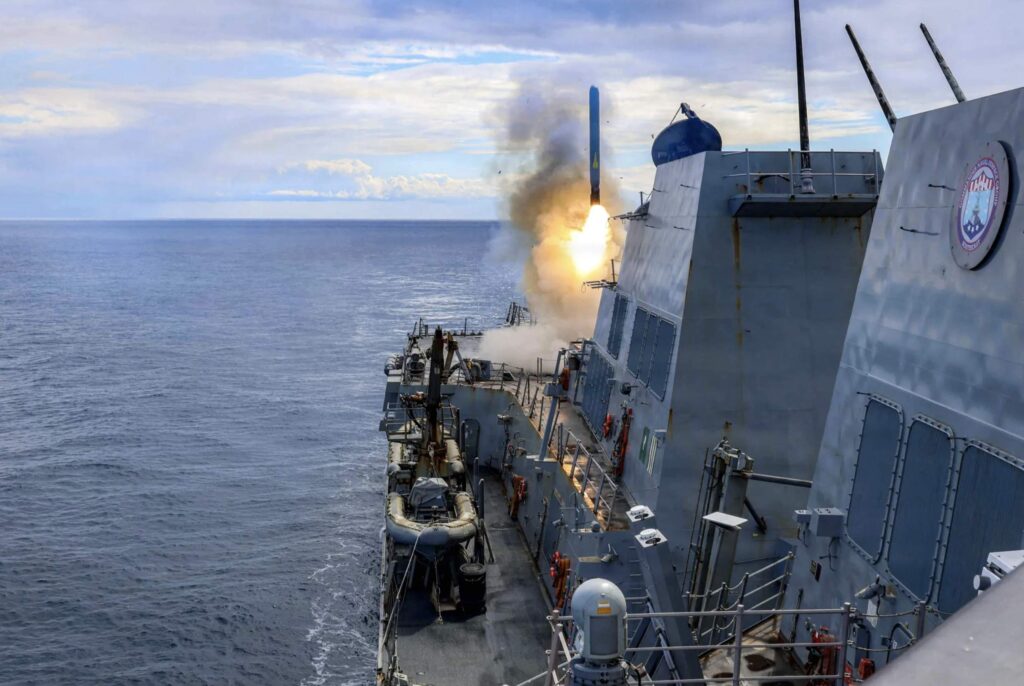
Adam Hanieh: First, the US-Israeli attack on Iran is disastrous in terms of its human impact – primarily on Iran, but also on the peoples of the region more broadly. We’ve seen the huge swathe of destruction following the bombing of the school a couple of days ago, deaths of hundreds of Iranians, 30,000 people displaced in Lebanon, and continual bombardment and occupation of southern Lebanon, Iraq, and other parts of the region.
We see an attempt by the US and Israel to use this moment to defeat and push back Iran, Hezbollah, and other forces in the region. But it is very clear that within the American ruling class, there’s a lot of consternation and nervousness about what this strategy might lead to. Any attempt to impose regime change on Iran would be, from American imperialism’s perspective, a risky strategy. It’s not at all clear that that would be successful, and I also don’t believe that any attempt to restore the Pahlavi regime would be successful. The base of support for Pahlavi is located much more outside, in the Iranian diaspora, rather than inside Iran itself.
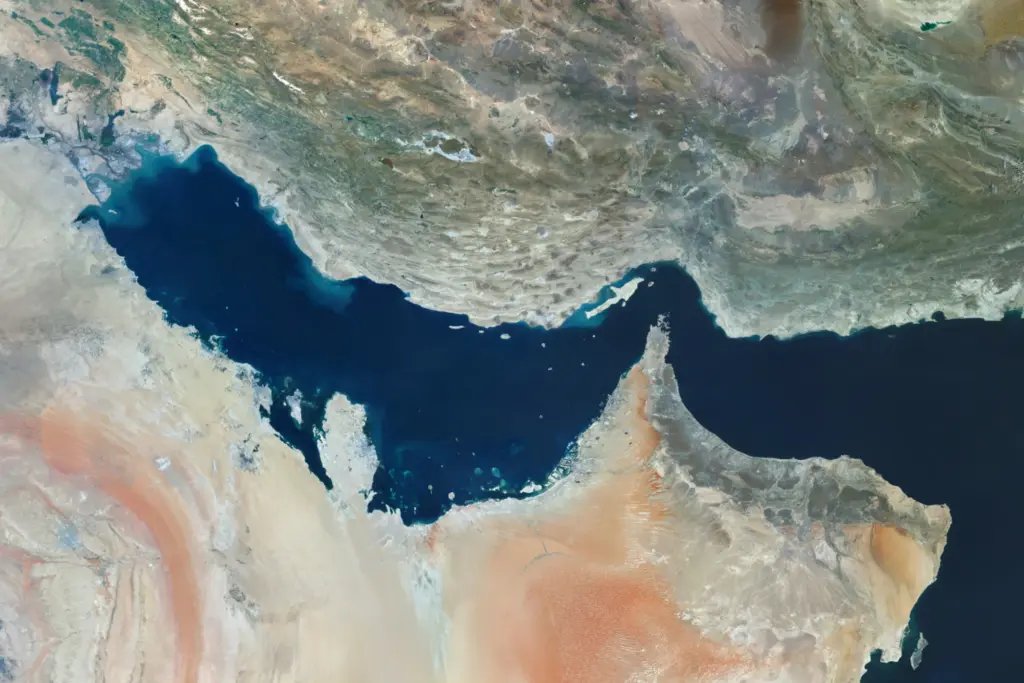
Reasserting US primacy in the region, in the face of a relative global decline of its power, has been a clear aim of US strategy over the last two years, since the beginning of the genocide in Gaza. And a big consideration is the oil reserves of the region, the Gulf states in particular, as well as Iran and Iraq, and the ways in which those oil exports are now flowing eastward rather than westward as they did historically. About 75% of the Middle East’s oil exports now go to China and wider East Asia, and so chokepoints like we see in the Strait of Hormuz are critical to Chinese and Asian energy security. This is the bigger question animating US policy in the region. The potential for those oil flows to be cut, in the event of any larger conflict with China, is certainly one of the tactical weapons in the US arsenal.
Simon Pirani: There is a contrast between the way this attack is being managed and the attack on Iraq in 2003. I recall from 2003 a lot of preparation, firstly ideologically from Paul Wolfowitz and the “neo-cons”, and then politically: Colin Powell’s speech to the United Nations about the fictitious “weapons of mass destruction”, and so on. And now we’re living in a situation where the US elite doesn’t bother with all that.
AH: That’s absolutely right, in the sense that there is not even a cursory attempt to provide a legal justification or cover for the war. We’ve seen the reasons offered by the Trump administration change from minute to minute. There is no attempt to use the fig leaf of the UN or any kind of allegations about weapons of mass destruction that we saw in 2003.
DG: But if we don’t take at face value whatever justification there might be, the critical public’s usual instinct would be to seek covert reasons, and usually the easiest reason would be a war for resources, for possession of oil. You say that oil is involved, but in slightly different ways: it’s not exactly about grabbing the resource but about redirecting its flows?
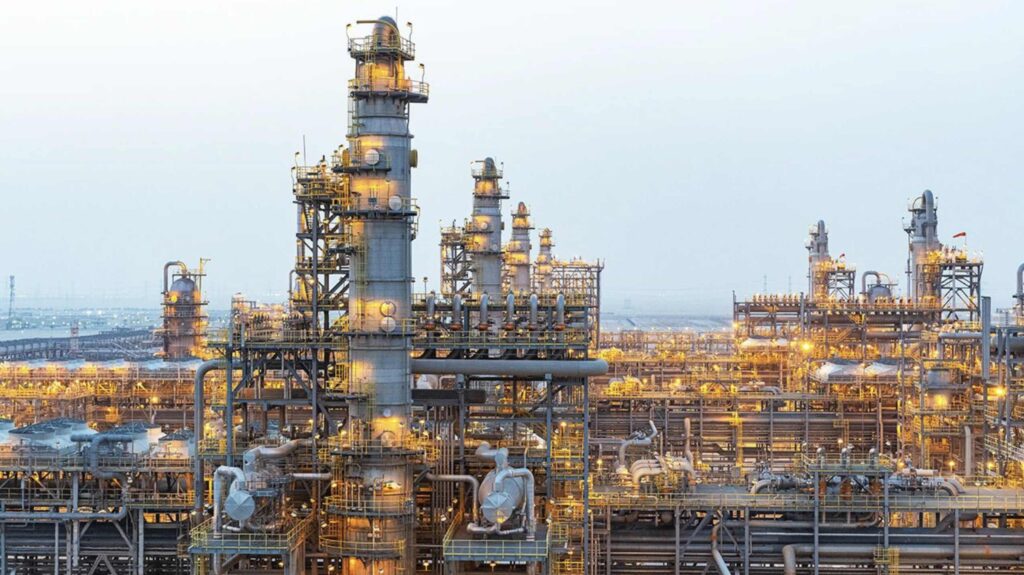
AH: Yes, I don’t think it’s an attempt to directly control Iran’s oil supplies, in the sense of taking direct ownership by American or Western oil firms. When we’re thinking about oil, it’s important to consider the whole value chain, including the refining of oil, the transport of oil. Control of those downstream segments is as powerful as direct ownership of crude oil reserves. In this case, we can see that 20% of the world’s oil and LNG is moving through the Strait of Hormuz, as well as 30% of the world’s fertilisers – which is very illustrative of the importance of the downstream segments. In this sense we can draw a parallel to the 2003 US/UK invasion of Iraq – which I don’t think was primarily concerned with the direct seizure of Iraqi oil fields.
DG: You started your explanation by talking about geostrategic dominance rather than any direct economic motive. Is that correct? And was that also correct for Iraq in 2003?
AH: As I’ve mentioned, I think the 2003 war was less about the direct control of Iraq’s oil and more about weakening a large Arab state that not only possessed oil wealth but also presented a potential threat to the wider American-imposed order in the Gulf region. Of course, the attempt to impose regime change in Iraq did not go according to Washington’s plans, but these bigger strategic questions were paramount in the motivations for the war.
More broadly, we need to put these developments in the Gulf in the context of the wider region. Over the last few decades, the two main pillars of American power in the Middle East have been Israel, on one side, and the Gulf monarchies, in particular Saudi Arabia, on the other. The US has sought to knit together these two pillars, through promoting economic and political normalisation between the Gulf states and Israel. This has been a long-standing policy that accelerated with the Oslo Accords in the 1990s and then more recently with the Abraham Accords in 2020 and the UAE free trade agreement with Israel in 2022. Any power that sits outside of that process is a target of American imperialism, and that’s exactly what we’re seeing today in the case of Iran. However, I think a full regime change in Iran would not lead to any kind of stable government, and American policymakers are very wary of that. That’s what we have seen in Iraq since 2003: two decades of fragmentation, and the US has been unable to install a reliable ally, despite its significant economic and military influence there.
SP: Reading your book, Crude Capitalism, it struck me that you write about the decline of American imperialism and at the same time the rise of the Gulf states. I don’t think they’re imperialist in any sense of the word, but they’re not completely dependent on the US in the way they were half a century ago. You write about their relationship with China. Where is that going over the coming decades?
AH: The place of the Gulf monarchies in the bigger architecture of American imperialism in the region is central to understanding what has been going on over the last two decades. These Gulf monarchies historically have been very dependent on, and in close alliance with, the United States since the post-Second World War period. The US basically guaranteed their survival in the wake of the anti-colonial struggles of the postwar period, through providing military protection and developing extensive political and economic connections, including military bases. It’s very indicative that the first place Trump visited after his election was Saudi Arabia, both in 2016 and in 2024.
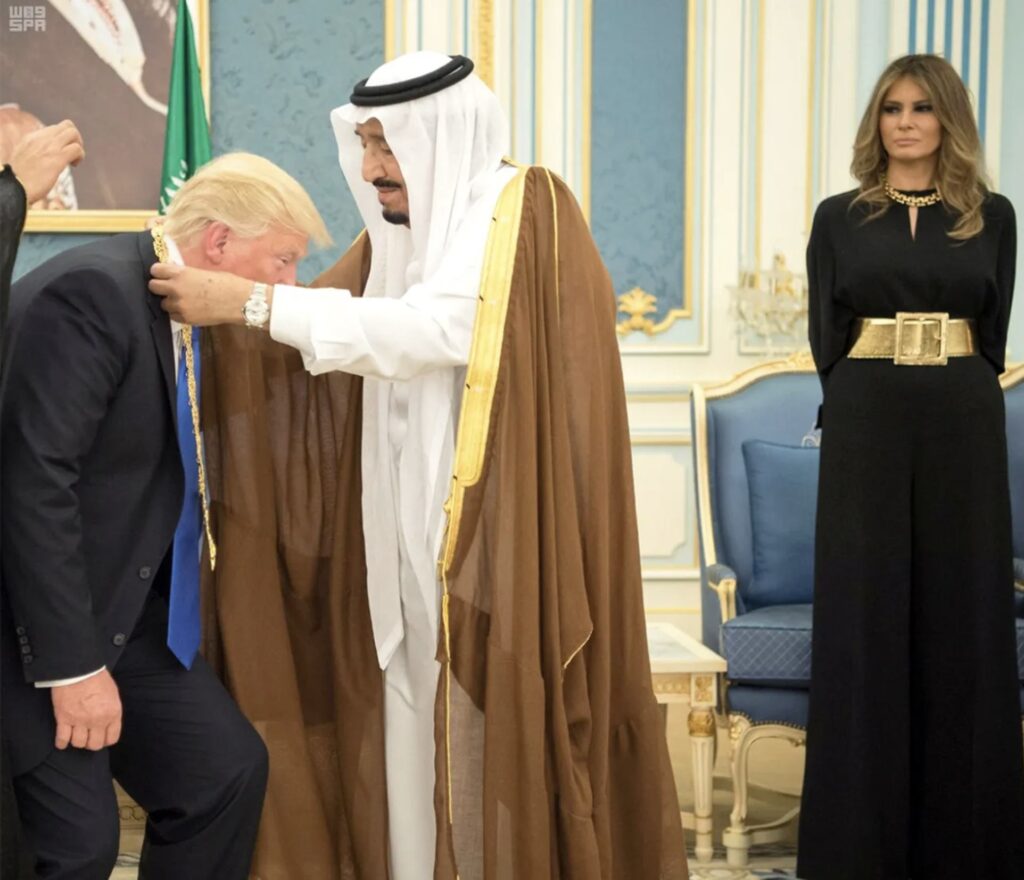
Over the last decade there has been an eastward shift in Middle East oil exports. They no longer flow to Western markets in the same proportion; the vast majority now go to China and East Asia. But even though these hydrocarbon exports are flowing eastward, the petrodollar surpluses that accumulate in the Gulf still predominantly flow into US financial markets. In this sense, the ways in which multipolarity is often discussed is overly simplistic: it is true that there’s been this eastward shift in commodity exports, but the connections between the Gulf and American power still run very deep. You can see this by looking at where these financial surpluses of the Gulf circulate, whether they be through sovereign wealth funds, or through more direct state purchases of US treasuries, or through purchases of US military hardware. The Gulf is the largest market in the world for military imports, and most of these are American-made. In all these ways, these financial surpluses continue to support American global financial dominance.
The increasing ties between the Gulf and China have made the Gulf even more important in the eyes of American imperialism. In the case of any deeper conflict between the US and China, Gulf oil exports will be critical for choking energy supplies to China. We can see the specter of this raised in the last couple of days, with the attacks on tankers in the Strait of Hormuz. The US’s ability to impose sanctions on Chinese companies depends also on this relationship between the US and Saudi Arabia, and on the pricing of oil in dollars. For all these reasons, while the Gulf’s regional power has certainly expanded and its involvement in the oil industry has diversified, the link with American power still remains absolutely central.
DG: What about these states’ own military adventurism? Simon doesn’t want to call it imperialism, OK, but clearly the Emirates have their interests in many countries now: they are involved in Sudan, Libya, Yemen, and other countries. Saudi Arabia does more or less the same. Both of them compete geopolitically with Qatar. How does that align with what you said?
AH: There are certainly rivalries between the individual Gulf monarchies, in particular Saudi Arabia, the UAE, and Qatar. In the last couple of decades we have seen each of these states attempting to assert their own regional power, whether through financing new authoritarian governments in places like Egypt and Tunisia, by sponsoring armed and political groups across the region, e.g. in Syria and Libya, or in direct military intervention, such as in Yemen or Sudan. Despite this, the relationship with American imperialism is still paramount for these states. The integration between the US military presence in these states, whether it be direct bases or the coordination of military systems, is very deep. For instance, the provision of US military hardware is overseen by US firms and military personnel, which means a deep and permanent American involvement in the Gulf’s state apparatus. In short, we can’t separate out the military capacities of these states from their incorporation into American military strength in the region.
DG: This winter marks the 15th anniversary of the chain of uprisings known as the Arab Spring. Looking back at it today, how did it change the politico-economic configurations in the region?
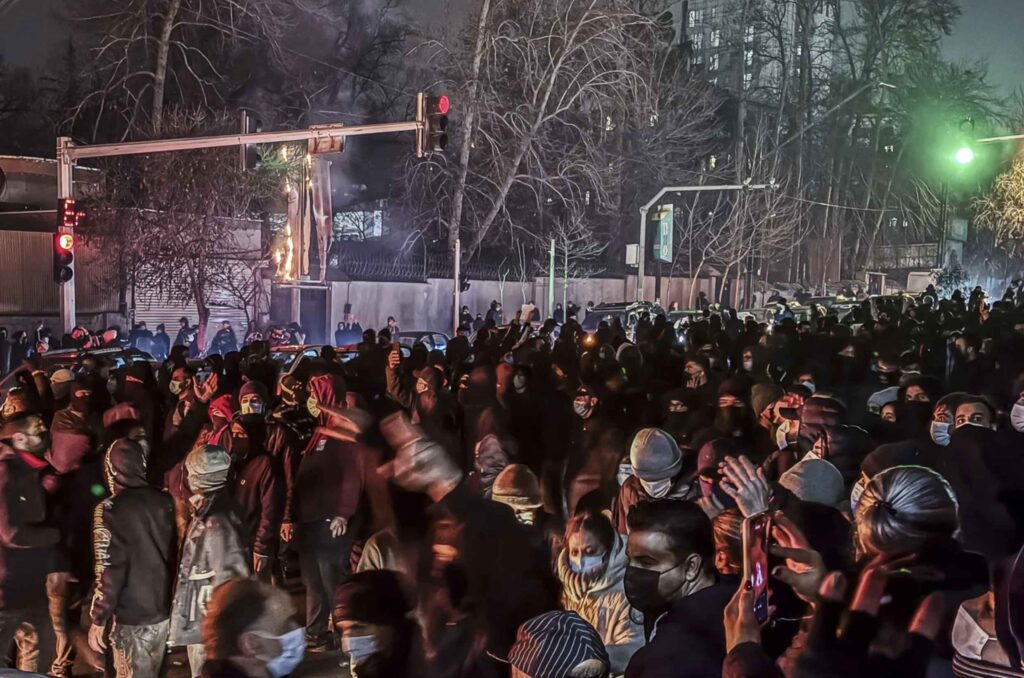
AH: The first thing I would say is that none of the drivers of those revolts have been addressed, in the sense of the extreme polarisation of wealth and the authoritarian nature of states across the region. Rather, what we’ve seen is an eruption of wars and crises in places such as, obviously, Palestine, but also in Lebanon, Syria, Libya, Yemen, and Sudan. The region is now the world’s largest site of forced displacement: one in three displaced people globally are now present in just four countries of the Middle East.
The other thing that’s become evident in the last 15 years is the significance of the Gulf monarchies in the political economy of the wider region. With the breakdown of the regional system post-2011, we saw an attempt by the Gulf states to put things back together in their interests, through supporting various new governments, political movements or armed forces. Along with this attempt by the Gulf states at the political level to assert their power, we also see economically Gulf capital deeply integrated into the class and state structures of neighboring states in the region – through ownership of industry, banks, infrastructure, particularly port infrastructure. If you map those ownership structures, you can really see the deep place of the Gulf in the wider regional political economy.
And then the other side of this is the attempt to push deeper normalisation between Israel and the Gulf states, which has accelerated, not weakened, post-2023.
SP: Without painting the situation in Iran in rosy colours, we’ve seen a big social movement there, even after decades of repression. What do the elites in Bahrain or in UAE or in Saudi Arabia think about it? They may like it when it happens on the other side geopolitically, but I think it also carries a threat all round, because they don’t control it.
AH: In the last ten years, we’ve seen several waves of uprisings from students, from workers, from women notably, and each wave was very violently repressed by the Iranian regime. And that’s why I said earlier, I don’t think there’s any credibility in this claim that Pahlavi is going to return to Iran on the back of US tanks and take control. I don’t think that the Pahlavi monarchy has any real popular base inside Iran. It’s very difficult to read at this moment, but the more likely intention of American policymakers is to do what they did in Venezuela: bring in some other element within the regime or other faction to try to take control. But again, it’s very difficult to predict, I wouldn’t want to say that’s going to happen with any kind of certainty.
DG: Since you mentioned Venezuela, there has been a lot of talk, sometimes maybe a bit misguided, about the oil motives behind everything – including from Trump himself, who kidnaps Maduro and explains that, yes, we want their oil. And then the oil companies in the US seemed to say that they’re not interested in that at all. So how does oil really fit into these recent conflicts?
AH: Yes, there are a lot of parallels here with the situation in the Middle East. And it’s absolutely right that there was not a serious attempt by the Americans directly to seize Venezuelan oil. You saw that clearly in the attitude of the big Western oil majors. I think the actual driving force of that US intervention in Venezuela was very explicitly stated by American policymakers: the Western hemisphere is ours. No other force should be here. It’s an attempt to assert American supremacy in Latin America, at a moment where many countries have pulled away from the American orbit towards closer relations with China and other states. That is the primary driving force.
As for oil, it comes back to what I said earlier: it is very important to look at refining capacities, control of transport routes, and so on. Venezuela’s refining capacity was devastated under American sanctions over the last 10 years or so. And if we want to look at crude oil, the key underground crude upstream reserves for the big Western supermajors, such as ExxonMobil, are in Guyana, neighboring Venezuela. That’s what they see as their main upstream reserve base in the coming decade. It’s too expensive to try to come back into Venezuela, some estimates put the required funds at over $100 billion and many decades of investment. So, yes, oil is obviously key to all of this, but it’s not about the direct seizure and ownership of upstream oil reserves in Venezuela.
DG: Since 2008, we have been discussing the ghost of the “oil peak”. At the beginning of the Russian invasion in Ukraine in 2022, some writers analysed it as the last chance of Putin’s Russia to leverage its hydrocarbon resources as a geopolitical tool, before they lose their importance because of the green transition. Are we really now past the point where energy bottlenecks could be weaponised?
AH: My short answer is no, I don’t think so. The recent war in Iran illustrates the continuing importance of oil, and of the transport routes and the bigger global oil industry. And certainly, at least in the short term, the spike in the oil price will provide a windfall for Putin in terms of Russian oil sales.
But the bigger question is the so-called green transition. If you look at the statistics, all energy transitions under capitalism are additive. They’re not a replacement. It’s not as though, when oil emerged as the leading fossil fuel in the middle of the 20th century, that the production and consumption of coal declined. It actually continued to increase. Last year’s consumption of coal, gas and oil was the largest in history. Other alternative energy sources are layered on top of the fossil fuel substrate. And that’s what’s happening with renewable energies. There’s certainly an expansion of solar and wind, but it’s being layered on top of fossil fuels. And even though there may well be a relative decline in the share of fossil fuels in the energy mix, that doesn’t mean that there’s an absolute drop in consumption of fossil fuel-produced energy. And, of course, what matters for the climate is the absolute consumption and production of fossil fuels.
To bring this back to the Gulf states: they are all projecting to ramp up the production of oil and in particular gas in the coming 10 years or so. The Saudi oil minister said a couple of years ago that ‘every molecule of hydrocarbons will come out’. However, at the same time, they are also accelerating solar and wind capacity in the Gulf. In fact, the Middle East is the fastest growing area for renewable capacity in the world outside of China. And this is principally because of the Gulf monarchies. And they are doing this because they want to free up more oil and gas for export, rather than burning it at home for electricity generation. It’s more profitable to export these hydrocarbons than burn them for electricity at home, as they currently do. So, there’s no contradiction between the expansion of fossil fuels and the expansion of renewables. In fact, under capitalism, they’re both supporting one another.
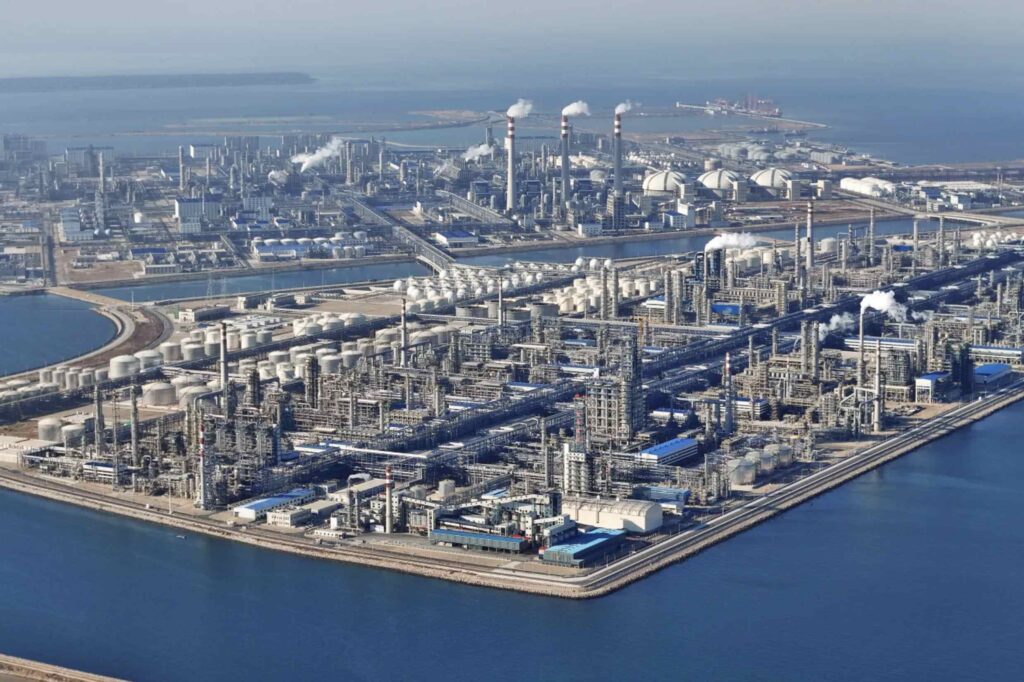
SP: Just going back to the point about bottlenecks: they’re not about total supply and demand. They’re about particular types of particular energy carriers in particular places. And the very rapid increase in gas prices in the last week, in contrast to the not very dramatic increase in oil prices, is a case in point, because of the really important role of Qatar: the European powers are trying to make it look as though they’re not reliant on Russian gas (although one can be cynical about what that means with the import of Russian LNG into Europe), but a couple of drones are flown to Qatar, and the price leaps up.
AH: I think that’s true. Again, it points to the need to think about these energy sources across the whole value chain and also globally. Where are they refined, processed, transported regionally and globally? I think we do have a tendency to look for a quick fix in terms of strategic thinking to identify so-called choke points. And I think you’re right: these things are often presented too simplistically, there needs to be bigger mapping – also, of how prices are formed. There’s a lot of misconception, for example, about oil, that the price is simply to do with supply and demand. The oil price is determined in financial markets, and it has a lot to do with speculation by the players in those financial markets about future conditions of prices. That might well be connected to supply and demand or speculation about geopolitical conflicts, but it can’t be reduced to that.
SP: That relates to the issue of retail prices of electricity and gas in Europe. 2022 was a big lesson, in that they’re set by all sorts of factors. The war in Ukraine was used as a cover for a fantastic amount of profiteering, particularly by electricity companies. It’s a political issue, which is right in front of us. Because it affects working class people in Europe, particularly in terms of their household budgets.
AH: Also in the UK: the same discussions are going on at the moment about electricity prices in the UK.
DG: You argue in your book that oil companies have moved away from denying climate science, and formulated a strategy to deal with the climate crisis, based on false solutions such as EVs, hydrogen, bioenergy and, centrally, carbon capture. Where is this going, and how can it be challenged?
AH: The strategies proposed by the major oil companies, whether they be the Western oil majors or national oil companies, like Saudi Aramco in the Gulf, are not about addressing the climate emergency, but actually about allowing for the increased expansion of fossil fuel production and consumption. The main elements of these strategies, such as carbon capture, the focus on electric vehicles (EVs), the focus on hydrogen – which many people argue is a Trojan horse for natural gas expansion – are technical solutions, that don’t deal with the fundamental problems of how oil and gas are connected to capitalism and the capitalist expansion. It’s a way of deflecting and appearing to be dealing with the problem, but not dealing with it in actuality.
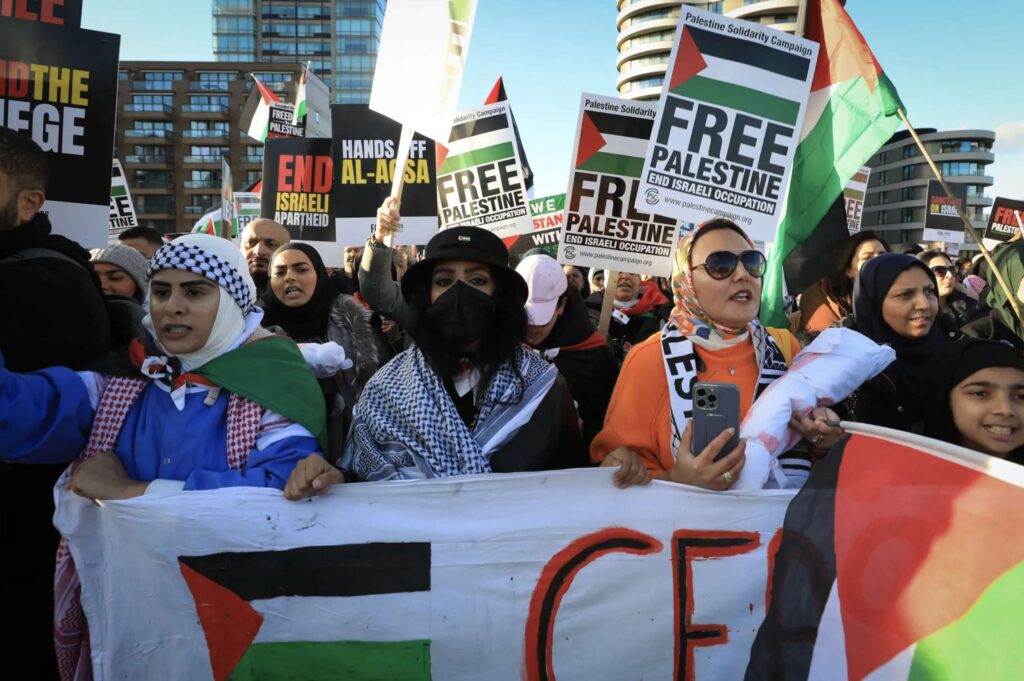
DG: In 2021, you published a politico-economic analysis of state formation in Palestine. The war that began in 2023 has certainly changed the balance of forces that constitute it. Today, after a number of Western states formally recognised the Palestinian state, what social classes does it rely on?
AH: I think this discussion around statehood is one that’s very dangerous for the Palestinian movement. Historically, the promise of statehood is illusory. It’s something that’s promised in return for deepening Israeli colonialism and the fracturing of the Palestinian political movements. We saw that clearly with the Oslo Accords, where it was framed as a step towards a Palestinian state in the 1990s. But actually Oslo narrowed the political vision of the Palestinian movement to barter over slivers of land in the West Bank. It separated out the question of Palestinian citizens of Israel, the Palestinian refugees, and also Gaza and the West Bank. These were all divorced, and brought out of the Palestinian movement. And similarly, today, we see Western states like the UK, for instance, recognising or promising to recognise a Palestinian state, but at the same time, arming and abetting the genocide in Gaza. That’s exactly what the British did. They continued to export military weapons and support the genocide in all sorts of ways, while at the same time, promising to support Palestinian statehood. So that’s why it’s very dangerous to fall into this political trap.
As for the bigger question you ask about the political economy and class dynamics in Palestine, what Oslo did, and what we see at play today, is the creation of the Palestinian Authority, which was formed in 1994 out of the Oslo agreements. The PA became a representative of Palestinian capital based in the West Bank, but its accumulation roots were much wider: the Palestinian capitalist class is very deeply connected to the Gulf states, in particular. The creation of the PA set up a body within the Palestinian political movement that would essentially act as a subcontractor of Israeli military occupation, and also act as a green light for the normalisation of Israel into the wider regional economy, as we spoke about earlier.
Understanding these internal social and political and economic dynamics is really central, I think, to understanding what’s going on in Palestine and the problems with the statehood narrative.
SP: For decades, we’ve talked about the one state solution, the two state solution. And when I hear these conversations, I think, what sense can we get from them? Clearly, Netanyahu has done everything to block off any prospect of a two state solution. And that goes absolutely with what you’ve said. And it’s a very grim perspective. The politics of solidarity organisations here in the UK have been very much focused on stopping the arms supply and so on, quite rightly. That’s the practical focus. But is there something we should be talking about politically that we’re not?
AH: I agree with you, in the sense that very often parts of the Left fixate on this question of what form of statehood are we talking about – one state, two state, what does that mean in practice, what kind of one state, who does it include, and so on. And the problem is that these are abstract discussions, very often they take place without Palestinians, actually, and there’s no meaningful political movement attached to them. I think these strategic questions will emerge as part of rebuilding the Palestinian political movement, and the solidarity movement as part of that. We can see clearly around the boycott-divestment-sanctions (BDS) demands, which are formulated to take into account the different sections of the Palestinian people, including Palestinian citizens of Israel and Palestinian refugees around the right of return. I think those broader political demands lay the ground for talking about what kind of end state we might arrive at, and so it’s really important to focus on those questions.
DG: Speaking of statehood demands, the Kurdish statehood agenda and Kurdish political movements were very popular among the progressive public a while ago. Now this has been a bit forgotten in the West, but the movements exist, in different shapes, across the territories of four states. The issue of achieving an independent statehood has been obviously very high on the agenda, especially in Syria and Turkey.
AH: It’s important that the Left recognize and support the Kurdish struggle. Historically, mainstream Arab nationalism has been very damaging because of its lack of support for the struggle of national and ethnic minorities, such as the Kurdish people. And one of the consequences of that is that it has opened the space for American imperialism, and Israel, to instrumentalise the Kurdish struggle. And we, unfortunately, see this attempt very clearly with the discussions of trying to arm Kurdish militias against the Iranian regime by the Americans and by the Israelis.
We need to take those struggles of the Kurdish people seriously, support the Kurdish people, learn the histories and debates of the different movements, and recognise this danger presented by American imperialism, which will not lead to any kind of self-determination of the Kurdish people. That’s been demonstrated time and time again in the last 20 years.
DG: How should this and other political movements we sympathise with build their eventual energy strategy? What might a progressive regime’s stance towards fossil fuels look like?
The deepening climate emergency means that we need to put upfront the question of the climate and the urgent need to move away from fossil fuels. The Middle East is absolutely key to this because it sits at the centre of the world oil and gas industry, particularly in relation to global exports. The politics of the region – from Palestine to Iran – cannot be understood separate from this role of the Middle East in the global energy system. It is imperative that we continually make the point: to support and fight for economic and political liberation and justice in the region is, at heart, also a climate question.
We recorded this interview on 5 March.