Victor Serge said of Ukraine that: “Nowhere else in Russia would the civil war be so hot and fierce as in the Ukraine, where fourteen governments replaced one another within four years.”1 Serge, Victor 2015, Year One of the Russian Revolution, Haymarket Books, p. 384. Soviet power was established on three separate occasions, but the first two attempts collapsed within months. First from German invasion in spring 1918,2 Borys, Jurij 1980, The Sovietisation of Ukraine 1917-1923, The Canadian Institute of Ukrainian Studies, p. 147. and in the second instance from White Armies in early 1919.3 Sullivant, Robert S. 1962, Soviet Politics and the Ukraine, Columbia University Press, p. 50. Even following the third and final seizure of soviet power in early 1920, for months and even years Ukraine was beset by the military threats both internal and external.
Along with the instability at the top of society, Ukraine also never developed a unified Bolshevik Party until as late as July 1918.4 Borys 1980, p. 139. And due to the repeated defeats and dissolution of Party leadership and structures it existed largely as disconnected local organisations up till 1920.5 Sullivant 1962, pp.51-53; Borys 1980, p. 134; Četverta konferencija Komunistyčnoji partiji (bilʹšovykiv) Ukrajiny [ČkKp(b)U] 2003, V. S. Lozntsky, O. V. Bazhan, V. M. Mazur, T. V. Portnova (eds.), Київ Видавничий дім «Альтернативи», pp. 59, 61, 67. The Party was also forced to send most of its members into the army, sapping it of civilian influence, see: ČkKp(b)U 2003, p. 59. At this point, the Party held its Fourth Conference to consolidate its forces and develop a perspective towards ruling Ukraine. The leadership sought a business-like and unifying conference but were instead confronted with harsh criticism and almost entirely lost control of the Party to the Decists; a roughly aligned collection of left oppositionists.
The Decists most notably won the Central Committee (CC) of the Ukrainian Party and a decisive vote on the question of economic reconstruction against Stalin as a representative for the Russian leadership. Though the CC would be dissolved by the Russian leadership the very next day, this marked a high point for the Decist faction and left-wing opposition in the Bolsheviks generally. However, there is much controversy surrounding the Conference, and the role of the Decists in Ukraine has never been systematically analysed. This article will explore both these questions and share an interesting episode in the early history of the Bolshevik Party in power.
The Decists
The Democratic Centralists, or Decists, were a left-wing opposition group within the Bolsheviks who consistently fought against the rise of bureaucratism within the Party and Soviets. They were active to varying levels of legality from late-1919 until many of the leaders were put to death in Stalin’s camps in the ‘30s. In their early period of open activity as a recognised faction of the Party in 1919-1921, the outstanding figure was Timofei Sapronov.
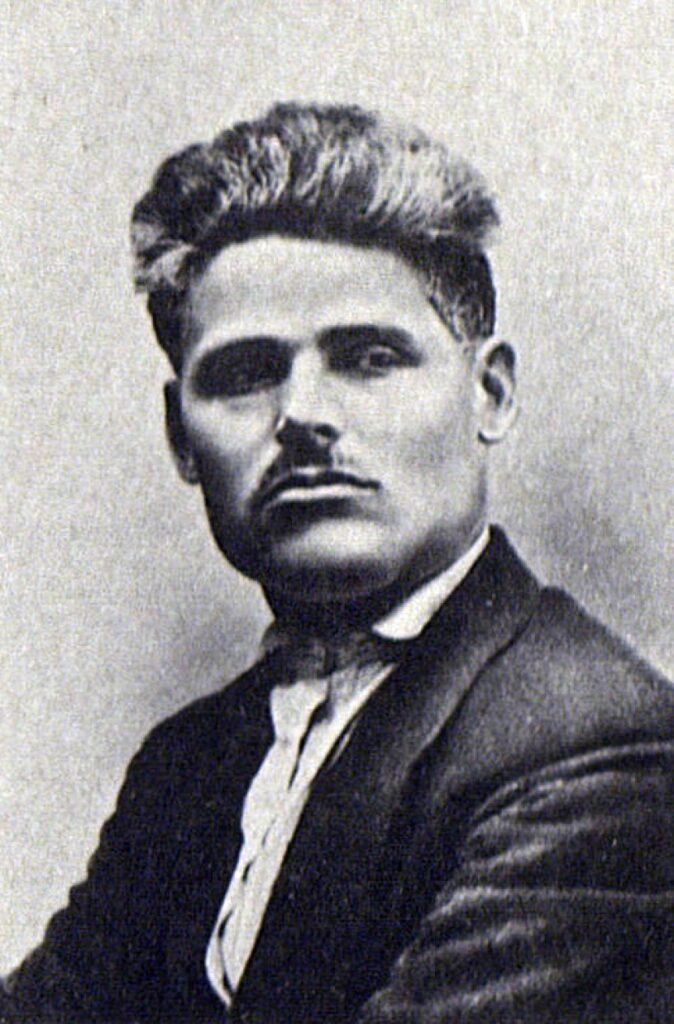
Sapronov was a leading local Bolshevik organiser and had waged a successful campaign against the Party leadership to win both the Eighth Party Conference and Seventh Congress of Soviets to the positions of the Decists on Soviet construction in late 1919.6 Rabinowitch, Alexander 2026, The Bolsheviks Survive, University of Pittsburgh Press, p. 244-247. This chiefly involved passing a resolution which criticised “significant structural and operational shortcomings of the Soviet-controlled nationwide governmental system embodied in the first (1918) Soviet constitution.”7 Ibid., p. 244. It also committed the Soviets to ‘democratic centralism’ as their method of organising and distributing power.
Democratic centralism had a long history in social democratic organising and was the idea that when decisions were made through internal democratic debates, they had to be carried to by all party members in their external activity. For Sapronov and the Decists, the term was invoked to reinvigorate internal Party life, but they also argued that it should be applied as an organisational principle of the workers’ state. Basically, the Soviets should be structured such that the local organisations had the maximum autonomy in solving their own issues and carrying out directives from above and that the highest central bodies not simply dictate demands through various branches of government.
Their victory at the Seventh Soviet Congress resulted in Sapronov and several of his co-thinkers being sent to the Ukraine branch of the Party just a few months before the opening of the Fourth Party Conference.8 Borys 1980, p. 155. Though this was something of a punishment,9 Sapronov was sent against his will, see: ČkKp(b)U 2003, p. 266. it was a part of a broader effort to bolster the Bolsheviks in Ukraine to which Sapronov’s organising skills would be essential.10 Sullivant 1962, p. 56; Borys 1980, p. 253. Sapronov was made Chairman of the Kharkiv Regional Executive Committee, which had always been the most numerous and revolutionary branch of the organisation.11 Borys 1980, p. 144. He set out recruiting workers to the Party but also sought to continue to grow support for the Decists.12 ČkKp(b)U 2003, p. 107; Daniels, R. V. 1960, The Conscience of the Revolution, Harvard University Press, p. 102.
Before this point, the Decists were almost exclusively based around Moscow Party officials, but Sapronov had no trouble connecting with local Ukraine leaders such as Rafail Farbman and Yakov Drobnis.13 Rafail was a leading member of the Ukraine Party and member of the Central Committee elected at the First Congress of the CP(b)U, see: Borys 1980, p. 149. Drobnis was added after the Second Congress, see: Ibid., p. 151. Other Ukrainians who would later become Decists leaders included Taras Kharchenko, Mikhail Boguslavsky and Isaak Dashkovsky. They and others had similar backgrounds to the Moscow Decists, as many had also been involved in the previous left opposition groups such as the Left Communist opposition to the Brest-Litovsk Peace.14 Kowaleski 2022, “For the Independence of Soviet Ukraine”, in Historical Materialism, 12 March (blog), https://www.historicalmaterialism.org/for-the-independence-of-soviet-ukraine/. Many were also involved in the Military Opposition, as alleged by their one of their opponents at the Fourth Conference, see: ČkKp(b)U 2003, p. 247. Because of the trouble the Ukrainian Left Communists had caused to the Russian Party leadership, Joseph Stalin was elected as a permanent member of the Ukrainian CC in October 1918.15 Sullivant 1962, p. 43.
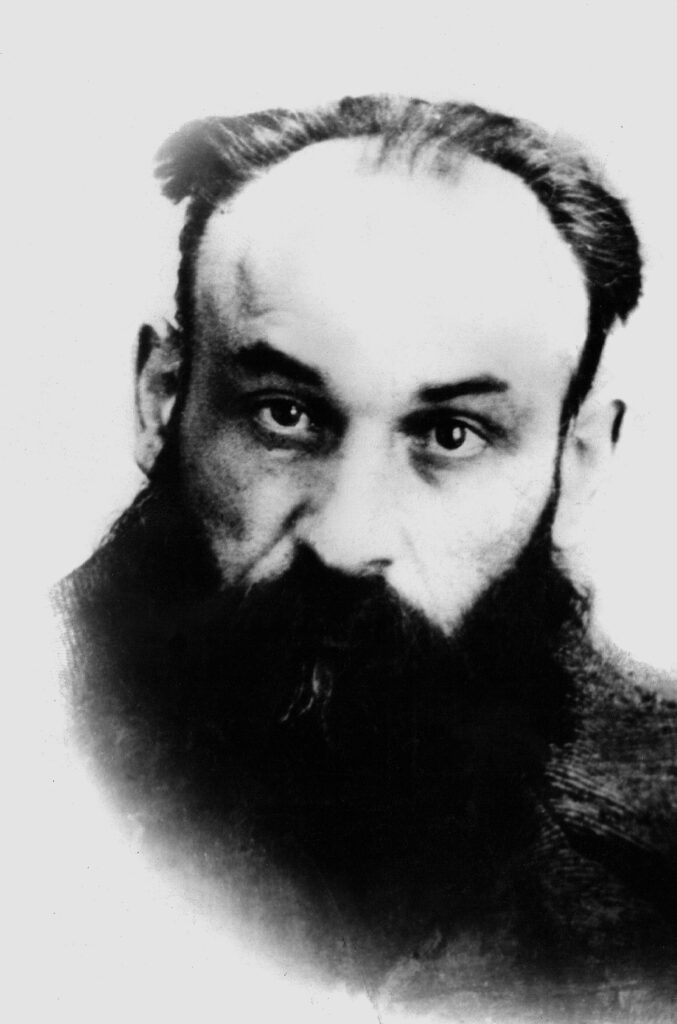
With his organising expertise, some allies from Moscow, and political connections with Ukrainian leaders, Sapronov and the Decists dominated several local Party conferences and went into the all-Ukrainian Fourth Conference with support of about half the delegates.
Fourth Conference of the CP(b)U
The Ukrainian Bolshevik Party’s Fourth Conference ran from the 17th-23rd of March 1920 and was the first all-Ukrainian meeting since the Party had emerged from the underground and exile for the third and final time.16 Sullivant 1962, p. 56. But rather than unifying, the Conference was instead marred by divisive factional infighting between the Decists and the old leadership backed up by Moscow, with Stalin as their physical representative. The mood was tense almost throughout, and the Conference “turned into a continuous uproar” at any point of controversy.17 Borys 1980, p. 155. There were certain issues which were dealt with in a purely business-like fashion, such as on the food question.
The atmosphere was a product of widespread dissatisfaction with the previous leadership and Christian Rakovsky in particular.18 Sullivant 1962, pp. 56-57; ČkKp(b)U 2003, pp. 10-11, 26. The most common charge was the Party leadership in the form of the Central Committee not meaningfully existing, and fleeing to Moscow rather than going underground in Ukraine, see: Borys 1980, p. 155; ČkKp(b)U 2003, pp. 71-72. Rakovsky was a member of the Politburo and Chairman of the Ukrainian Soviet Republic. Though a more hostile account of the episode blamed the Decists as having created the divisive atmosphere,19 ČkKp(b)U 2003, pp. 18-19. it is clear that they instead took advantage of the opening and “mastered the situation completely”.20 Borys 1980, p. 156. In the opening sessions, Sapronov succeeded in passing a motion critical of Rakovsky’s CC and drew the battle lines for the following days.21 ČkKp(b)U 2003, pp. 111, 240, 443.
But the Decists weren’t always on the front foot, and the hostile mood was often incited against them. Rakovsky and his supported did all they could to turn the tide in their favour, including laying responsibility on Rafail’s shoulders for the work of the CC in the preceding year,22 Ibid., p. 122. But it seems that his role was mostly technical and related to managing the meagre connections the Party had while underground and could hardly be blamed for the CC’s general absence, see: Ibid., pp. 126-127. and blaming Sapronov and the Decists the factional atmosphere. Kolbrai, an ally of Rakovsky bemoaned:
“I am deeply disturbed and deeply offended by what I am seeing at this conference. The formation of factions, all sorts of underhanded tricks”.23 Ibid., p. 323.
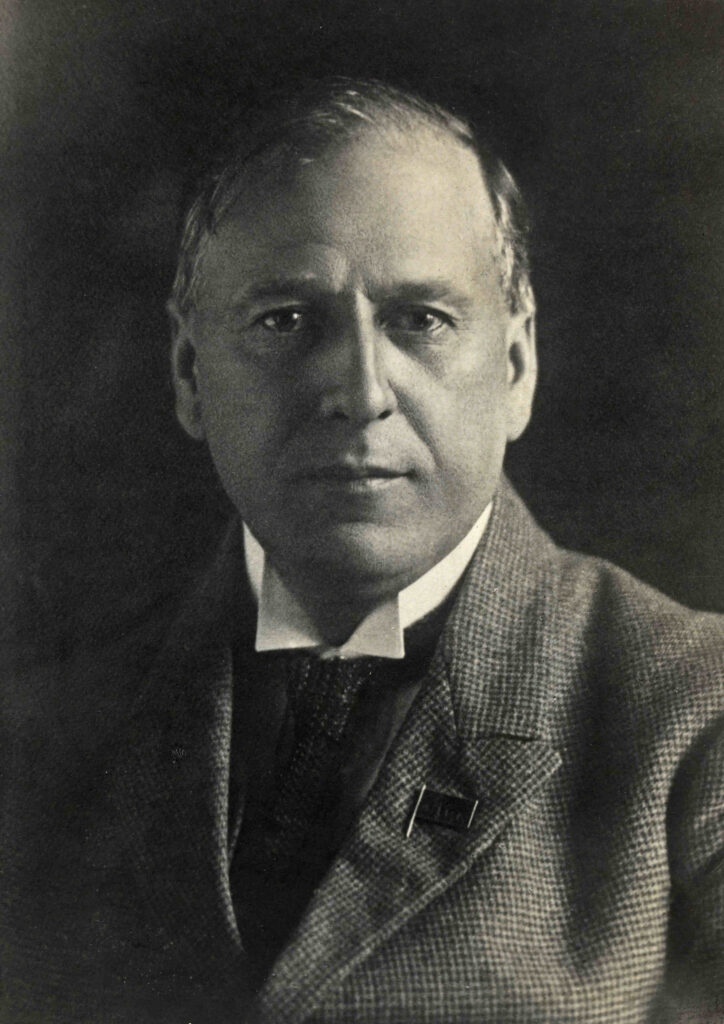
At the beginning of the Conference, the Presidium was elected unopposed and was dominated by Decists,24 Ibid., pp. 42-42, 46. but due to constant heckling from both sides it failed to maintain the confidence of the delegates and was disbanded on the second to final day.25 Ibid., pp. 373-374. Stalin led the replacement Presidium and managed much better control of proceedings.26 Ibid., p. 421. Prior, however, there was general clamour throughout27 Ibid., pp. 275, 319, 321, 323. and reports of impropriety.28 Ibid., pp. 313, 315, 316-317, 318, 323. Though the most instructive cause for disbanding the Presidium came from Rakovsky:
“Such a presidium terrorizes the delegates. This is not a presidium; it is the Kharkiv and Poltava party groups, who, having taken control of the presidium, want to impose their will and direct the conduct of the conference.”29 Ibid., p. 367.
Kharkiv was the base of support of Sapronov, and Poltava was Drobnis’ – throughout the Conference Rakovsky’s side argued that the Decist delegates were hijacking the Conference to push their political agenda. Specifically, they argued that the Kharkiv delegation was overly represented relative to their membership and on this basis their credentials were called into question. The Kharkiv district had 64 delegates out of 260, which was by far the highest of any electorate, but not especially surprising considering the history of the region as one of the few areas of the country where Bolshevik’s held on to their organisation.30 Borys 1980, p. 144. It was also a major industrial region, see: Allen, Barabara C. 2020, “The Workers’ Opposition in Ukraine, 1920s-1930s”, Historical Materialism, 4 July (blog), https://www.historicalmaterialism.org/the-workers-opposition-in-ukraine-1920s1930s/. Although this point was contested during the Conference, see: ČkKp(b)U 2003, pp. 43, 81. Robert Daniels attributed great importance to “Sapronov’s Kharkiv Steamroller” which allowed the leftists to win “all the important votes at the conference”.31 Daniels 1960, p. 102. But even if he held Kharkiv’s 64 delegates together Sapronov still needed a good many more votes for a majority, and in fact on a few debates they were defeated, as will be shown.
The issue that Rakovsky and his supporters latched on to was that the Kharkiv organisation ran a ‘party week’ shortly before the Conference. This was a typical event whereby the Bolshevik Party opened its ranks to new admissions, but the argument went that it happened too recently for these members to be vetted.32 Rakovsky’s final attack on these lines was a motion signed by 116 delegates, but Stalin dismissed it, see: ČkKp(b)U 2003, pp. 377, 472. There were three sets of membership numbers which were used by either side to defend or attack the Kharkiv organisation,33 The Kharkiv City Party Committee reported a total number of 8,000 members, with 6,400 confirmed by the time nominations were made for the Conference, see: Ibid., p. 189. A hostile motion from Rakovsky alleged that the party week brought in 4,250 of Kharkiv’s 5,196 members, see: Ibid., p. 377. The Credentials Committee report stated that Kharkiv had approved 6,880 members by March 1st, see: Ibid., p. 315. but the Conference Credentials Committee’s ruling was quite clear that Kharkiv’s delegation was correct.34 Ibid., pp. 312-321. The Committee was not stacked with Kharkiv delegates and there is no reason to doubt their ruling, see: Ibid., pp. 312, 320. Additionally, the rate at which Kharkiv Party members re-registered following the Conference was totally ordinary, see: Ibid., p. 22.
Nonetheless, when the All-Russian CC explained to the Ukraine Party their decision to dissolve of the Decist-dominated Ukrainian CC, they cited the ‘party week’ controversy as part of their justification and produced a fourth set of figures for Party membership over the period.35 Ibid., pp. 475-478. Though this aspect of the justification was “nasty twaddle”,36 Service, Robert 1979, The Bolshevik Party in Revolution, Macmillan Press, p. 128. in the words of Robert Service, the Russian leadership had good reason to dissolve the CC; it very clearly did not represent the majority of the Ukraine Party and would be unable to properly lead. Due to the factional nature of the Conference a mere 112 delegates voted for the Decists list to the CC, and a majority actively boycotted voting.37 ČkKp(b)U 2003, pp. 437-440. However, it must be stated that it was highly unlikely that Lenin and the Bolshevik CC would have done so if it were their supporters who won out at the Conference, and despite indicating to the contrary, no Decist leader was appointed to the new CC.38 Ibid., p. 476. They did not want to deal with a hostile leadership in Ukraine but had solid justification to disband them.
Politics of the Conference
The political debates at the conference were just as messy as the factional manoeuvrings. In fact, on many questions the factional divisions broke down. On the land question, which was the most important issue for domestic politics as it dealt with how to relate to the majority of Ukraine’s population, there were at least four distinct points of view.39 Ibid., p. 347. The speaking list also had 60 delegates on it even after hours of debate, see: Ibid., p. 347. The major positions, as in many debates, were represented by Sapronov and Rakovsky. Rakovsky argued for organising landless and small-land holding peasants into what were called Kombeds to assist the Soviets in carrying out land reform,40 Ibid., p. 294. and was supported by one of Sapronov’s main allies – Rafail.41 Ibid., p. 335. Dashkovsky was also in support, although it’s unclear if he was even a Decist at this stage, see: Ibid., pp. 328-331. Sapronov rejected creating this new class organisation and instead argued to strengthen the rural Soviets and draw in the poor peasantry.42 Ibid., pp. 301, 326, 353 He was criticised repeatedly for a failure to appreciate Ukraine’s particularities, and Rakovsky’s position won the day.43 Ibid., p. 360. One particularly invective quote:
“the scheme over which Comrade Sapronov has labored so much—which he, with such tenacity undoubtedly worthy of better application, has tried to implement at several conferences over the course of a month—is untenable. In this regard, Comrade Sapronov is a schematist, detached from reality.”44 Ibid., p. 309.
Federalism, which had been a divisive issue for the Ukrainian Bolshevik’s since their founding,45 Borys 1980, pp. 87, 146. had by this point been fundamentally settled but was still the product of some controversy. The CC argued that Ukraine should be formally independent but with a close affiliation with the Russian state, and that the Ukrainian Party would be a subordinate section of the All-Russian.46 ČkKp(b)U 2003, pp. 129-133. The main opposition to this position came from the Decist Isaak Dashkovsky, who spoke from the far-left against the degree of national independence put forth by the leadership and was even opposed to the Ukraine Party having its own CC.47 Ibid., pp. 93, 134-136. Though the Decists were in the tradition of Left Communism and had a general hostility to national movements,48 Sullivant 1962, p. 56. Dashkovsky did not speak for the faction on this question and the resolution of the CC was adopted with only 2 votes against.49 ČkKp(b)U 2003, p. 145. Trotsky indicated that the CC’s theses on the Ukrainian national question was defeated, but he appears to be confusing it with the question on economic construction, see: Trotsky, Leon 1941, Stalin, Harper & Brothers, pp. 265-266.
In fact, Sapronov and Rafail expressed some leniency towards federalist sentiments in the Party. They were elected to a commission to decide the appropriate punishment for one Yurii Lapchynsky who had led a federalist push in the Party since a Conference in 1919.50 Borys 1980, pp. 154, 249-251; ČkKp(b)U 2003, pp. 35-38. They successfully convinced the Conference that Lapchynsky should not be expelled.51 ČkKp(b)U 2003, pp. 174-184, 471. Sapronov had defended this position since a Kharkiv Conference where he directly opposed the position of the CC which was for immediately expulsion.52 Ibid., pp. 29, 38. Although the political basis for his argument was not explicitly about the limits of acceptable Bolshevik opinion on the issue, but rather on basic democratic principles.53 Basically, Sapronov argued that Lapchynsky had received no warning and that it was unfair that he was personally targeted rather than the whole group, see: Ibid., pp. 173-174.
Economic Construction
The question of economic construction was the major debate engrossing the All-Russian Party following the end of the major period of Civil War in late 1919 and the widespread destruction of the economy.54 For some indication of the scale of the crisis in Ukraine, in 1917 it shipped out almost 2000 million kilograms of coal monthly, while just before the Conference the figure was roughly a mere 65 million kilograms. The trains also ran incredibly infrequently, and grain production was reported as so startlingly low that one cannot even believe the figure given by Stalin, see: Ibid., p. 30. The Russian CC proposed a set of theses which called for replacing management of industry by collegiality with single managers.55 Ibid., p. 455. Interestingly, after Lapchynsky left the Bolsheviks, he made Sapronov-style arguments on the nature of soviet power at a non-Bolshevik, communist, conference. It was suggested by a contemporary that the two had some kind of political relationship, see: Maistrenko, Ivan 1985, Istorija moho pokolinnja, Canadian Institute of Ukrainian Studies, pp. 157-158. Simply put, collegiality meant that decisions were to be made by a team consisting of a Bolshevik, a specialist or technician of some kind, and a worker.56 ČkKp(b)U 2003, p. 248.
Sapronov identified it as the main issue the Decists would take a stand on at the Ninth Congress of the Bolshevik Party which opened just a week after the Ukrainian Conference. He was therefore concerned with getting oppositionist delegates elected from Ukraine to support his view, of which the Decists received an equal split of the 26 delegates with supporters of the Russian leadership.57 Ibid., p. 437. But Sapronov also fought to win the debate at the Ukraine Conference, which was primarily between himself for the Decists and Stalin for the CC.
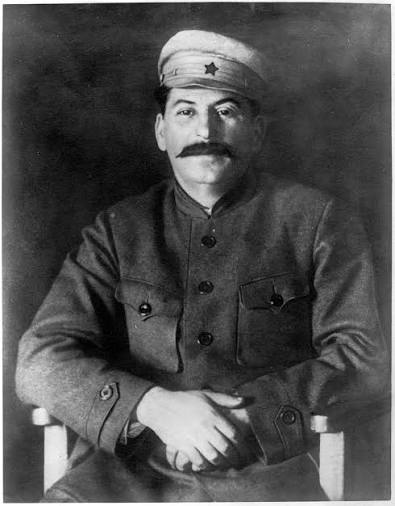
The theses of the CC called for the military methods which had found so much success in the Red Army to be applied to the economy. From the theses:
“Collectivity, insofar as it exists in the process of discussion or decision making, must unquestionably give way to a single chain of command in the process of execution.”58 Ibid., p. 460.
But Stalin sensed the hostility of the Conference and attempted to mediate the position of the CC:
“I know workers there who can manage the mines better than the directors. Where there are no such workers, management must be entrusted to a specialist, provided he is proven and will not let us down; and where there is neither an experienced specialist nor a worker capable of assuming the duties of a director, there remains only one option—a collegial body …
Obviously, collegiality is not a principle; here the question is one of expediency—where it is better, where it is more advantageous. If collegiality is more suitable, then let it remain. The whole point is that collegiality is not denied in the resolution as a task for the present moment.”59 Ibid., p. 272.
Rakovsky, who argued in support of the CC, made clear that the theses were not about taking steps towards socialism, but taking expedient measures towards rebuilding a destroyed economy:
“Everything proposed here as measures to boost industry would be a mistake to consider socialist construction; no, comrades, I do not think that the Central Committee of the Communist Party of Ukraine could see a socialist constitution in a socialist state here.”60 Ibid., p. 256.
The Decists attacked the CC for attempting to crudely impose military methods into the economy, but they weren’t opposed to the notion of militarisation in general, taking it to mean an increase in discipline, organisation, and self-sacrifice.61 Ibid., pp. 232, 235, 267. Their theses emphasised that they were following the provisions of the Seventh Congress of Soviets and democratic centralism.62 Ibid., pp. 467-468. This meant for them a commitment to collegiality as the “guiding principle in the construction of the governing bodies of the socialist republic”.63 Ibid., p. 469.
Though there was some confusion between Sapronov and others who argued for collegiality on to the extent to which collegiality had anything to do with socialism. The theses themselves were clear that “during the transitional period of the proletarian dictatorship, participation in the collegium is a necessary stage of learning the art of governance.”64 Ibid., p. 469.
The Decists argued that this had the advantages of controlling the specialist who typically came from hostile class backgrounds while also bringing in the initiative of the mass of workers to combat bureaucratism.65 Ibid., p. 234. For Sapronov, collegiality was “the form that prevents one from becoming a bureaucrat.”66 Ibid., p. 266.
Collegiality was attacked primarily for standing in the way of the efficient rebuilding of the economy and for defending individual and professional self-interest67 Ibid., p. 258. while pretending to speak for the average workers. Stalin argued that: “Comrade Sapronov is imitating the voices of the weary. I have not heard the true voices of the weary.”68 Ibid., p. 271. The Decists were ridiculed for making a principle of something as narrow as collegiality:
“Are the collegial bodies of 3–5 people advocated by Comrade Sapronov the means by which workers are drawn into production? Is the elevation of a workers’ aristocracy—the elevation of a certain circle of workers to govern all workers—this means?”69 Ibid., p. 252.
Despite this, a serious blow was dealt to Stalin and the CC as the Decists theses were adopted by a vote of 138 to 87.70 Ibid., p. 430. In closing the Conference, Stalin had this to say:
“Of the substantive issues discussed here, the most important one is the question of economic development. You know what a struggle it was. … I believe that what was adopted by the conference as a basis—and what will still be discussed at the Party Congress— constitutes a major, serious mistake.”71 Ibid., p. 440.
Aftermath
The Decists took their victory in Ukraine to the Ninth Party Congress but were soundly defeated and failed to slow the introduction of one-man management into the economy.72 Pirani, Simon 2008, The Russian Revolution in Retreat, 1920–24, Routledge, p. 57. Additionally, following their defiance many Decist leaders were sent away from Ukraine to work in Russia.73 Daniels 1960, p. 103; Borys 1980, pp. 157-158; ČkKp(b)U 2003, p. 21. Although, Rafail and Drobnis were elected to represent Ukraine as Decists up to the Tenth Party Congress in 1921.
Opposition resprouted in the Ukraine Party in the form of the Workers’ Opposition,74 Allen 2020. but “never again were Ukrainian Bolsheviks to challenge so openly and so forcefully central direction of Party affairs.”75 Sullivant 1962, p. 59. The Decists intervention into the Ukrainian Party led to one of the last major victories for left-wing opposition in the Bolshevik Party, but it was the product of the particular circumstances in Ukraine and was never replicated anywhere else.
The Conference was messy, dramatic, and often uncomradely. But speakers were never prevented from presenting their case.76 With one exception being Lapchynsky, whose position on federalism was deemed to be beyond the acceptable scope of Party opinion. The debates were thorough and complex, and there was an effort by all participants to take serious steps forward.
In this way, the debates of the Fourth Conference and the intervention of the Decists are an important corrective to the view that the Ukraine Bolshevik Party was a mere puppet of the All-Russian – that they not only failed to attend to Ukraine’s particulars but were in fact a tool for imperialist extraction. Though this was certainly true once Stalin took power, in the early 1920’s the Party clearly had a life of its own, with many independently minded local leaders willing to oppose or even stand with the Russian leadership depending on the issue.
Finally, it’s important to stress that the Decists did not offer a fundamentally different prospect for the Russian or even Ukrainian Revolution.77 At the Ninth Congress they did not even counterpose their economic theses to the CC but instead offered them as amendments. Instead, they represented a trend within the Party that sought to hold the Party as committed to socialist and working-class principles as was possible in a situation of retreat after retreat. Their role at the Fourth Conference is one episode in the long and valiant history of their fight against the bureaucratisation of the Party and internal counter-revolution.