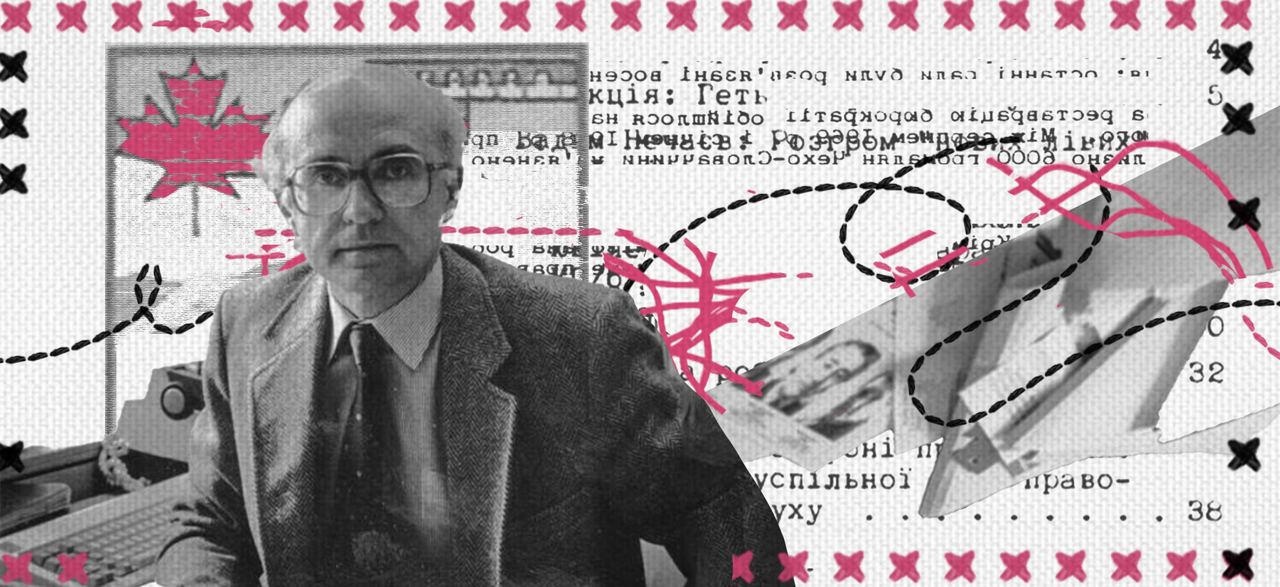
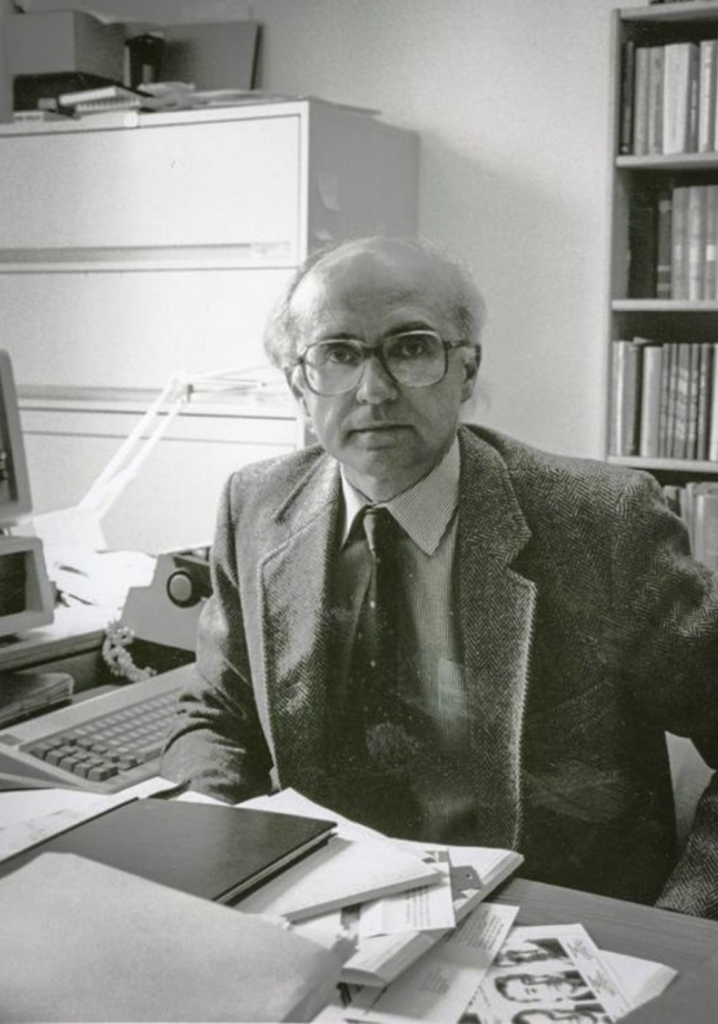
Bohdan Krawchenko is a social scientist of Ukrainian origin whose academic and intellectual biography spans Canada, the United Kingdom, Ukraine, and Kyrgyzstan. As a student, he was active in Canada’s left-wing student movement and helped organize its Ukrainian section. He later became involved with the British Marxist journal Critique and the Ukrainian diasporic magazine Diialoh (Dialog), both of which criticized the Soviet Union from a left perspective. He also played an important role in the development of Ukrainian Studies in Canada, notably as director of the Canadian Institute of Ukrainian Studies. After the collapse of the USSR, Krawchenko moved to Ukraine, where he worked on civil service reform, co-founded Osnovy Publishers (Osnovy) with Solomiia Pavlychko, and taught at the National University of Kyiv-Mohyla Academy. Since 2004, he has worked at the University of Central Asia in Kyrgyzstan. Spilne spoke with Bohdan Krawchenko about his eventful life journey—from a left-wing Canadian student of Ukrainian origin to academic and institutional work in Central Asia.
An Unusual Political Socialization in Canada
What led you to join the Ukrainian left in Canada?
I didn’t “join the Ukrainian left” in Canada, because at the time no such movement really existed. It emerged in the 1960s as part of a broader politicization of young people who were gathering around critical ideas. I was drawn to leftist views, and I began to formulate them earlier than other young Ukrainians from the postwar émigré community—partly because my own political socialization was somewhat atypical.
After the war, my parents moved from displaced persons camps in Germany to France, and later to Canada, settling in Montreal. Although my first language was French, I had to attend a school run by the Protestant School Board of Greater Montreal, because Quebec had a confessional education system. French-language schools were only for Catholics, and I was Orthodox. So I went to an elementary school where I was the only Christian in an entirely Jewish class. I celebrated Jewish holidays and sang along with everyone else: “Oy Chanukah, oy Chanukah, a yontif a sheiner.” Living in a Jewish neighborhood, I was a “shabbos goy”: I’d get twenty-five cents for dropping by Orthodox Jewish homes on Saturdays to do things like turn on the television so the men could watch football, or to buy them beer. And nobody ever commented on my name—Bohdan—even though for Jews from Eastern Europe it carried disturbing historical associations. From an early age, I developed an allergy to antisemitism.
After the war, around 250,000 Ukrainians found themselves in displaced persons camps (DP camps) in the American and British zones. Most came from western Ukraine; only about 60,000 were from central or eastern regions. The camps created ideal conditions for political mobilization. With little paid work available, people’s energy flowed into education, culture, religion, and political debate. The Bandera faction of the Organization of Ukrainian Nationalists (OUN-B)—with roughly 5,000 members in Germany—had the organizational cadres to campaign among the refugees and became the dominant political force. Around 35,000–40,000 DPs eventually settled in Canada, mainly in the urbanized part of southern Ontario, with a smaller number in Montreal. They formed a distinct group, separate from the 390,000 Ukrainians who had arrived in earlier waves of immigration and settled in the three Prairie provinces, where a more liberal and progressive political culture prevailed. In 1926, the first Ukrainian was elected to Parliament: Michael Luchkovich of Alberta, who spoke out against the Holodomor and helped found the Co-operative Commonwealth Federation (CCF), a social-democratic party in Canada. By contrast, the Bandera group brought a far-right integral nationalism into Canada.
By the way, since Russia’s full-scale invasion in 2022, roughly 300,000 Ukrainians have moved to Canada—by far the largest wave of immigration to date. As far as I know, its impact on the existing Ukrainian community hasn’t been studied in any serious way.
My parents were from eastern Ukraine: my father from Dnipropetrovsk, my mother from Berdiansk, and my brother was born in Donetsk. We belonged to a small group of skhidniaky (“Eastern Ukrainians”) who remained relatively separate for decades. Some Galicians criticized skhidniaky for not having shed “Soviet” views, for speaking Ukrainian “incorrectly,” for having a different sense of national identity—including a different pantheon of heroes—and for being critical of integral nationalism. And we were Orthodox. In Montreal, in the Rosemont neighborhood, there was a Ukrainian Orthodox church whose parishioners were mostly from the prewar immigrant wave. Across the street was a Ukrainian Greek Catholic church serving the nationalist community of postwar displaced persons. Half a kilometer away was another Orthodox church, founded by skhidniaky, where a political party created in the DP camps effectively set the tone. And there was almost no interaction between these communities.
The Ukrainian Revolutionary Democratic Party (URDP), founded and led by Ivan Bahrianyi, was the only significant political force among skhidniaky. The URDP’s position on Ukrainian independence differed fundamentally from that of the Bandera movement. The Banderites created the Anti-Bolshevik Bloc of Nations and hoped that conflict between the West and the USSR would lead to the collapse of the Soviet Union. Accordingly, they supported anti-communist regimes around the world—Franco in Spain, Pinochet, and others. The URDP, by contrast, believed that Ukraine would inevitably become independent, but that this would not happen under external pressure alone: it would also result from the internal disintegration of the Soviet system. They counted on a peaceful transformation of the USSR into a federation or confederation of free peoples, in which Ukraine could determine its own future.
My father became a hetmanite in the displaced persons camps. The hetmanites were a very small group focused on preserving the memory of Hetman Pavlo Skoropadskyi and promoting a state-centered tradition in Ukrainian political thought. They criticized the Central Rada for failing to create effective state institutions and an army, and they emphasized the role of elites on the path to independence. In Montreal’s hetmanite community, there were people with a certain charisma. Among them was Yurii Rusov, the son of Sofiia Rusova, who in 1917 had been a student delegate to the Central Rada. He was a well-known ichthyologist and worked at the Université de Montréal. Another was Captain Mykola Bazylevskyi from the Zaporozhian Cavalry Division of the UNR, formed in 1919—a unit of the army of the Ukrainian People’s Republic. They supported the ideas of Viacheslav Lypynskyi, and my father often quoted his Letters to Brothers-Farmers. Lypynskyi believed that the best way to unite the Ukrainian nation was through territorial patriotism. The Ukrainian liberation movement should not rely only on the intelligentsia, but also on industrial leaders, the military, and a strong middle peasantry. It was also crucial for building Ukrainian statehood to integrate into national identity those upper strata who had been denationalized. The only “political practice” of the hetmanite community was an annual “academy,” with long speeches about Skoropadskyi’s achievements. The concert part of the program was performed by my sister and me: she played the piano, and I played the violin.
My father disliked Dmytro Dontsov, the ideologue of integral nationalism. The Banderites supported him. Dontsov lived with Yurii Rusov’s sister in a small house in a little town north of Montreal. My father called him “an ideologue of racial hatred.” He believed that patriotism is not necessarily determined by language—Skoropadskyi spoke Russian (as did Dontsov’s partner)—but by devotion to Ukrainian statehood.
My father bought a farm southeast of Montreal, which effectively ended my direct contact with the Ukrainian community. I went to an English-language high school and integrated into an Anglo-Scottish environment, while the farmers around us were French Canadian. As the only Ukrainian, I was able to define my identity on my own terms.
My Ukrainian education continued on the farm as well—out in the fields during harvest, where my passionate father delivered tirades against The Black Council and Ivan Briukhovetsky; cursed the Swedes for failing to show up at the Battle of Poltava; analyzed in detail the mistakes of the Central Rada, and especially Volodymyr Vynnychenko’s inconsistency. And I began to argue with my father—especially about the potential of social movements.
In tenth grade, I won a provincial Rotary Club public-speaking competition with a speech about Ukraine, and the daily newspaper The Montreal Star wrote about it.
Student Political Life in Canada
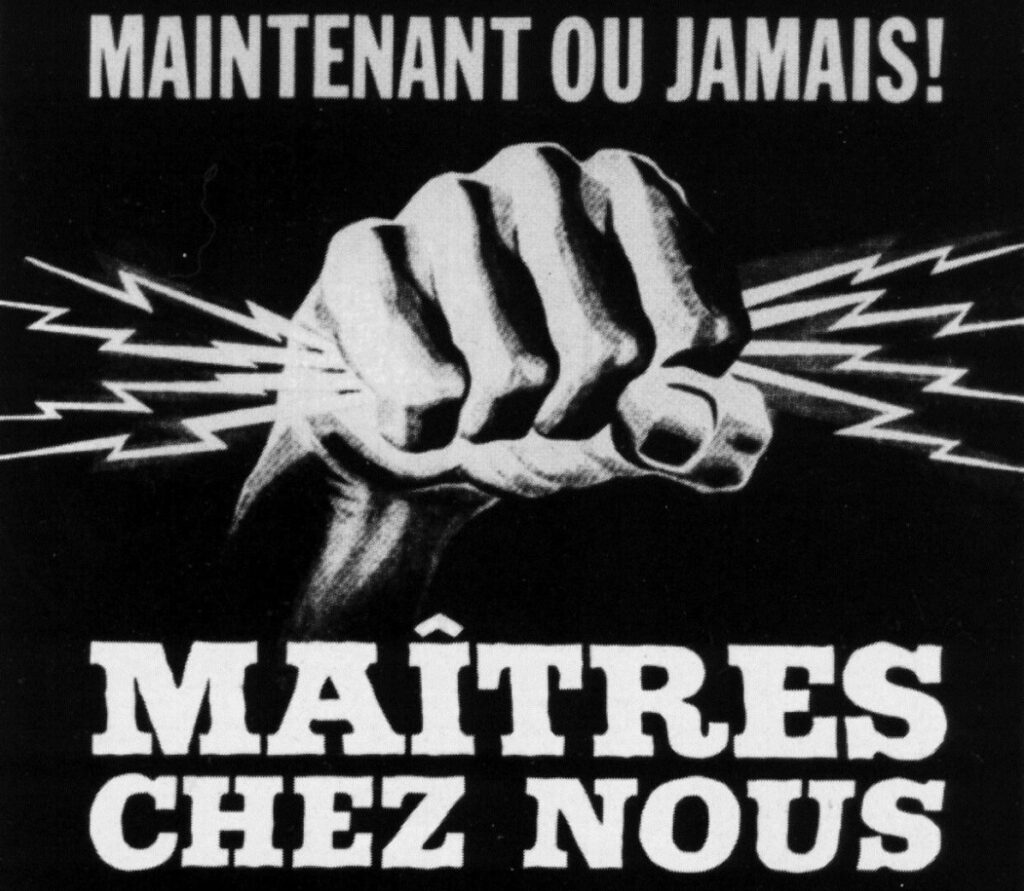
I became involved in student political life in Quebec. The 1960s in Quebec were the period of the Quiet Revolution and the Maîtres chez nous (“Masters in our own house”) movement, accompanied by mass popular mobilization. I enrolled at Bishop’s University—a small residential university in the Eastern Townships, historically connected to the Anglican Church—where the winds of 1960s student activism could be felt, if only faintly. I was the editor of the student weekly. We covered student protests across Canada and around the world. We tried to stir up this conservative, privileged “little Oxford,” where students wore academic gowns, and to make it wake up to the social realities of the 1960s—in Quebec in particular. We even tried (unsuccessfully) to affiliate the university’s student union with the Union générale des étudiants du Québec (UGEQ), an influential student federation inspired by syndicalism.
This university, founded in 1843—one of the oldest in Canada—had only 480 students, but it offered an excellent education in a close-knit setting and a lively cultural life, including a visiting theatre program. It was there that I received a solid grounding in philosophy and political theory and developed a deep interest in political sociology.
Although, like many other young Ukrainians, I was a patriot when it came to Ukraine, I lived under a kind of pessimistic cloud. Under the Soviet regime the population seemed paralyzed and inert. Russification was advancing relentlessly, and almost no one spoke Ukrainian on the streets of Kyiv. Yet with the arrival of the 1960s, a period of global change began, marked by the rise of social movements and political and cultural shifts. In Eastern Europe, hope was stirred by workers’ strikes in Poland, the Prague Spring of 1968, and student protests in Yugoslavia.
I had no real sense of what was happening in Ukraine. But when I saw Sergei Parajanov’s film Shadows of Forgotten Ancestors in a French-language cinema in Montreal, and then—in 1969—bought The Chornovil Papers, a translation of Viacheslav Chornovil’s Lykho z rozumu (Woe from Wit), which I read in one sitting on a park bench—this felt like a genuine flash of optimism. And in 1970, a British publisher brought out Ivan Dziuba’s Internationalism or Russification?
But how could one develop political practice in Canada? We always felt that the Ukrainian community had a special mission: to preserve identity and to keep the embers of independence alive. I decided to continue into graduate school and to use the academic environment as a platform for advocacy from the standpoint of the New Left—a term that was widely used in the 1960s and 1970s. I was planning to spend the summer at a cottage by a lake, working as a journalist at the Sherbrooke Daily Record.
But the organizers of the Ukrainian Canadian Students’ Union (SUSK) noticed me—Roman Serbyn, a university instructor in Montreal, and Roman Petryshyn, a civil servant at the Department of Citizenship in Toronto and a graduate student at Lakehead University. They felt my experience in student activism made me a good fit for the role of field coordinator they planned to hire for the summer. The job was to travel across Canada, energize Ukrainian students, and secure broad participation in an upcoming congress in Vancouver that was meant to define a new program for the organization.
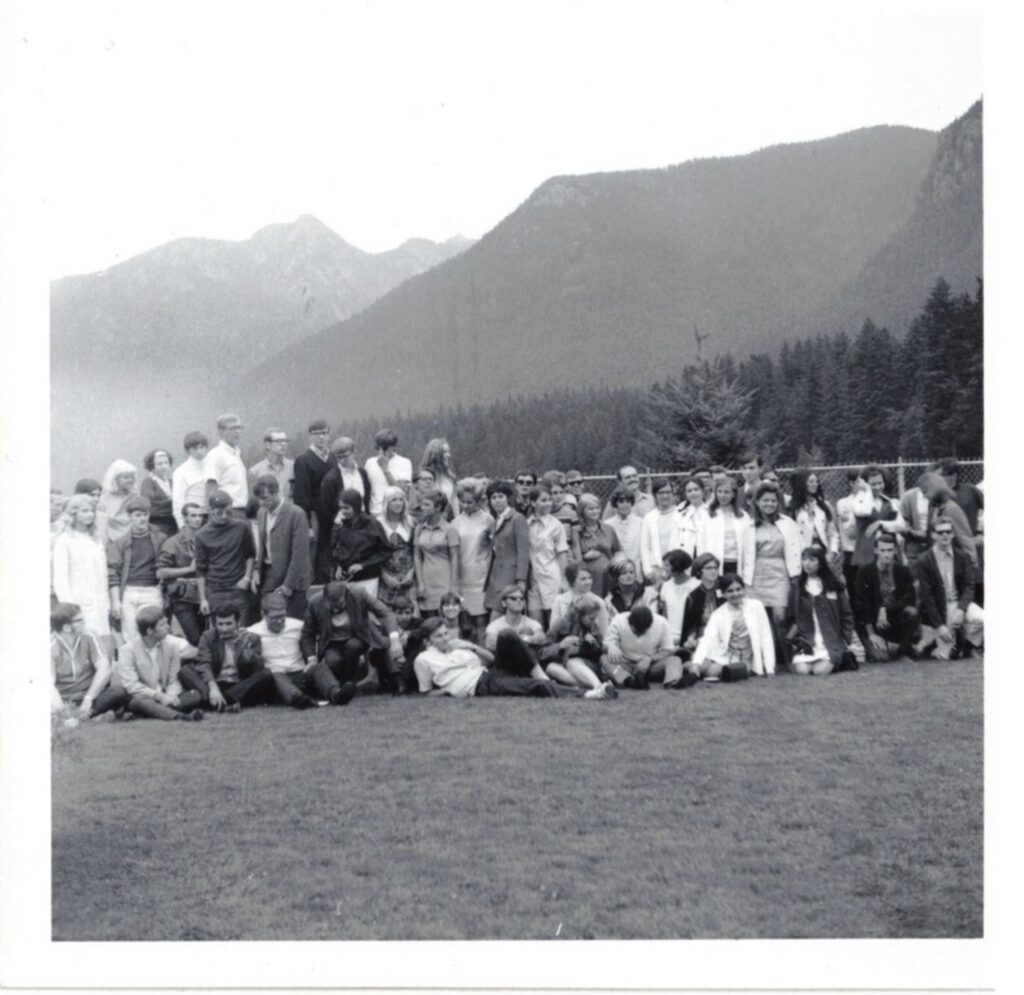
My mission became to criss-cross Canada, speaking to Ukrainian student clubs at universities, introducing them to the new agenda, and encouraging them to take part in the Vancouver congress—the gathering that would set a new direction for the SUSK. The 1969 Vancouver congress was a turning point. We discussed important issues facing ethnic groups in Canada in light of the federal government’s proposed policy. I organized a panel on contemporary student movements and invited Dimitrios Roussopoulos, an active political figure in Montreal and the founder of the journal Our Generation, to give a talk about the student movement and about how left ideas are part of the Ukrainian tradition. A small group of Bandera-aligned students were outraged that we had given the floor to this “leftist.” Despite that, I was elected president of SUSK.
A revitalized Ukrainian student organization began to take part in Canada’s political life. At the time, the Quebec sovereignty movement was challenging the country’s unity, and the federal government created the Royal Commission on Bilingualism and Biculturalism, which secured language rights for French-speaking communities across Canada. The Commission’s fourth volume focused on “ethnic groups” within a bicultural model (English or French). That framework assumed that ethnic groups would assimilate into one of the two dominant cultures—which was, in effect, a discriminatory concept. SUSK developed and actively promoted multiculturalism as an alternative. We mobilized students and the broader community—especially people from earlier waves of immigration—around this vision. The Ukrainian student organization played a significant role in multiculturalism being adopted as federal government policy, and later at the provincial level as well.
This movement inspired figures such as Manoly Lupul—a third-generation Ukrainian Canadian, a Harvard PhD, and a professor at the University of Alberta. With his participation, new Ukrainian Canadian institutions were created, including the Canadian Institute of Ukrainian Studies (CIUS) in Edmonton. During this period, bilingual Ukrainian schools were established in Alberta and Manitoba within the public education system. The community also organized Ukrainian social services and homes for seniors. Later, the Ukrainian left founded the Hromada housing cooperative in Edmonton—a lively housing project run by the cooperative’s own members.
SUSK also became involved in advocating for Soviet political prisoners. To do so, students set up a separate Committee for the Defence of Soviet Political Prisoners, one of whose leading participants was Marko Bojcun, who at the same time served as SUSK president. He later became a prominent left intellectual in the United Kingdom. This work required a clearly articulated position within democratic discourse, as well as the use of newer forms of protest—such as hunger strikes—to draw public attention.
The Ukrainian student movement in Canada was the result of changes in the community’s social structure. The 1950s brought greater prosperity, and the children of the postwar immigrant generation—especially girls—showed some of the highest university-enrolment rates. This major influx of university graduates not only entered a range of professions; many of them continued into graduate school. Some specialized in Ukrainian Studies and later obtained university teaching posts. One of SUSK’s tasks was to lobby for the expansion of university courses in Ukrainian Studies across different fields.
Who did you connect with in the Ukrainian left during your student years?
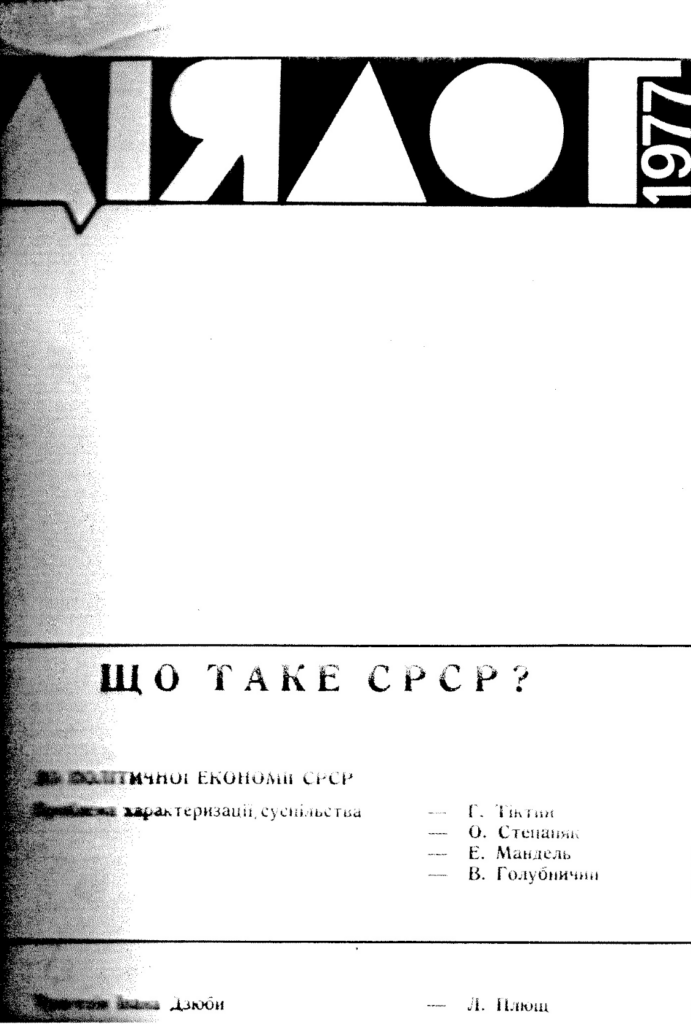
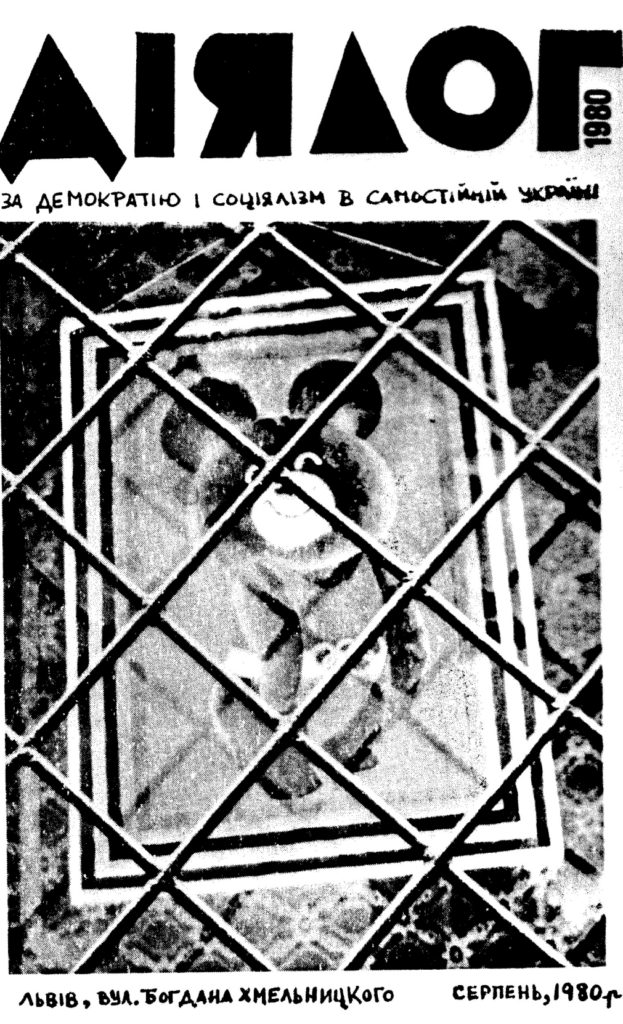
A small Ukrainian left emerged out of the student movement and coalesced around Diialoh (Dialog), which was published from 1977 to 1987. We tried to smuggle it into Ukraine. With our own distinct identity, we were able to act as a group. The most important figures for us were former members of the Vpered group, which had emerged as a left current within the Ukrainian Revolutionary Democratic Party (URDP). We kept in touch with its participants: Vsevolod Holubnychy (an economist), Ivan Maistrenko (a former Borotbist), Hryhorii Kostiuk (a literary critic), Borys Levytsky (a political scientist), and Roman Paladiichuk—a businessman, a former journalist, and a follower of Ivan-Tadei Mitrynga, who broke with the Bandera faction of the OUN and argued for ethical and humanistic values. The Vpered group later formally dissolved and passed the torch to Diialoh. We also met with Bohdan Fedenko, the son of Panas Fedenko, who had founded the Ukrainian Socialist Party, which belonged to the Socialist International.
I also met Nick Oliynyk, who had once been a member of a Ukrainian communist group in Canada but broke with it in order to support Trotsky’s opposition to Stalin. He persuaded Trotsky to call for an “independent, socialist Ukraine” in his 1939 article “The Ukrainian Question.”
When I was working at the Canadian Institute of Ukrainian Studies (CIUS), we published Ivan Maistrenko’s History of My Generation; and, posthumously, Soviet Regional Economics: Selected Works of Vsevolod Holubnychy; as well as Hryhorii Kostiuk’s two-volume Encounters and Farewells; and Borys Levytsky’s Politics and Society in Soviet Ukraine, 1953–1980. CIUS also published five volumes of Volodymyr Vynnychenko’s diaries from 1911–1936.
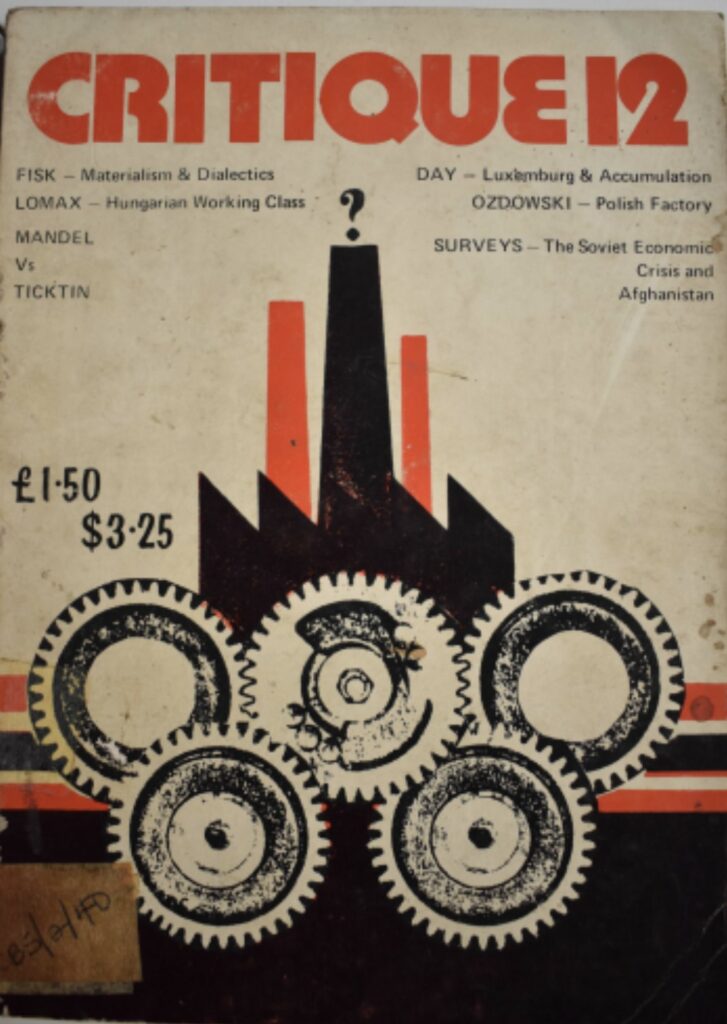
The Socialist Theory Journal Critique
You were one of the founders of the Marxist academic journal Critique. How would you describe its purpose and contribution, as well as your own role in it?
After studying in Toronto, I went on to pursue further education at the Institute of Soviet and East European Studies at the University of Glasgow. This experience proved decisive in my life. There were thirteen of us students—all left-leaning and critical of the Soviet Union. The Institute was housed in a nineteenth-century Victorian building, had an excellent library, rooms for students, and we were given keys, so we could hold discussions late into the night. One of the students—Michael Cox—later became a well-known professor at the London School of Economics and the founder of the LSE IDEAS think tank. I focused on the Soviet economy and the social structure of the USSR.
We were fortunate to have as our professor Hillel Ticktin, a Jewish Marxist from South Africa who, after facing arrest for his involvement in the anti-apartheid movement, received a scholarship to study in Moscow. He was a committed anti-Stalinist and a sharp critic of the Soviet system. His lectures on the political economy of the USSR offered deep analysis of both the economy and the social structure. His method involved posing questions that other approaches to studying the Soviet Union simply never raised. He described the USSR as a “non-mode of production,” historically unstable. The Soviet bureaucracy, in his view, was not a ruling class in the classical sense that controls surplus extraction, but a privileged stratum that managed production and distribution without legal ownership. Its power rested on political control, repression, and the suppression of market mechanisms. The system was inherently inefficient because it had neither capitalist competition nor socialist democracy. The economy was militarized—geared toward heavy industry and the military sphere, with minimal attention to consumer needs. It was characterized by chronic losses, shortages, poor product quality, and low labor productivity. Planning was largely fictitious; enterprises resorted to informal bargaining, hoarding resources, and manipulation to meet targets. This system was doomed to collapse. Armed with this analytical framework, each of us immersed ourselves in specific aspects. I focused on the condition of the working class and later on the national question.
It was obvious to our group that we had to do something to disseminate this school of thought. I believe I was the first to propose creating a journal. But first we organized several conferences, which were very successful. I then moved to Oxford for doctoral studies and took responsibility for preparing the first issue. We produced it almost without a budget, in a left-wing print shop, with support from friends in our Canadian circle who had also moved to London for graduate studies. The first issue of Critique: Journal of Socialist Theory appeared in 1973. The journal is still published today and is issued by Taylor & Francis.
It is worth noting that volume 18 of Critique was devoted entirely to Roman Rosdolsky—Engels and the “Nonhistoric” Peoples: The National Question in the Revolution of 1848—translated and edited by John-Paul Himka, a member of our circle. I published several articles in Critique under the pseudonym Holubenko, including “The Soviet Working Class: Discontent and Opposition” (1973), which generated some resonance, since no one had raised this issue before. The article described in detail the methods of social control and atomization that restrained workers’ discontent. But whenever that discontent took the form of protest, the authorities would immediately make concessions; once the protesters dispersed, the KGB would intervene and arrests would follow. The article discussed the 1962 workers’ uprising in Novocherkassk, brutally suppressed by the authorities. Among my other publications were “The Famine in Ukraine in 1933” (1986), which was reprinted several times by other left publications, including a Polish underground journal, and “Perestroika and the Soviet Working Class” (1990).
On Soviet Ukraine
What were your contacts with the opposition or dissidents in the Soviet Union, particularly Ukrainian ones? Did you interact with them only through literature, or did you know anyone personally at the time?
You have to understand the context. Soviet society was probably the most atomized society in modern history. The state controlled virtually all economic activity, apart from small private garden plots, and almost all forms of human interaction outside the family took place under state supervision. You couldn’t even organize a simple chess club without permission from a party authority. A powerful repressive apparatus and a network of informers ensured social control. In such a setting, social capital was reduced to a minimum. Fear was internalized, and studies showed that the average Soviet person could trust only a very narrow circle—around six people. The mechanisms of control were especially harsh in Ukraine, as were the punishments. There was a saying: “If in Moscow they clip your nails, in Kyiv they cut off your hand.” According to the Ukrainian Helsinki Group, roughly 60–70 percent of political prisoners in the USSR were Ukrainians, even though Ukrainians made up only about 16 percent of the Soviet population. When it came to personal contact with dissidents, this was difficult not only because foreigners were monitored, but also because such contact put them at risk. I visited Ukraine three times before independence and in Kyiv and Lviv I met people with oppositional views who knew well-known dissidents—and that was enough.
We were able to read dissident writings largely because two Ukrainian organizations managed to smuggle out and publish samvydav and manuscripts. One was Prolog, a publishing organization founded by the so-called “Dviykari” (the Second Group of the OUN), led by Lev Rebet. The “Dviykari,” founded in 1946, were connected with the Ukrainian Supreme Liberation Council (UHVR) and the Ukrainian Insurgent Army (UPA). (Rebet was later assassinated by a KGB agent.) Prolog published works by Ukrainian dissidents. There was also the journal Suchasnist, founded in 1960 by Ivan Koshelivets. Suchasnist played an enormous role as an intellectual, literary, and liberal voice of the Ukrainian diaspora. Paradoxically, its liberal orientation was made possible by support from an American foundation funded by the CIA, which meant the editorial board did not depend on fundraising among the postwar émigré community, which was largely right-conservative. Another organization was the publishing house Smoloskyp, which issued a large amount of dissident material, samvydav, and the journal Ukrainskyi Visnyk (Ukrainian Herald), an underground human-rights publication founded in 1970 by Viacheslav Chornovil. This publishing house, like the information bulletin Ukrainskyi Holos published in Paris, received support from the Melnyk faction—a more politically inclusive wing of the OUN that emerged after the 1940 split.
Although the Banderites were the largest group in the postwar émigré community, they were relatively inactive when it came to obtaining and publishing dissident literature, and they were uneasy that the materials coming out of Ukraine did not have a strongly nationalist tone. That is why the case of Yaroslav Dobosh came as such a shock to all of us. He was a Belgian student and a member of the Ukrainian Youth Association (SUM), linked to the Banderites, who arrived in Ukraine in December 1971 to obtain samvydav for publication in the West. In January 1972, he was arrested at the border, and the KGB confiscated rolls of photographic film and copies of the dissident journal Ukrainskyi Visnyk. He confessed to being affiliated with the OUN and to a mission to establish contacts with dissidents, and he repeated this at a press conference in Kyiv in June—something the KGB used as a pretext for the mass arrests of 1972. Throughout this period, the Banderites issued no denial; it appeared only after Dobosh returned to Belgium. Beyond the obvious senselessness of this, it also aroused suspicions that KGB agents might have infiltrated this political group.
As for the activities of our small left group in distributing literature to Ukraine: we established contacts in Ukrainian communities in Czechoslovakia, Poland, and Yugoslavia, and passed on to them stocks of literature—our Ukrainian-language journal Diialoh, which began publication in 1977, as well as various magazines and books intended to inform opposition-minded people about events in Ukraine, in the region, and about global trends. Our contacts would then pass this literature to visitors from Ukraine to read, and in some cases they managed to bring materials into Ukraine. Occasionally we organized direct transfers of materials to Ukraine, though this was rare. When it did happen, it was usually academic texts that were highly valued by intellectual circles deprived of access to contemporary Western scholarship. In the case of Czechoslovakia, I worked with Jan Kavan to organize the transport of vans filled with books into the country—some of which were intended for our Ukrainian contact. We were assisted in this by members of the youth wing of the Austrian Social Democratic Party. Jan Kavan later became Foreign Minister of the Czech Republic in 1998. Petr Uhl, a left-wing political prisoner, helped us establish contact with Ukrainian oppositionists in Czechoslovakia. He was one of the founders of the Charter 77 initiative and in 1998 became the Czech government’s Human Rights Commissioner.
As luck would have it, the first Ukrainian dissident to reach the West was Leonid Plyushch, and he shared left-wing ideas. A mathematician by training, in 1968 he signed a declaration of solidarity with the democratic movement in Czechoslovakia. In 1972, he was arrested and confined in a psychiatric hospital, where he was subjected to destructive drug “treatment.” Thanks to the efforts of Tetyana Khodorovych—also a mathematician and a prominent Russian dissident—his case drew the attention of French mathematicians, including Laurent Schwartz, a well-known socialist with a Trotskyist past who campaigned actively for his release. Support for Plyushch was broad in left circles in France and across Europe, to the point that leaders of the French and Italian Communist parties appealed to Moscow to free him. He arrived in France in 1976, and the following year he published his memoirs, History’s Carnival (Ukr. «У карнавалі історії»), which became a bestseller. He not only strengthened democratic and progressive discourse; he also complicated—and enriched—the image of the “contemporary Ukrainian,” which was often perceived in the West as monolithic.
I met Plyushch many times in France. And beyond politics, our conversations soon took an unexpected turn. He developed a deep interest in Ukrainian literature and later became a literary critic. CIUS published his study Taras Shevchenko’s Exodus Apropos “The Soldier’s Well”—a gripping, original reading of Kobzar: a structuralist exploration of Shevchenko’s inner and cultural transformation, drawing on semiotics and psychoanalysis. Later he published a substantial study of the most influential Ukrainian writer of the 1920s, Mykola Khvylovy, in the book His Secret, or Khvylovy’s “Beautiful Lodge.”
Another outstanding dissident—a man of titanic inner strength—was Danylo Shumuk, who spent a total of forty-two years in captivity. Amnesty International recognized this as the longest term of political imprisonment on record. Shumuk was first arrested under the Second Polish Republic for involvement in the underground Communist Party of Western Ukraine. He was released in 1939 when Soviet troops occupied western Ukraine, but was soon forcibly mobilized into a Red Army penal battalion and sent to the front. There he was taken prisoner by the Germans and held in a POW camp in Khorol (Poltava region), notorious for conditions so inhuman that few survived. In 1943, Shumuk escaped and joined the Ukrainian Insurgent Army (UPA). He later recalled that, although he fully understood how hopeless it was to fight both the Nazis and the Soviet authorities at once, it was a moral duty—to prove that Ukrainians resisted and fought to the end. In 1945, he was captured by the NKVD and sentenced to death; the sentence was later commuted to twenty years of hard labor in the Gulag. He was sent to the camp in Norilsk, a brutal penal complex in Russia’s Arctic zone. There he played one of the leading roles in the Norilsk Uprising of 1953—the largest revolt in the history of the Soviet camp system. Released in 1956 during Khrushchev’s “thaw,” Shumuk was arrested again the very next year—this time for “anti-Soviet propaganda”—and sentenced to another ten years. That term ended in 1967. Yet in 1972, during a new wave of mass repression, he was arrested again, now for writing and circulating his own memoirs. In the camps, he organized hunger strikes, joined the Ukrainian Helsinki Group, and for many years demanded permission to emigrate to Canada, where his relatives lived. Thanks to the efforts of Amnesty International, the Ukrainian diaspora, and official appeals from Canada, he was released in 1987 and resettled in Canada—where I met him. CIUS later published his memoirs in English as Life Sentence: Memoirs of a Ukrainian Political Prisoner.
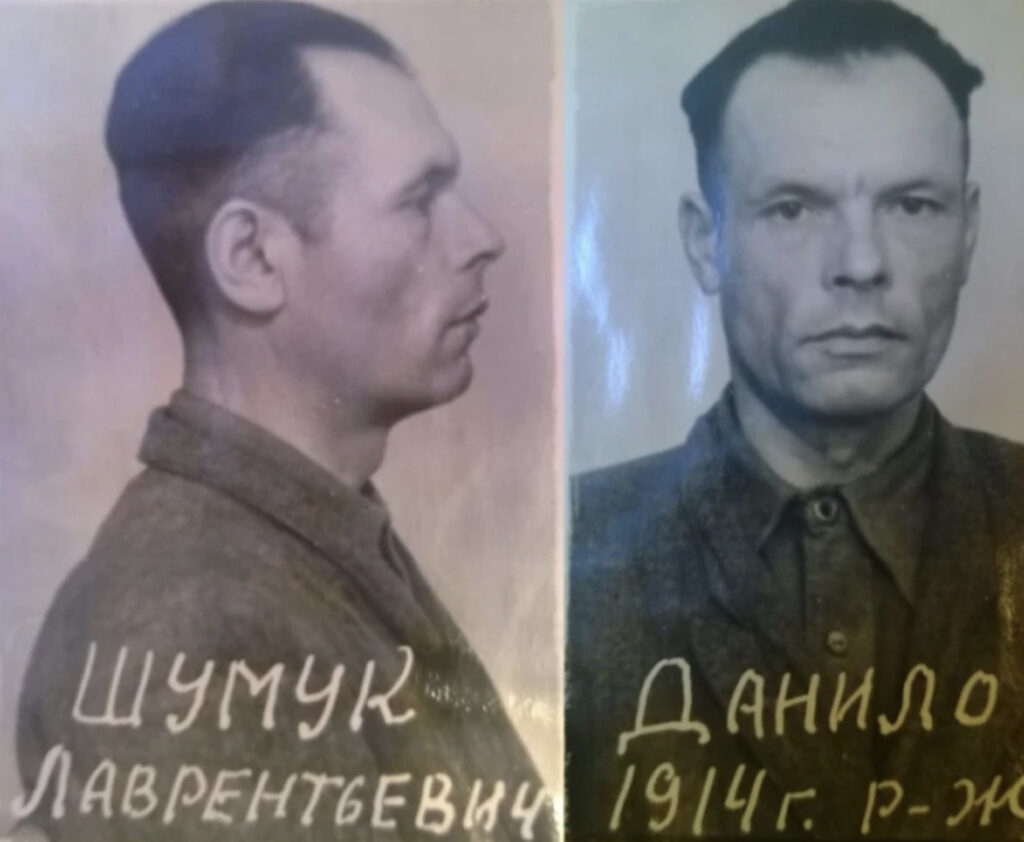
Danylo Shumuk was an extraordinary figure: a person who deeply valued social justice, workers’ dignity, and community solidarity. He was an uncompromising opponent of authoritarianism, guided by a strong moral sense of duty and personal responsibility, and remained committed to Ukrainian civic nationalism. In 2002, he returned to Ukraine, died in 2004, and was buried in Pokrovsk, Donetsk region—which, one hopes, will remain under Ukrainian control.
After moving to Ukraine in January 1991, I had the opportunity to meet and work with several former political prisoners who had transitioned into roles as political leaders and civic activists. I won’t go into detail, but I will note that traits such as uncompromising devotion to one’s convictions—admirable and even necessary in prison—were not always helpful in the post-independence period, when success often depended on the ability to build broad coalitions. The failure to unite wide patriotic forces was one reason for Viacheslav Chornovil’s disappointing result in the first round of the 1991 presidential elections. And after 1991, internal conflicts led to the fragmentation of Rukh. In this context, I particularly valued Mykhailo Horyn, who, thanks to his calm, clear reasoning and principled pragmatism, was an effective coalition builder.
Connections with the European Left
Could you tell us about your engagement with the European left?
The growing influence of Critique opened new opportunities. When I moved to Oxford, the wave of arrests in 1972 pushed me to start writing articles for left-wing journals in the United Kingdom. And when I relocated to France in 1973, that in turn became a springboard for publishing on the European continent. I wrote dozens of pieces for left-wing journals and newspapers in seven countries. For a period, I had a weekly column in a Danish newspaper. I was also a regular contributor to left publications in Czechoslovakia and Poland. The point is simple: if you want to shape how the European left thinks, you must write for the outlets its supporters actually read.
It’s important to remember that in the 1970s—especially in France and Italy—the Communist Party’s influence on how people imagined the USSR extended far beyond its formal membership. Anti-American sentiment in Europe also mattered a great deal. Fueled by the Vietnam War and by U.S. support for authoritarian regimes around the world, it produced a conviction that the Soviet Union was the lesser evil. At the same time, there was a latent racist subtext. I remember a conversation with a French Communist sympathizer who told me: “Democracy is impossible in the USSR. They’re Slavs—they’re used to the whip; obedience is in their blood, unlike us Europeans.” Many people were prepared to accept that the Soviet system needed reform, but any idea that it was reformable and ultimately had to be overthrown was met with outright hostility. This is where articles that popularized Critique’s position—about the Soviet order’s lack of viability and its inevitable collapse—played a crucial role in shifting the dominant paradigm. I would add that the only groups on the left that openly advocated overthrowing the Soviet system were the Trotskyists, in one form or another.
Of course, the situation today is completely different. Most left forces (apart from orthodox Communists and certain segments of the populist left) support Ukraine. I have seen Ukrainian authors published in left media, but mostly in English-language outlets. And given Europe’s consolidation and its crucial role in supporting Ukraine, it is extremely important that such articles begin to appear in other European languages as well.
On the Left in the Diaspora Today
What is your view of the left in the diaspora today, and its relationship with Ukraine?
Ukrainian leftists as an organized group—like Diialoh—no longer exist. Diialoh itself ceased publication, and its legacy is now preserved in the University of Manitoba archives thanks to Myroslav Shkandrij, a professor there and a former editor of Diialoh. That said, some of its former participants—above all Marko Bojcun—played a key role in creating a left-wing platform for solidarity work with Ukraine by helping to found the Ukraine Solidarity Campaign in Britain. The Campaign, supported by members of the Labour Party and by trade-union activists, is coordinated by a committee that includes representatives of the newer wave of Ukrainian migration—Tanya Vyhovsky (chair) and Yuliya Yurchenko—as well as Mick Antoniw, who represents the postwar generation of the Ukrainian diaspora. Antoniw, who earlier had links to Diialoh, served as a member of the Welsh National Assembly/Senedd and played an important role in organizing trips by Welsh miners delivering humanitarian aid to Ukraine. Chris Ford, one of the Campaign’s key organizers, has also written on the history of the Borotbists and the Ukapists.
It’s also worth adding that before the Campaign there was Labour Focus on Eastern Europe, which ceased publication in 2004. It was founded by Peter Gowan and Halya Kowalsky (a member of Diialoh), and it helped draw the attention of the British left to Ukrainian issues.
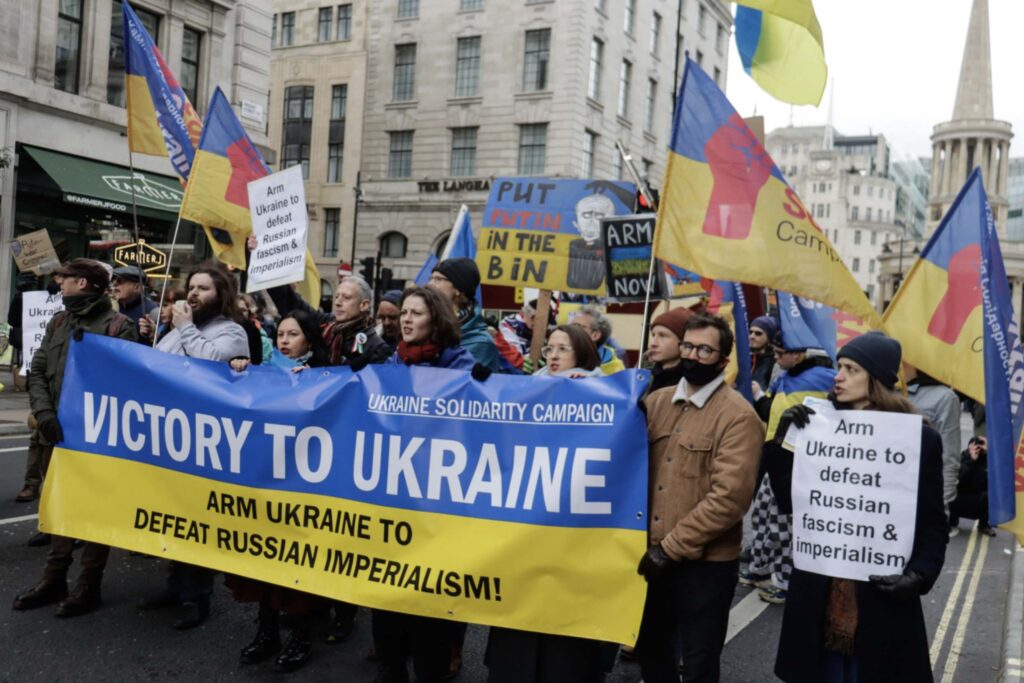
I can’t recall anything comparable to the Ukraine Solidarity Campaign in other countries. There are individual left Ukrainian voices—for example, Tanya Vyhovsky, a member of the Vermont State Senate, the home state of Bernie Sanders, who has spoken out strongly in support of Ukraine. And Sanders himself—a politician known for his principled stance—represents Vermont in the U.S. Senate. The Ukrainian question is global; it serves as a litmus test for a group’s moral compass. In 2022, when hundreds of thousands of people took part in marches against Russia’s invasion of Ukraine, this sent a clear signal of broad support among ordinary people. In Canada, Ukraine is supported across the political spectrum. At the same time, some segments of the far left and parts of the academic world frame the conflict as a proxy war that should be resolved diplomatically—a position that, as it turns out, echoes that of Donald Trump. More broadly, the Ukrainian diaspora in Canada and elsewhere has changed due to generational turnover. It is now generally liberal in outlook, while the integral nationalist current has moved to the margins. The appointment of Chrystia Freeland as foreign minister, and later as deputy prime minister, breathed new life into the Ukrainian community. For us on the left, she was a familiar figure since childhood. Her mother, Halyna Freeland, a well-known feminist, founded the Hromada housing cooperative and later the Ukrainian Legal Foundation in Kyiv.
Overall, I believe that, in the context of today’s agenda of supporting Ukraine in its struggle against Russia, the left in Western countries does not have to perform any special separate task beyond reinforcing mainstream efforts and doing the often exhausting work of countering those on the left who do not support Ukraine. At the same time, there is a potentially important role in supporting efforts within Ukraine itself aimed at far-reaching, much-needed reforms. Yet today the voice of the left in Ukraine in this direction is barely audible—and it needs to be amplified.
On the Contemporary Ukrainian Left
What do you think about today’s Ukrainian left? What problems and challenges do you see?
I first learned about the contemporary Ukrainian left through Marko Bojcun. In 2024, Zakhar Popovych introduced me more closely to today’s Ukrainian left, and through him I gave several lectures for members of Priama Diia (Direct Action), who were interested in my experience of student organizing and in the syndicalist ideology of the Quebec student movement. In 2025, I attended a conference of Sotsialnyi Rukh (The Social Movement), which brought together trade union activists and some government representatives. The event focused on hardship bonuses for workers in critical sectors. I was invited, as something of a “historical artifact,” to deliver a greeting. The idea that seemed to resonate most was that concern for workers’ well-being belongs to a long-standing Ukrainian tradition—from Taras Shevchenko onward, the social idea has always been central to the national one.
I hadn’t realized that Sotsialnyi Rukh also aspires to become a political party, and I found myself reflecting on their strategy for broadening their base of support. The organization appeared to function as a hybrid of movement and party: on the one hand, it organizes discussion platforms and builds ties with trade unions. But expanding a party usually requires a broader communications strategy, clear advocacy goals on priority issues, and—crucially—an electoral presence. The organized Ukrainian left is extremely small. Since the closure of Political Critique (Politychna Krytyka), the only left journal is Spilne. Cedos does substantive work in the fields of social and spatial development. But the intellectual and political vacuum that remains is enormous.
Much of the research produced by left thinkers focuses on critiquing neoliberalism—pointing to predatory elites, rising inequality, and the erosion of public goods—often without moving toward practical solutions. Meanwhile, profound social shifts caused by war, economic pressure, centralization of power, pervasive corruption, and the high stakes of postwar reconstruction have created an unmistakable public demand for new ideas about justice, well-being, and collective purpose. The resulting vacuum exists alongside a clear—though not always explicitly articulated—demand for socially oriented alternatives.
Public Administration Reform and Osnovy Publishers
What motivated you to move to Ukraine after the Soviet Union collapsed? Did you want to help build a new Ukraine?
I arrived in Ukraine in January 1991. From 1987 onward, I visited every year. I was convinced that Ukraine would become independent and arranged my academic leave so that I could witness that historic moment. I planned to work on a book and to contribute to policy development for Rukh, assisting some Ukrainian economists in drafting an economic program. But within weeks of my arrival, Bohdan Hawrylyshyn—a key figure in bringing George Soros to Ukraine—put me in touch with Soros himself. From that point on, everything changed.
With Soros’s support, an Advisory Council to the Presidium of the Verkhovna Rada was created to bring international experience into legislative and economic reform. The Council included Ukrainian and prominent foreign figures, signaling support for Ukraine’s independence at a time when Western governments were still backing Mikhail Gorbachev. I was tasked with organizing the work of the Council’s secretariat and worked closely with Deputy Chair of the Presidium Volodymyr Hrynov. This gave me an inside view of key events and of the condition of public administration.
Ukraine faced an extraordinarily complex reform agenda with a government that lacked both capacity and a clear vision of what needed to be done—or how to implement reforms. In Soviet times, all key political and administrative functions were concentrated in Moscow, while residual powers were exercised by the Communist Party of Ukraine, which simply transmitted directives to the government. The institutional structure of the state was astonishingly incomplete. For example, there was no central bank, no ministry of defense—despite the presence of 1.5 million military personnel on Ukrainian territory. There was no ministry of the environment, in a country that had already experienced a nuclear disaster. Institutions with experience in foreign trade were absent. The Ministry of Finance essentially functioned as an accounting office that had never engaged in policymaking. The size of the central executive apparatus was strikingly small: about 12,000 civil servants at the central level in a country of 50 million people—compared to 60,000 in Greece, with a population of only 10 million. The upper echelons of ministries were dominated by people with technical training—75 percent; only 8 percent had an economics background (of the Soviet type), and just 3 percent had legal training. As an institution, the civil service did not exist, nor did the very concept of “public administration.” It took quite some time before even the term “public policy” entered the lexicon.
I devoted fifteen years to developing the public administration system and building the policy function within government. In mid-1991, after I wrote an analytical memo on priority steps in state-building, Leonid Kravchuk supported my proposal to establish an Institute of Public Administration and Local Government under the Cabinet of Ministers. The institution opened in spring 1992, and I became its first director. It was modeled on France’s École nationale d’administration and became a platform for a range of further initiatives. In 1993, the Law on Civil Service was adopted, and Ukraine became the first of the former Soviet republics to take this step. In 1995, after Leonid Kuchma became president, the Institute was reorganized into the Academy of Public Administration under the President of Ukraine. I served as vice-rector and director of the newly created Center for the Study of Administrative Reform. We began developing public policy as a governing paradigm, which culminated in the adoption of new Cabinet of Ministers procedures requiring that all documents submitted to the government be prepared in the format of policy analysis. At the end of 1999, after Viktor Yushchenko became prime minister, we presented him with a plan for more comprehensive administrative reform.
In 1992, together with Solomiia Pavlychko, we founded Osnovy Publishers, which played a key role in developing understanding of economics, public policy, and public administration in Ukraine by publishing dozens of important books. At the time, Ukraine was flooded with consultants offering “off-the-shelf solutions” and PowerPoint presentations, often without deeper engagement with context. I was able to persuade donors to support translations of foundational works so that Ukrainians could gain detailed, systematic knowledge across fields and also develop Ukrainian terminology in these areas. In 2003, we published Oleksandr Kiliievych’s English–Ukrainian Glossary of Terms and Concepts in Public Policy Analysis and Economics. He noted that thanks to Osnovy’s work, more than 1,500 new terms entered the Ukrainian language. In total, the publishing house released over 300 titles.
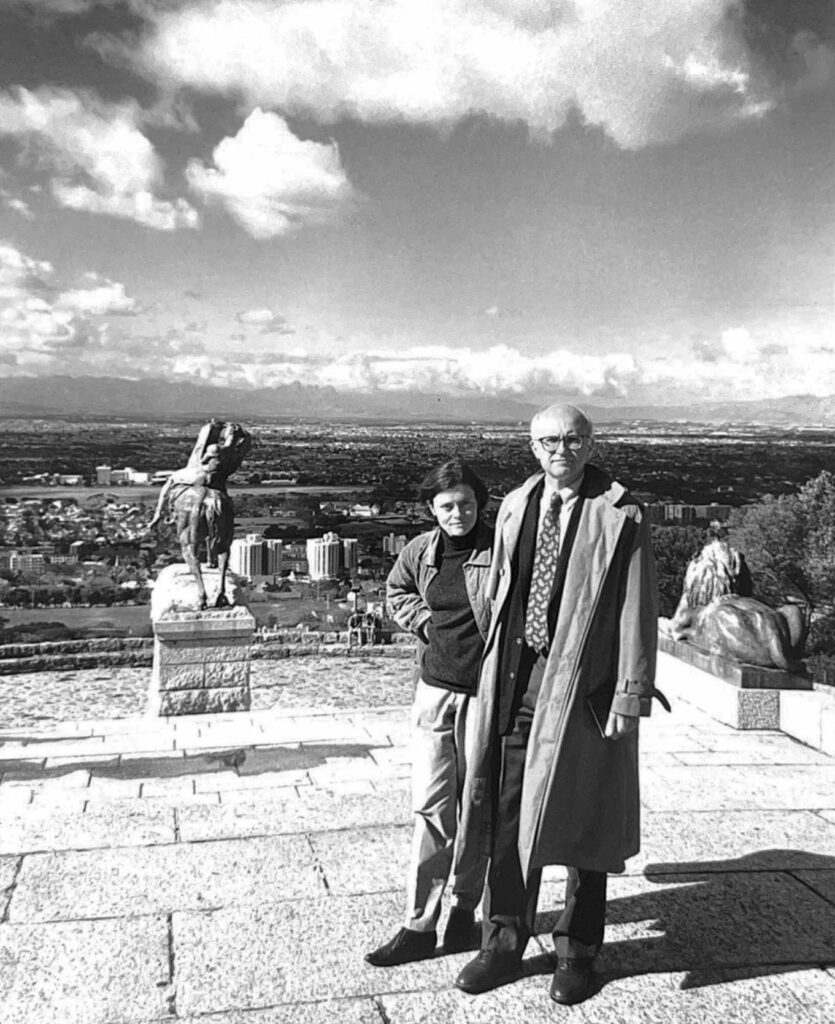
In 2021, the National Academy of Public Administration under the President of Ukraine—together with its regional branches—was shut down. As a result, Ukraine is now the only country in Europe without a national institution specifically devoted to training civil servants. In most European countries, schools of this kind are a well-established part of the continental model: they provide systematic preparation for the civil service. Universities do teach public administration as an academic discipline and carry out research, but they serve a different purpose than national schools of government. After the 2021 reform, the Academy’s key functions were moved to universities, where lecturers often do not have enough hands-on experience of working inside government. The irony is that this happened just as Ukraine is facing unprecedented challenges—especially with European integration—so the state has lost its main tool for preparing professionals to take on tasks of that complexity.
Something similar is happening in public policymaking. In a democracy, you’re supposed to have transparent, mandatory consultations with stakeholders—that’s a cornerstone of good governance and one of the main ways civil society participates. Instead, decision-making is becoming more and more opaque. It feels like we’re watching the same film again: we’re sliding back toward old practices—less openness, less inclusion—rather than moving forward.
In 2004, you moved from Ukraine to Kyrgyzstan. Why did you do that? What was your mission at the University of Central Asia?
The death of Solomiia Pavlychko [prominent Ukrainian feminist and Kravchenko’s wife] was a tremendous blow to me—like the wind that had been carrying me forward suddenly died away. I was exhausted. In addition to my work at the Academy, I was leading a major regional initiative—the Local Government and Public Service Reform Initiative of the Open Society Institute—and I had responsibilities at the International Renaissance Foundation, along with other professional commitments. I took part in the protests of the Orange Revolution, and when, in January 2005, the Central Election Commission finally confirmed Viktor Yushchenko’s election as President of Ukraine, I breathed a sigh of relief. And then I realized: it was time for a change. I needed to do something different.
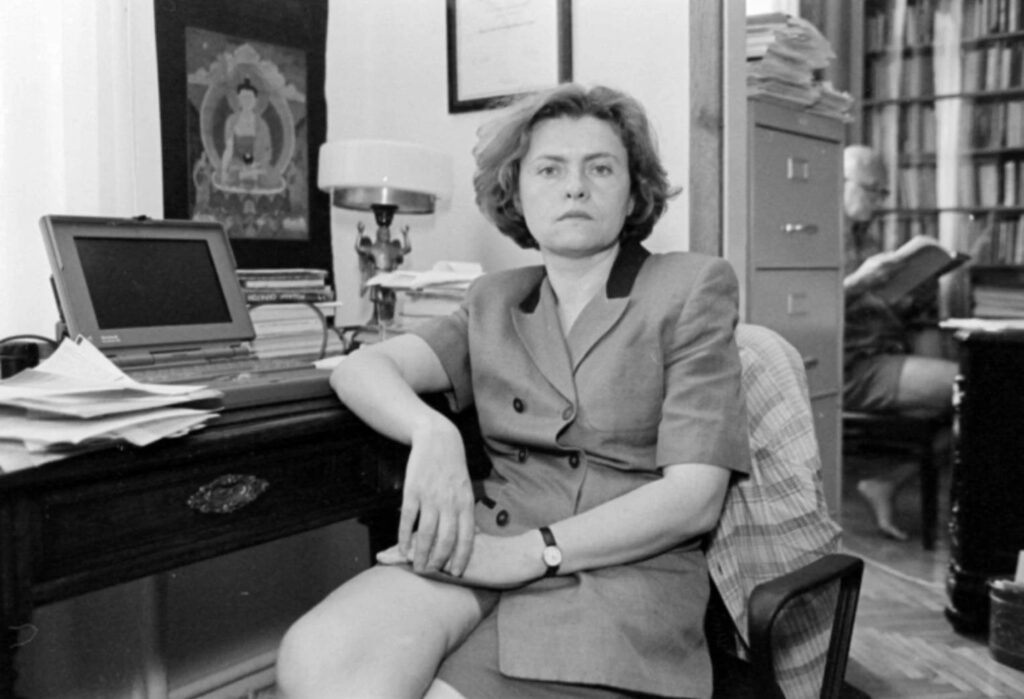
At one point I came across a job advertisement in The Economist: they were looking for a dean for the School of Development at the University of Central Asia. It was a new institution being created to promote socio-economic development in disadvantaged mountain regions across three countries—Kyrgyzstan, Tajikistan, and the Jetisu (Zhetysu) region of Kazakhstan. The plan was to build fully residential campuses that would provide world-class education in these remote areas, while the School of Development would bring together several institutes focused on interdisciplinary research and teaching in the field of development. The idea seemed bold to the point of impossibility—and at the same time deeply appealing. I arrived in Central Asia in 2005 thinking I would stay for three years. And I’m still here: I have just completed my term as director of my most recent initiative, the Afghanistan Research Initiative. Now, working as a senior research fellow at the School, I finally have some time to write and to plan my return to Kyiv.
My journey at the University of Central Asia has been a real challenge—the learning curve was steep. For eight years, I served as Director General. But the most valuable lesson I drew from this experience—one that I believe is extremely relevant for Ukraine—is an understanding of what development research truly is. When done properly, it is an interdisciplinary and multidisciplinary field that seeks to grasp the social, economic, political, technological, and cultural dimensions of how societies function. This approach is also distinguished by its normative orientation—a commitment to contributing to solutions for pressing societal problems. An important feature is the involvement of a broad range of social groups in generating and mobilizing knowledge.
Social Change and National Consciousness in Twentieth-Century Ukraine
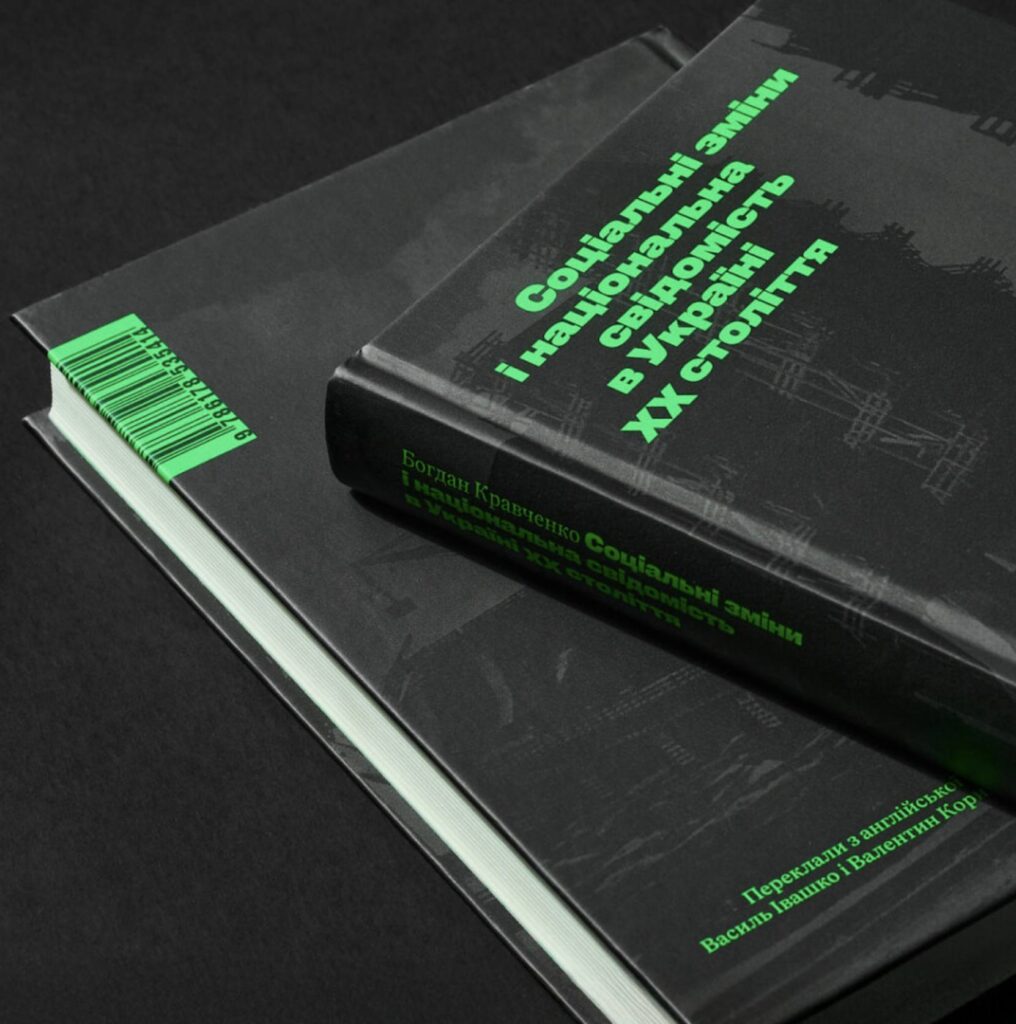
This year Osnovy Publishers is reissuing your book Social Change and National Consciousness in Twentieth-Century Ukraine. How would you describe your approach to Ukrainian history in this work, and what significance do you think it has for today’s Ukrainian readership?
I raised questions that required an interdisciplinary approach. In a sense, the book is a work of social and economic history, as well as a historical political economy of Ukraine—and it clearly belongs within the field of postcolonial studies. It begins with a portrait of Ukraine on the eve of the 1917 revolution and ends in 1972, the year Petro Shelest was removed from office for a “nationalist deviation.” It offers a material explanation of how national identity and the drive for independence were formed. The book is dense with statistics, which makes it “not an easy read,” but, as one recent reviewer put it, “it fills in the gaps.”
The study uses a socio-structuralist approach, examining how shifts in large-scale social structures shape national identity and collective behavior. It provides a detailed analysis of changes in demography, urbanization, class formation, the economy (including its geographical dimension), and key institutions such as education and the press. Particular attention is paid to the formation of an elite—the Party—and to the impact of Moscow’s policies on the country’s development. It also considers the nature of intellectual agency and, in the revolutionary period, the decisive role of mass movements—especially the peasant movement—in the birth of the nation.
As for the topic’s relevance, I should note that this April I taught a course titled “Nation-Building and State-Building in Twentieth-Century Ukraine: Historical, Political, and Economic Perspectives” at the Department of Political Science of the National University of Kyiv-Mohyla Academy. The students found it engaging, because they had never previously taken courses in social or economic history—neither at school nor at university—and they had only limited knowledge of the subject. They were better oriented in the history of political thought than in the history of society. Their understanding of the Soviet period was fairly superficial. Unlike their predecessors, the mental map of today’s generation is shaped above all by watershed events: the Maidan and the war. At the same time, they are interested in colonial studies and decolonization—fashionable fields that, at their core, presuppose historical knowledge. This is precisely where the book becomes relevant.
Let’s start with Russian imperialism. From the late fifteenth century, Russia functioned as a patrimonial state—a system in which the ruler enjoyed unlimited personal power, treated the country as private property, and erased the boundary between public and private interest. This patrimonial control constrained the formation of independent economic classes, while the state monopolized the economy to extract resources. Those resources were directed mainly toward financing a vast military and police apparatus designed for social control and imperial expansion.
Meanwhile, agricultural productivity did not improve between the fifteenth and nineteenth centuries. Because of this long stagnation, Russia proved incapable of intensive economic development. As a result, it staked its growth on extensive territorial conquest and large-scale colonization.
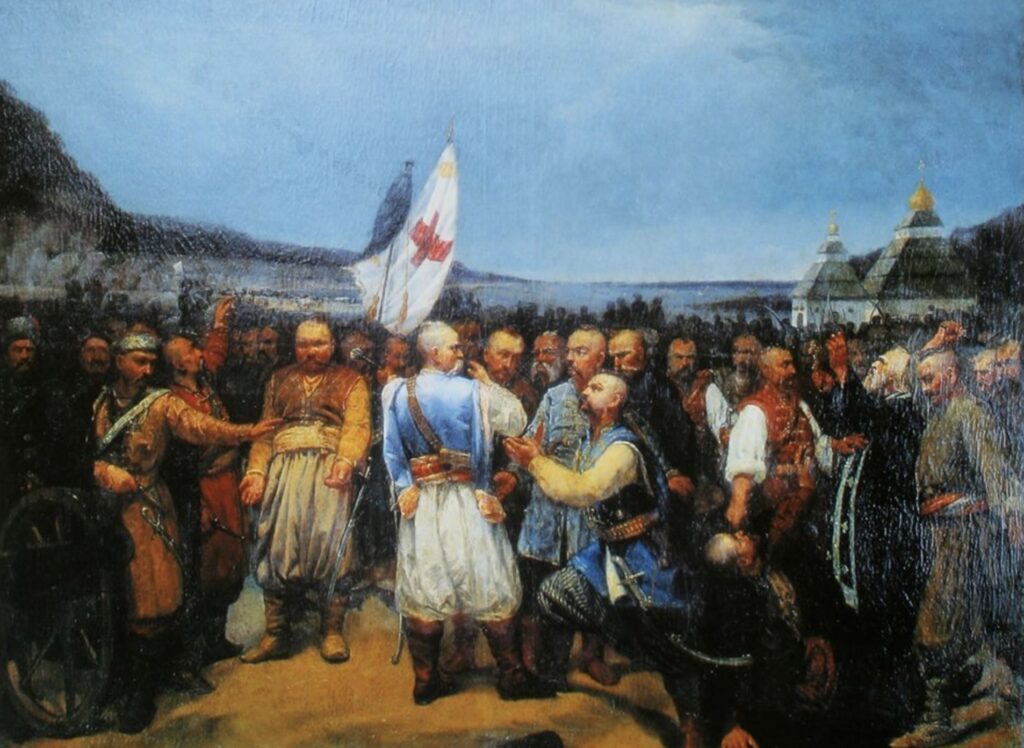
Ukraine, by contrast, after the revolution of 1648 and the creation of the Cossack Hetmanate, developed along a different path. The Hetmanate was a corporate social formation—similar to European states of the seventeenth century, but more egalitarian. Serfdom was abolished, and a vibrant class of merchants and artisans organized in guilds flourished alongside growing urban autonomy and cultural development. This progress was sustained through free trade with Europe. To illustrate the scale: in 1710 alone, Ukrainian goods worth over one million rubles passed through Vitebsk. By comparison, the entire state revenue of the Russian Empire in 1708 amounted to only 3.4 million rubles.
Russia’s destruction of the Hetmanate was not merely a political annexation. It was the systematic dismantling of an alternative social order. The empire eliminated autonomous Ukrainian institutions, destroyed economic classes, and introduced serfdom in its harshest form—panshchyna (corvée labor)—to secure a labor force for estates granted to Russian nobles. This was accompanied by a large-scale resettlement policy. The consequences were profound—and unique in the European context. Ukraine’s level of urbanization in the eighteenth century was higher than it would be at the end of the nineteenth; Ukrainians, who had previously constituted a majority in cities, became a minority; and literacy rates declined. In this way, Russian colonialism in Ukraine was more than simple foreign rule. It was a collision between two fundamentally different social systems. The victory of Russian patrimonialism led to economic decline, de-urbanization, and the systematic marginalization of the titular nation.
The forcible incorporation of Ukraine into the Soviet Union was a catastrophe. The cumulative losses—including the Bolshevik seizure of power (1917–1919), the first man-made famine of 1921–1922, forced collectivization, the Holodomor, the political purges of the 1930s, and 6.8 million deaths during the Second World War—were staggering. According to estimates by the Russian dissident demographer Sergey Maksimov, these events took the lives of more than half of Ukraine’s male population and a quarter of its female population. Losses on that demographic scale are without precedent in European history. That is why it is all the more striking that Ukrainian society still retained the strength for national self-assertion in the postwar period.
The concept of internal colonialism is very useful for explaining what happened in postwar Ukraine. The country was part of a single state in which its economy played an instrumental role, with priority given to sectors that benefited Russia. Ukraine’s economy was tightly controlled from Moscow, and this politico-economic dominance was accompanied by a large-scale influx of Russians into Ukraine, who occupied leading, high-status positions. At the same time, Russification intensified to conceal and legitimize this demographic stratification. As a result, Ukrainians were concentrated on the lower rungs of the social hierarchy, producing a kind of “cultural division of labor,” where social stratification was based on visible cultural differences. As one would expect, Ukrainians—as a discriminated group—reactively began to affirm their culture and national identity as a means of gaining greater control over their own society.
Applying this conceptual framework requires a substantial body of empirical evidence to substantiate its constituent claims. Once you assemble the data, the picture becomes quite clear. Between 1959 and 1970, half of all capital generated in Ukraine was exported beyond its borders. Because Moscow controlled 80% of enterprises, it determined how revenues were allocated—and that meant, for example, that the mining industry in the Donbas remained underinvested, leading to worsening workplace safety conditions—one of the main drivers of workers’ protests. Moscow controlled most higher education institutions as well, setting admissions policy, curricula, and the language of instruction. The situation was especially glaring when it came to the social mobility of the Ukrainian working class. Ukrainian workers were among the most educated in the USSR. In particular, Ukrainian youth had exceptionally high educational attainment: in 1970, 63% had completed full secondary education—the highest rate in the USSR after the Baltic republics. Yet the relative position of Ukrainians with higher education fell to 14th place out of 15 union republics—only slightly above Tajiks. Higher education was a pathway to professional mobility.
And centralization was humiliating for Ukraine’s political elite. Just imagine what Petro Shelest, First Secretary of the Communist Party of Ukraine, must have felt when he had to ask permission from a Moscow bureaucrat to build a pedestrian overpass in Kyiv.
Overall, Ukrainian academic scholarship has advanced significantly over the past few decades. Institutions such as the Institute of Sociology, the Institute of Demography, and others have produced a great deal of valuable research on different aspects of society. The work of younger-generation scholars is especially impressive—people like Yuliia Yurchenko, who apply a political economy approach in their analyses. Given where I live, I can’t follow developments in Ukraine’s research community closely. Still, there seems to be a shortage of integrative studies that systematically bring together analyses of social and economic change in Ukraine. Disciplinary fragmentation continues to dominate, making it harder to form a coherent picture of post-Soviet transformations. And of course, a major obstacle remains the lack of up-to-date census data—the last census took place back in 2001!