Ela Kwiecińska is a historian, a teacher with Invisible University for Ukraine (IUFU) at the Central European University in Budapest, and a docent at the Institute of Slavic Studies of the Polish Academy of Sciences. Her doctoral dissertation was dedicated to the idea of an Eastern European civilizing mission in the 19th and early 20th centuries. At the suggestion of Spilne, Ela and I decided to talk about the history of the mass violence in Volyn during World War II. Convinced of the power of personal histories to better help understand historical processes and open space for critical rethinking of entrenched narratives, I asked Ela, my friend, to reflect on her own experience and to define her positionality as a researcher. After that, we spoke about asymmetric memory1 Andrii Portnov, “Poland and Ukraine: Entangled Histories, Asymmetric Memories,” Essays of the Forum Transregionale Studien 7, Prisma Ukraïna (2020), https://perspectivia.net/receive/pnet_mods_00003867. in Poland and Ukraine and about the very process of creating historical knowledge.
Caring about your own heritage means working with it critically
Liana Blikharska: What does Volyn mean to you, as a historian and as someone whose family is from there?
Ela Kwiecińska: I was born in Warsaw, but nobody in my family is from that city that was almost completely destroyed during World War II. Volyn is part of my family history. My grandmother was born in Volyn in 1929 in the village of Stara Huta, which no longer exists today: it was burned to the ground by UPA partisans in 1943. I’ve known since I was little that our family is from modern Ukrainian territory. I heard more details when I was a teenager. My grandmother told me about what happened there: about the murder of Poles, about how they fled Ukraine. There are more details about that in my article with Petro Dolhanov2The article “A Polish shelf in a Ukrainian house in Mazura: Ukrainian-Polish family histories in the shadow of Volyn” has two parts. Part 1 : https://uamoderna.com/backward/polska-shafa-v-ukrayinskij-hati-znajdena-na-mazurah-ukrayinsko-polski-rodynni-istoriyi-na-tli-volyni/. Part 2: https://uamoderna.com/backward/polska-shafa-v-ukrayinskij-hati-znajdena-na-mazurah-ukrayinsko-polski-rodynni-istoriyi-na-tli-volyni-chastyna-2/. in Ukraina Moderna. I never intended to become a specialist on Volyn. But maybe if I never met Petro Dolhanov in a seminar in Krasnogruda, I would have never dared to write about it. It’s important to meet someone who can empathize with you, who’s willing to listen, who’s truly interested in the topic and with whom you can speak sincerely.
I see my first trip to Volyn in 2010 as a process of studying myself and my own identity. There were three of us: my father, myself, and my grandmother’s brother, who was 10 years old when his family fled Volyn. He was our guide on the trip. He remembered Ukrainian from his childhood, but my grandmother never learned it. Maybe this was because my great-uncle was an open and sociable person, while my grandmother is quite introverted. When we came to Ukraine to visit our native villages, it was a very important and illuminating experience: it was even cleansing, in some sense. Knowing the language really helped us communicate with the locals. Some of them remembered our family, others didn’t. But all of them treated us with respect and warmth, as if we were their own, and invited us inside. There was a sense that we had returned home. It was this trip that spurred me to learn more about Volyn.
The image of my first trip to Volyn is typical for all displaced people: of an abandoned, absolutely idealized country. I saw this same nostalgic idealization when I spoke with Ukrainian Lemkos, whose grandmothers and grandfathers, like my own, spoke of the Beskids as a promised land flowing with milk and honey. I don’t know how I would view it if I returned today; unfortunately, it might have been different. But that is how I imagined that land back in 2010.
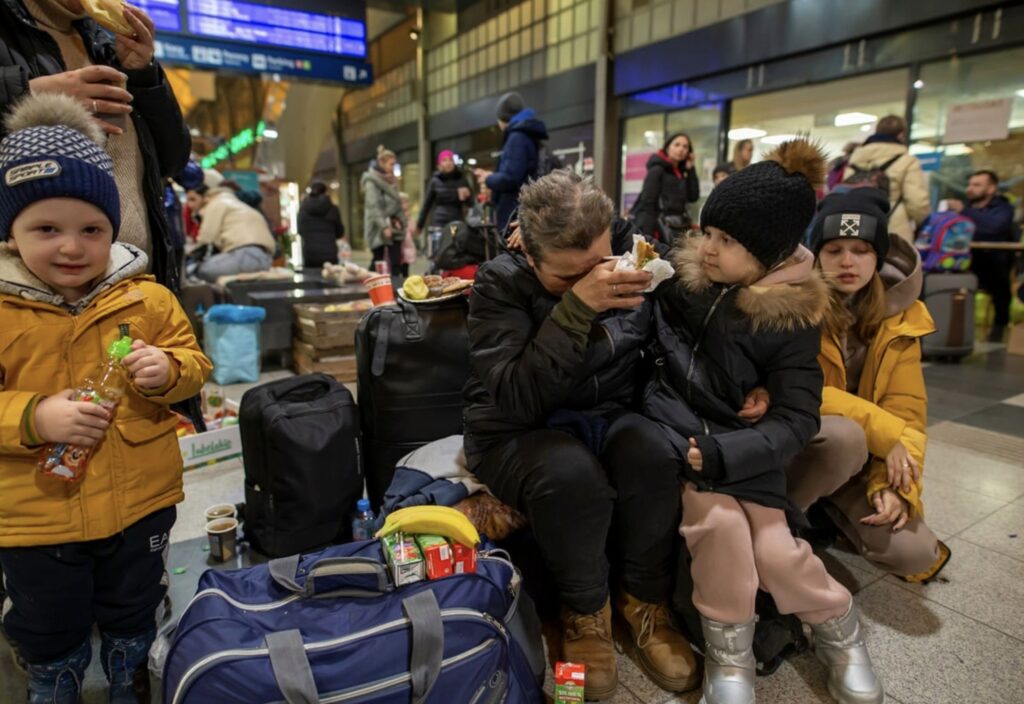
For me, that trip really was a return to my own roots. This is quite a typical experience for my generation in Poland: we are discovering for ourselves that we are not some mythical ethnic Poles, but instead we draw our strength from diversity. Some of us have Ukrainian origins, some Jewish, some German. I was born in 1989, and I think it is not a coincidence that we are the generation of the democratic transformation. I believe that some of my identity is Ukrainian. There are Poles that share a common heritage with the people in neighboring countries: Lithuania, Belarus, Ukraine. Nobody has calculated it exactly, but probably around a third of Poles have ancestors that were born outside the borders of modern Poland. This is very important to understand. “Kresy people” are an enormous segment of society, and different people with this heritage do different things. Some go to “we remember Volyn” marches, some volunteer for Ukraine, like at the train station in Wrocław. One of the most active volunteers, Pawel Rudnicki, wrote explicitly in his book that his main motivation for helping Ukrainians was the fact that his grandfathers and grandmothers once arrived from Lviv at the same train station.
Can I ask about your positionality?
In Poland I prefer to speak from the position of a critical intellectual. I believe that if this is my heritage, I have to treat it critically. That’s why my doctoral dissertation is dedicated to the civilizing mission in Eastern Europe as a colonial project. I compared the civilizing missions and practices of Poland and Germany. I also wrote a schoolbook about the Ukrainian minority in Poland during the interwar period, which I also believe is critical. After a historical section, there’s a practical task: the students have to organize debates on whether Ukrainians in Poland should be given more or fewer rights. Teachers who use the book say that students vote in favor of giving Ukrainians more rights after the class. Formally it’s a class on the history of the 20th century, but of course it’s also about the present.
After the start of the full-scale invasion, I decided to work for Ukraine. You might say that I became Ukrainian by choice at that time. I may have even spoken more frequently in Ukrainian than in Polish over the past few years. In 2022 I volunteered and eventually worked at the Invisible University for Ukraine, a program of informal education under the Central European University. In general, my life now revolves around Ukraine. But I still continually ask myself: who am I to Ukrainians? It is an especially relevant question nowadays, when the political conflict between Poland and Ukraine is much deeper. History shows that life is hard for people with a hybrid Polish-Ukrainian identity. Of course this might not be as noticeable in peacetime, but when political conflict or war breaks out, these people start to be morally, and in the worst case physically, destroyed from both sides. I also wrote about this in the schoolbook I mentioned earlier. Yet even in the mid 20th century there were people who tried to work together rather than incite hatred.
A tendency has been emerging in Poland in which right or far-right historians build a national narrative while the left deconstructs it. At one point I realized that this is a trap, and thus we’re playing into a “Polish-Polish war” between the right and the liberals. It’s been especially painful for me to see Ukraine and Ukrainians as objects in this “Polish-Polish war,” and Volyn has begun to be used to incite hatred.
Political capital in the memory of human suffering
How did the issue of Volyn arise in Poland? It seems that there was a movement from private family histories to concrete political groups and then to national-level narratives. Why did this happen? Is it part of the wider tendency of “memory wars” that are now visible around the world? You mentioned the “kresy people.” Some of my relatives have also been active in those circles after relocating to Wrocław from the Lviv area in 1946. They participate in societies, visit events, spend time there together nostalgically, but they also tell the younger generations about their experience. I have very strong insider knowledge of that community. As its name suggests, it still lives by the myth of the “kresy,” “our kresy.” On the one hand, this myth is a very intimate link to our family heritage, but on the other, the Polish right is actively instrumentalizing it.
Memory wars are a typical phenomenon all over the world. It’s important to emphasize that besides Polish-Ukrainian ones, arguments surrounding Volyn also have an intra-Polish dimension. It’s a struggle over whose memory must enter and be prioritized in the national canon. Aside from the Volyn massacre, the Polish canon also contains Katyn and the Warsaw Uprising. The memory of the Katyn executions is directed against Russia, and that of the Warsaw Uprising against Germany. The latter has been resolved the most thoroughly, and it has become the foundation for good Polish-German relations. Nobody in Poland has really hoped for rapprochement with Russia, so nowadays Katyn does not stir the same emotion as Volyn since there is hope for a union with Ukraine.
There’s also a class dimension here. The Polish elite was killed at Katyn, while the dead at Volyn were simple peasants. So the memory of Katyn also entered the canon of the anti-Communist intelligentsia, while Volyn did not. During World War II, the Polish government in London also reacted very passively to the fate of Poles in Western Ukraine. On the one hand, it didn’t want to give up on those territories, but on the other, the Polish underground had no chance to participate in the fighting in Volyn in 1943 since all their forces were concentrated on the uprising against the Germans in Warsaw. For a long time there was a feeling in Poland that the victims in Volyn were “second-class.”
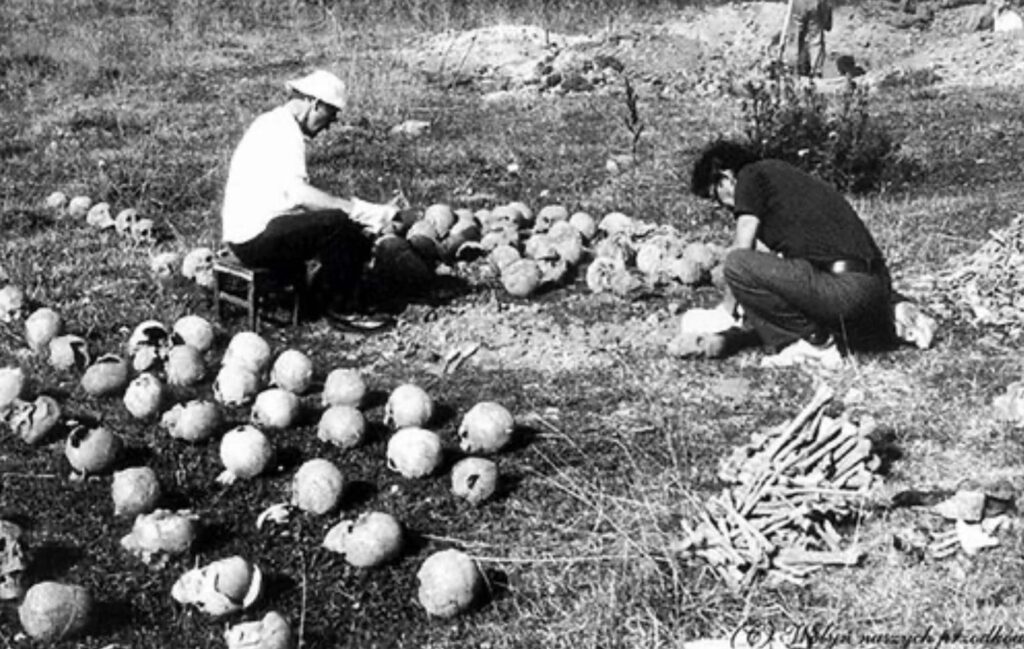
The memory of Volyn has not been worked through inside Poland. On the contrary, people were silent about it for a long time. The government of the Polish People’s Republic simply told people: “Your motherland is under Wrocław now. What we have returned are eternal Polish lands.” But that’s not how this works: people aren’t a sack of potatoes that you can just carry around from one place to another. When Poles came to this territory as part of a “population exchange,” there were still Germans living in their homes there; eventually the Germans were expelled further west. Silence surrounded the history of these forced migrations because nobody knew what to do with them. This is the true history of many people in Poland. The victims are one thing, but there are still witnesses of the events in both Galicia and Volyn. The conflict in Galicia was on a smaller scale since the Poles there were stronger, there were more of them, they had an organized underground. But several hundreds of thousands of people there witnessed what happened as well.
Some of your family, Liana, stayed in Ukraine. They managed to live there semi-legally by concealing their Polish identity during the Soviet period. The same thing happened in Poland: people couldn’t talk openly about what happened to them. They could talk about the UPA as bandits because that was the Soviet narrative, but not about the mass murders in Volyn. Poles had to forget about their origins in Galicia and Volyn because of the friendship and collaboration between the Polish People’s Republic and the USSR.
Testimonies only started to be collected in the late 1980s. Culture3 An environment formed around the Polish post-war literary and political magazine Culture, the founder and editor-in-chief of which was Jerzy Giedroyc. Combining Ukrainian, Lithuanian, and Belarusian figures who emigrated after 1944, the journal covered issues of reconciliation after World War II. One of the most important initiatives of this milieu was its work on Polish public opinion, particularly on calls for society to make a decision regarding the eastern border of the Polish People’s Republic. See Portnov, “Poland and Ukraine,” 41-43. in Paris also didn’t manage to launch the discussion on Volyn because nobody on the Ukrainian side wanted to talk about it. The topic of Volyn was also silenced for a long time in independent Poland, this time for the sake of good relations with Ukraine. Liberal Polish elites maintained the slogan from Solidarity: “There is no free Poland without a free Ukraine.” When I was still a university student, 10 or 15 years ago, the dominant thought among the liberal elites was that the story of the mass killings in Volyn was a Pandora’s box: nobody really knew how to approach it, so they decided that it was better to leave it untouched until Ukraine joined the EU. They hoped that the problem would resolve itself over time. Until recently, representatives of the Polish government did not appear at commemorations of the massacre, and initiatives to erect monuments to the victims were blocked. But far-right forces picked up the topic. They started appearing at anniversaries and speaking out in the name of the elderly survivors to honor the memory of the victims. The far right built political capital on Volyn, juxtaposing themselves against the liberal elites that were repenting for Operation Vistula, for discrimination against and Polonization of Ukrainians in interwar Poland, for the postcolonial myth of the kresy, and so on. Polish liberals hoped that selfless support for Ukraine on its path to the EU would provoke a similar critical rethinking of history in Ukraine. This is why the Polish right actively takes events like bestowing a Hero of Ukraine award upon Stepan Bandera or naming a Ukrainian military unit in honor of “heroes of the UPA” and exploits them against supporters of a Poland-Ukraine union.
Work in the field, narrative wars, and ruptures in the public space
Anna Wylegała published an article on public sentiment in Poland in which she writes about the bitter disappointment over Ukrainian intellectuals, even liberals, not showing enough interest in the role of the UPA, especially regarding its dark side and the crimes committed by its members. What is your impression of societal attitudes in Poland and Ukraine? Do people see a way out of this situation? Is it possible to bypass the topic of the mass killings in Volyn without joint, well-founded research by not only academics, but also by various ethnic, professional, and activist groups?
I think social psychologists are most needed right now. Michał Bilewicz has written a book called Traumaland. Poles in the Shadow of the Past (Traumaland. Polacy w cieniu przeszłości) that might be useful here. Analyzing the Holocaust, Bilewicz proposes answers to questions about what reconciliation means. On the one hand is calling a crime a crime and condemning it, and on the other is the sense that some kind of justice does exist. People’s pain and the fact that their ancestors were killed must be acknowledged without any whitewashing. Poles must also unequivocally condemn the atrocities they committed against Ukrainians. Revenge does not justify crimes. So there has to be strict condemnation, without calling the Volyn massacre a “tragedy” as if it were a weather event or a natural disaster. Another complicated question is the “retaliatory operations” committed by Poles. I believe evil needs to be called evil. The fact that it was revenge doesn’t justify any crime against Ukrainian civilians. Those people were just as innocent as the Poles in Volyn. And this also needs to be condemned in Poland.
But the question is whether heroizing the UPA and condemning their crimes can coexist. Can you only heroize its fight against Russia? I don’t think that that will work for Polish society. I don’t know how to find a way out of this situation. Maybe an off-ramp could be what Anna proposed in her article: some kind of consensus. But we saw what happened with the Communiqué4The Second Polish-Ukrainian Communiqué was jointly signed by Ukrainian and Polish historians in November 2024 as an attempt to develop a shared interpretation of the complex and bloodstained chapters of Polish-Ukrainian relations in the 20th century. It is an ideological continuation of the First Communiqué signed by historians in 1994. See https://uamoderna.com/blogy/ii-polsko-ukrayinske-komyunike/.. It was an attempt to bring this ridiculous memory war to an end. But some people called the signatories traitors. Under pressure from right-wing forces, some Ukrainians withdrew their signatures.
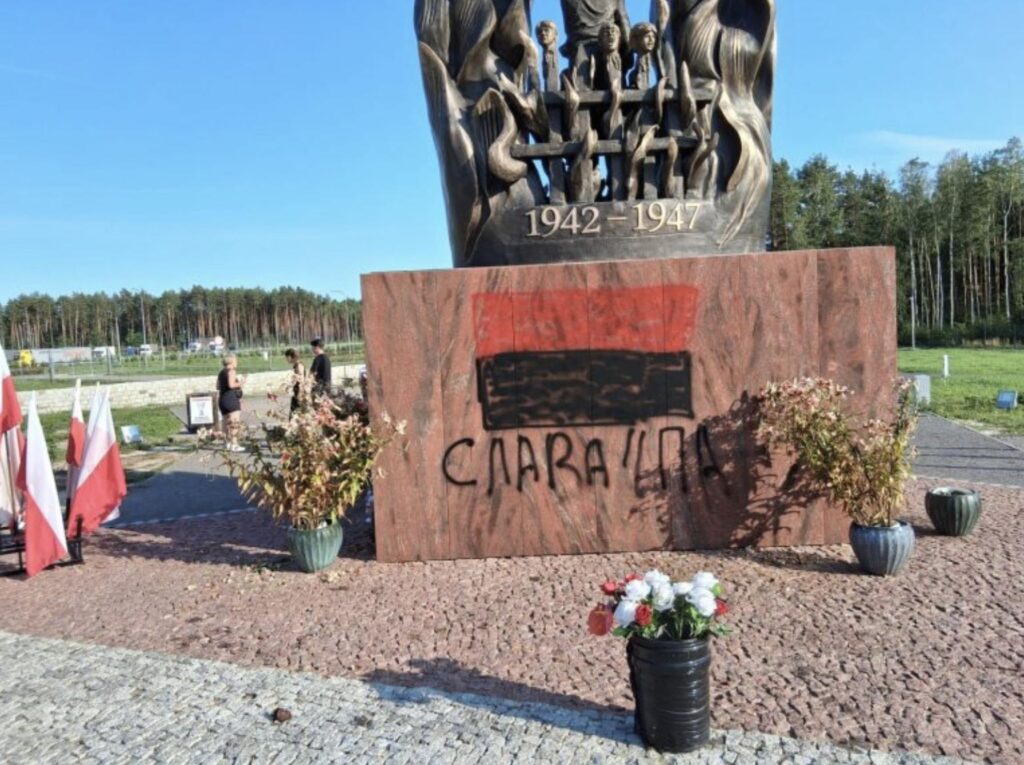
I think this is not only a memory war, but also a question of values. For me, killing and discrimination on national grounds is evil. I condemn the fact that Ukrainians were seen as third-class citizens in the interwar Polish Republic, not because I think in categories like “Ukrainians” and “Poles,” but because discriminating against someone according to certain criteria goes against my values.
Nowadays, in this war, I’m also on the side of Ukraine. And I absolutely don’t think that anybody has to be grateful for support. My choice stems from my values and from what I do. I believe I’m on the right side of history, on the side of the victims of military aggression.
The question of values is also a question of what kind of people we choose to be. The UPA leadership proposed a model of “Ukraine for Ukrainians,” without Poles or Jews. Yet there are many Ukrainian citizens of Polish and Jewish origin fighting in the ranks of the Ukrainian Armed Forces today. National minorities can also be useful for their states in wartime. For example, you have Polish origins and many connections to Poland through various communities and personal contacts. This lets you work more effectively for your state that’s now at war, right? You and I, Liana, have worked in humanitarian aid to Ukraine, we present at conferences, we write articles.
As I analyze Polish society, I understand that if Ukraine wants to collaborate with Poland on equitable conditions, as equal partners, we’ll need to reflect and work through shared traumas. Because of the war and Russian propaganda, this process is often viewed in Ukraine as an attempt by Poles to rewrite Ukrainian history. On the other hand, people in Poland perceive situations to be frivolous when Ukrainians talk about dialogue but commemorate the UPA at the same time. This happened, for example, with the recent naming of a military unit in honor of “heroes of the UPA,” which happened immediately after the conclusion of a conference of Polish and Ukrainian historians. A similar situation occurred in April 2015, when a law recognizing UPA members as independence fighters was adopted on the day that [Polish] president Bronisław Komorowski spoke before the Verkhovna Rada.
Another question is what Poland and Europe mean to Ukraine. I get the sense that Ukraine views relations with Poland, as well as Brussels, through a Russian prism. This is understandable during wartime. Yet the narrative that “Brussels and Warsaw can’t tell us how to live” is unproductive for collaboration and support for a “strategic alliance” between Poland and Ukraine. The European Union, as well as any community, is based on certain compromises. All relations, collaborations, and alliances require cooperation. This doesn’t only apply to Volyn: it’s how trust and relationships with people are built.
On the other hand, it’s worth asking the question of who has a voice in discussions on Volyn today. So far, those whom the story concerns the most—on both sides—usually don’t have a voice. On the contrary, the topic has been monopolized by several “memory warriors” and large institutions like the Institutes of National Memory in both Poland and Ukraine. Maybe we need to decentralize the discourse on Volyn, support local Polish-Ukrainian initiatives, and return this history to the people that are most directly affected.
Thoughts on research methodology on the mass killings in Volyn
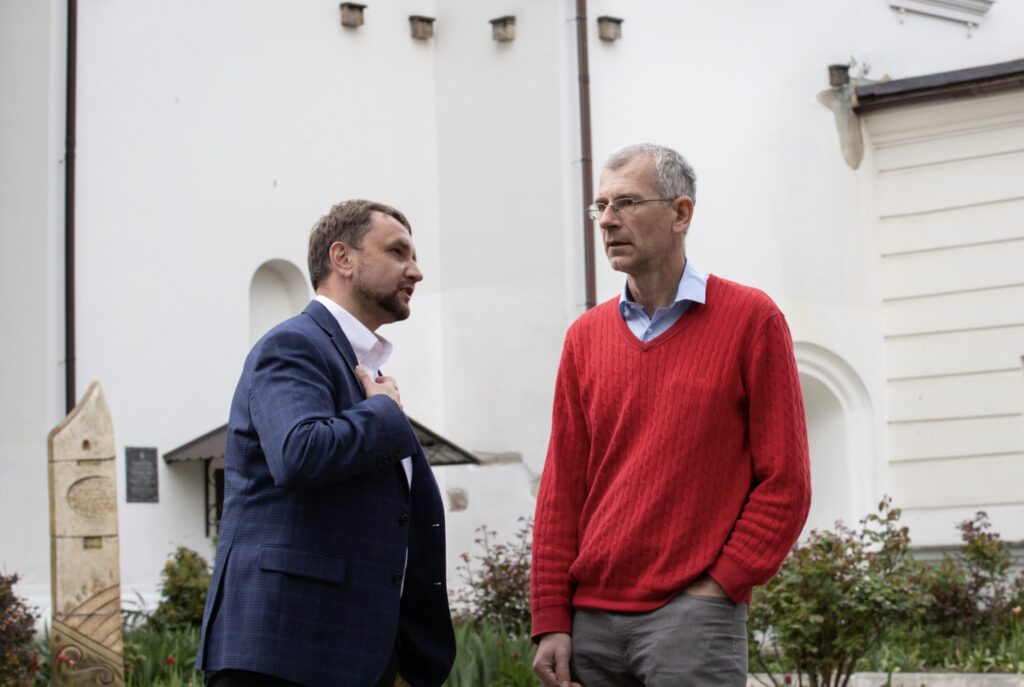
I was at your lecture with Petro Dolhanov. There are also the memoirs of your grandmother, Stanisława Kwiecińska, that were published in 2018, an excerpt of which was translated into Ukrainian and released on REEsources. What do personal testimonies allow us to see that political or military history do not? Our mutual colleague Andriy Usach works with what is called “contradictory behavior” in Holocaust studies: when the same person saves some people and kills others.
Something like that also happened in our family. The UPA member that guarded my grandmother’s family was my great-grandfather’s brother-in-arms back when they were serving in the Russian tsarist army. When the partisans attacked the village, he said: “these are my Poles.” He added: “don’t kill them. You can loot, but don’t kill them.” I know from family legends that my relatives saw their Ukrainian neighbors as friends, so they didn’t want to leave. Later, when the neighboring villages of Hurby and Zelenyi Dub were burned, they had doubts. It was ultimately that UPA friend that convinced them to flee. He said that he wouldn’t kill them himself, but he wouldn’t be able to hold back his comrades anymore. To this day my grandmother recalls the name of my great-grandfather’s comrade that protected them, and she’s 97. His name was Gapin, he was from the village of Moshchanytsia. That might have been a pseudonym, not his real name. It’s entirely possible that he didn’t kill “his Poles” but killed others. We don’t know.
I think we can, for example, look at the Volyn massacre from below, by studying the fate of the victims. Most of the research that we have today centers on political and military history. This is the perspective of main characters who approved decisions and issued orders. But when talking about memory and honoring victims, we need to look at what happened through the eyes of ordinary people that were the majority of the population: the eyes of peasants. They were not only Poles, but also Ukrainians, Jews, Czechs. Seeing the fate of each individual person can protect against heroizing those who should not be. People make difficult choices during war; Ukrainians understand that better than Poles today. If we look at history from below, we can see all these nuances and hard decisions that people were forced to make. For Poles—and not only for them—it was the question of staying in Volyn or fleeing. Of whom to trust. Who will hide and save us, and who will kill us? Which of our neighbors is collaborating with the underground and is most likely to betray us, and who will remain silent or stand up for us?
In general, it would be good to step out of national frames and not look only at national groups, which will inevitably generalize and create a monolithic picture: so they say, all Poles acted this way and all Ukrainians another way. We need to look at local dynamics. People behaved differently and made different decisions, especially in mixed families. But without any whitewashing. Then, maybe, the path to reconciliation will begin, but only after condemning the perpetrators.
What are the biggest methodological challenges that arise while researching the mass killings in Volyn? How can you work with fragmentary sources and archival materials that often are lacking?
There are archival materials, but you need to look at them critically and analyze the context in detail. For example, this applies to the interrogations of UPA members that were conducted in the post-war Soviet Union. Obviously they were asked about the motives and reasons for the killings. But to avoid punishment, they denied the crimes and completely justified themselves. It’s also important to look at what happened from the perspective of social history. For example, we shouldn’t repeat World War II propaganda that all Poles were occupiers, enemies, and aliens on Ukrainian soil that needed to be killed. My family, for example, lived in Volyn since the 18th century, from the time those villages were settled. They were most likely impoverished Polonized nobility of Ruthenian origin from the Kyiv region, so-called odnodvortsy. Other branches of my family were Lithuanian Tatars that came to Volyn around the same period, as well as local Jews. The Poles that came to Volyn in the interwar period were deported deep into the USSR during the first Soviet occupation. So the people that were considered the worst “occupiers,” who had seen war, were already gone in 1943. The UPA’s “enemies” were other, autochthonous Poles.
Contra spem spero
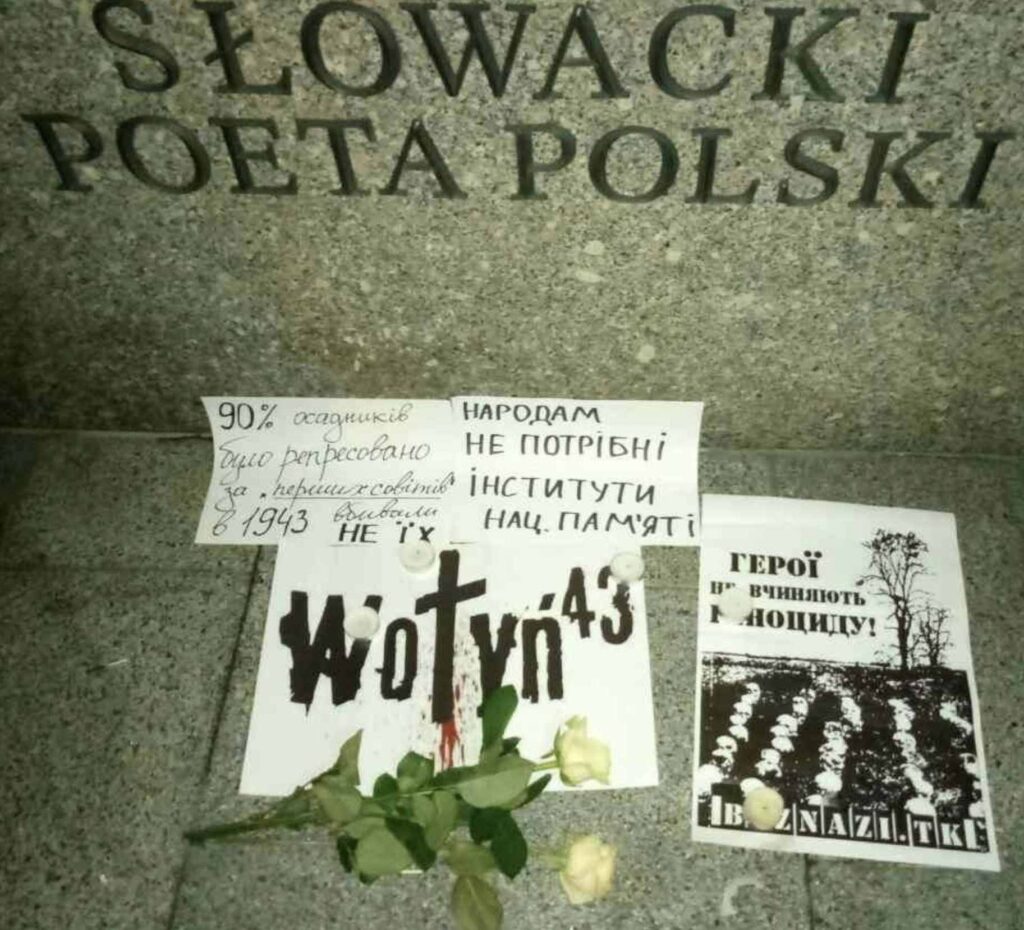
Three articles by Petro Dolhanov, Yaroslav Hrytsak, and Oleksandr Zaitsev were recently published. Petro addresses his article to a Ukrainian audience, examining historical myths as weapons and tools of self-defense in Russia’s war on Ukraine. He stresses that waging war—even a defensive one—“while heroizing the UPA tends to drag us into a complicated paradigmatic trap.” What do you think?
You know, it is definitely for Ukrainians themselves to decide which model of people they want to build. Will it be a “Ukraine for Ukrainians,” without national minorities? After all, UPA was complicit in killing Poles and Jews. This is an important marker for people outside Ukraine.
In an interview with the Polish journal Kultura Liberalna, Yaroslav Hrytsak notes that the UPA is seen in Ukrainian society mainly as part of the historical struggle against Russia. This is particularly important in war, especially after the Separate Special Purpose Regiment North was named in honor of “heroes of the UPA.” As Hrytsak said: “Ukrainians were so surprised by the reaction in Poland that nobody expected it. This gesture was made to Ukrainians and to Russia.” Oleksandr Zaitsev shares this thought in his short factual analysis of the history of UPA units. All these researchers highlight the differences between history and scholarship and collective memory, which uses historical facts and debates in politics.
In your opinion, what role does this context play in public discourse in Poland? How much do Poles associate the UPA with the fight against Russia? It’s another provocative question, but do you think it’s even possible for Polish society to see the UPA—and especially the declaration naming the unit after “heroes of the UPA”—in a different light?
I think UPA is a trigger. It’s an incantation. It’s like scattered grain for Ukrainians. UPA is an emotional trigger that causes an almost exclusively negative reaction in Polish society. Of course there were many Polish liberals and leftists that tried to explain that the renaming was not directed against Poland. I personally think that there’s a certain model of nationalism that can come back to bite us, both Poles and Ukrainians. Integral nationalism presumes that innocent people, civilians, and members of national minorities can be killed for the sake of the nation.
I think it’s impossible to exclusively associate the UPA with the fight against Russia. Maybe Polish liberals and leftists are to blame for arguing that support for the UPA in Ukraine is marginal. But the question arises: if Polish society realized earlier that it’s mainstream, would there have been the same willingness to aid and support Ukraine in 2022? I don’t know.
I also don’t know how to bring together a Ukrainian canon with UPA and a Polish canon with Katyn, the Warsaw Uprising, and Volyn. For example, after Ukrainian president Petro Poroshenko signed a law in 2015 “On the legal status and commemoration of the fighters for Ukrainian independence in the 20th century”—which recognized, among others, the Carpathian Sich, the UVO, the OUN, and the UPA as independence fighters—the Polish response was a Sejm resolution “On honoring the memory of the victims of the genocide of civilians in the Second Polish Republic in Volyn in 1943-1945 committed by Ukrainian nationalists.” There is a juggling of these decrees: a reaction to a reaction, in a loop. I think the same thing will happen now. Donald Tusk has blocked funding for the Volyn Massacre Museum in Chełm that the Law and Justice Party wants to open. But if, for example, the Roman Shukhevych Museum is opened, Poles will say: “Why can’t we have a Volyn Massacre Museum if they have a Roman Shukhevych Museum?” And this will only deepen the conflict further.
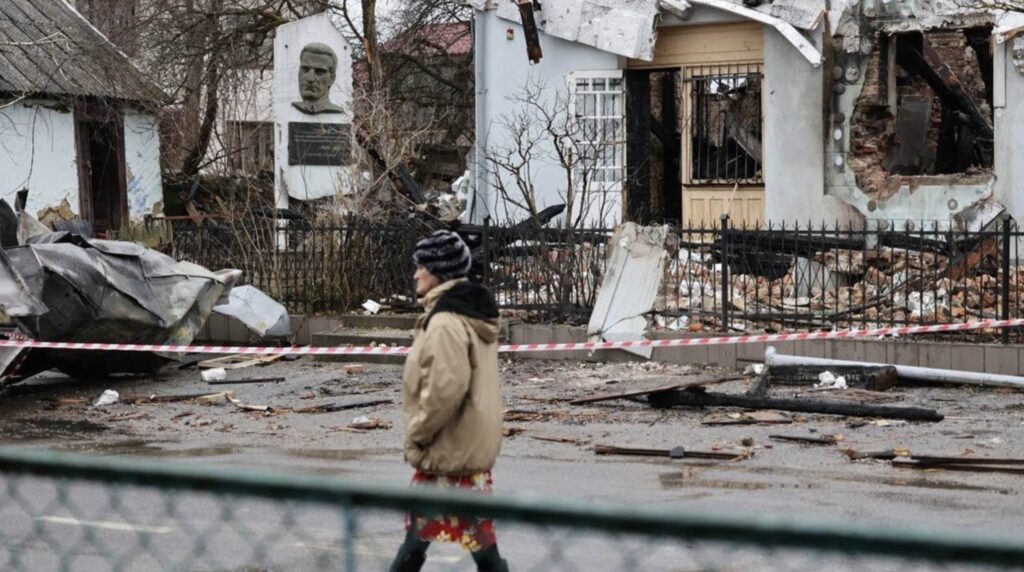
The Roman Shukhevych Museum in Lviv is a local initiative subordinate to the city council. It’s not a state project, but a local one, which makes the situation even more complex considering the time and place.
Yes, but the pantheon is at the nationwide level.
The pantheon is indeed a nationwide project. The Verkhovna Rada recently voted to create it. The only public critical voice that I saw was John-Paul Himka.
I can’t speak to the decisions that Ukraine takes inside the country. But I can say that there are many critical biographies of Roman Dmowski in Poland. Polish liberals and leftists criticize him constantly. I participated in a women’s strike fighting for the renaming of the Roman Dmowski Roundabout (Rondo Dmowskiego) to the Women’s Rights Roundabout (Praw kobiet). Likewise, on Ukrainian Independence Day—by the way, no Ukrainian media covered this, I don’t know why—there were counterprotesters at Gregroz Braun’s Confederation Party march. I was also there. We blocked the march so that his supporters couldn’t reach the Ukrainian concert. There were only Poles there. Ukrainians walked past, but the march and its blockade were part of an internal Polish conflict. In both Ukraine and Poland, the media mainly shed light on the right. Volodymyr Viatrovych would say that they quote everyone; Grzegorz Motyka would say the same. But us, women… I went to block Braun’s march as a Polish citizen because I disagree with the model of a people that assumes hatred on a national basis, including toward Ukrainians. Because if nobody protests, it means everyone agrees.
Let’s conclude with what sows hope. After Karol Nawrocki asked Volodymyr Zelensky to return the Order of the White Eagle, many people on social media started to symbolically “return” their medals, awards, and other distinctions. Related to that, you published several posts about things that you plan to keep under any circumstances…
My personal awards.
…I remember, there was a mattress from your historian colleague from Lviv, a Cossack figurine from a student, a letter from volunteer friends that lived in your apartment, which was a genuine coordinating hub for humanitarian aid in the winter and spring of 2022. Can personal relationships overcome the legacies of authoritarian tendencies in global politics, which can in turn influence both scholarship and public discourse? What is needed for this? Maybe a bit of critical thinking and empathy. What else?
Yes, I gave my colleague a mattress and said that he didn’t return it to me. But he gave me a drawing that I also do not plan to give back. I have a bunch of these little souvenirs from friends, people that lived at my place or whom I helped. It’s very sweet. Here, you see, on the shelf I have drawings by children from Zhovkva. I’m glad that I could express my position in this article. You know, I almost want to ridicule petty politicians. Zelensky received that award not because of Volyn, but because he’s the president of a country where real people are confronting a real evil. For me the real awards are my friends, acquaintances, and colleagues in Ukraine. This is everything that we can do together. I really appreciate that when I come to Ukraine, I always stay at someone’s house and not in a hotel. I really would like for that to continue. My friends in Ukraine are extremely important to me. I’m very grateful to them for everything.