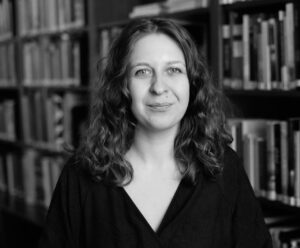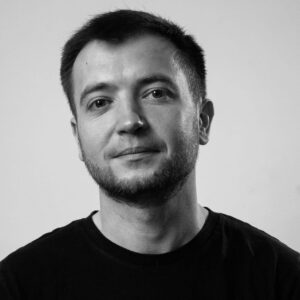
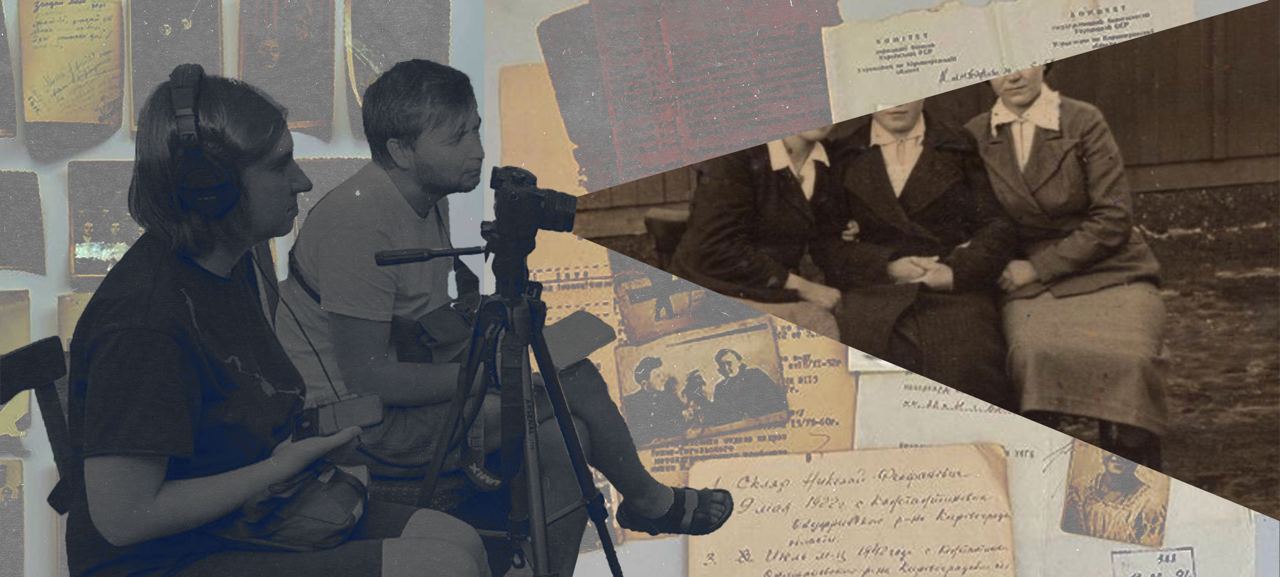
In 2021, cultural studies scholar Anna Yatsenko and historian Andrii Usach founded the NGO After Silence. Their experience of collecting oral-history testimonies about the events of the mid-twentieth century, working with the archives of security agencies, and digitizing private collections became the foundation for their work in public history and memory culture. In April this year, the community that had grown out of Andrii and Anna’s initiative gathered for a DIY exhibition devoted to five years of working together. The evening, held in a small space at 6 Hrebinky Street in Lviv, offered an opportunity to reflect on the tools and formats they had used: field research, physical and online exhibitions, documentary work, and media projects. A few days earlier, we spoke with Andrii and asked him about researching the Second World War and the postwar period in the context of Russia’s war against Ukraine. One of the key questions was how family photo albums, personal stories, and local practices expand the space for the individual within collective memory.
Andrii Usach is a historian, director of the NGO After Silence, and a junior researcher at the Mykola Haievoi Center for Modern History at Ukrainian Catholic University. His research interests include the history of the Second World War and the Holocaust in Ukraine and their memory, oral history, vernacular photography, and public history. Andrii is currently writing a dissertation on local collaboration and the Holocaust in the Bar district during the Nazi occupation.
Shaping the Memory of War in Wartime
Andrii, many parallels are now being drawn in public discourse between the present war and the Second World War. We can see that our understanding of certain contemporary processes does, in fact, derive from what we know about the 1940s and 1950s. How does the memory of the Second World War and the postwar period influence individual and collective memory in Ukraine today?
I suggest looking at this influence from two directions: from above and from below. At the grassroots level, people compare their current experience with what they heard from older relatives about the Second World War. Why the Second World War? Because in Ukrainian collective memory it is one of the most traumatic experiences, one that affected Ukrainians across the country and left its mark on almost every family and individual history. The Holodomor and the insurgent movement took place only in parts of the country. People make comparisons and find reassurance in them: “My grandmother lost everything during the war, but she survived, and I am proof that she managed to rebuild her life and start a family.” In other words, this experience helps people. For example, we recorded an interview with a woman who now lives in Berlin. During the Second World War, she was evacuated from Kyiv into the interior of the USSR. Had she not been evacuated, she would have been killed at Babyn Yar as a half-Jewish woman. During the Russian full-scale invasion of Ukraine, she was evacuated again, this time from Kyiv to Germany. This woman, who is now over ninety, told a story of losing her home twice, and she herself tried to compare the two wars.
So, on the one hand, we are talking about this kind of individual experience and reflection on one’s personal history. But when the initiative comes from above, when journalists or officials begin to say that what is happening now is the same as what Ukraine experienced during the Second World War, this is mostly untrue. Such people often lack the knowledge needed to make these comparisons. For example, there were many reports from the first liberated territories in the spring of 2022 where people said in interviews, “those Germans—oh, Russians…” This happened because they had not experienced any other war or any other occupation, so these experiences merged into one for them. But when people in positions of authority keep saying that the Nazi and Russian regimes are identical, this prevents us from seeing the nature of the Russian regime.
Unfortunately, the experience of the Second World War in Ukraine has not been critically discussed. Perhaps in the ten years before the full-scale invasion, a more or less serious conversation began about what the Second World War was in the Ukrainian context. But since the start of the full-scale invasion, this discussion has stopped. Many people also self-censor because they fear being instrumentalized by Russian propaganda. I, too, would perhaps not speak about certain things now. Yet at the diplomatic level, we make far too little use of these discussions to reach, for example, Germans, who respond strongly to topics connected with the Second World War but still view it first through the Soviet narrative and then through the Russian one.
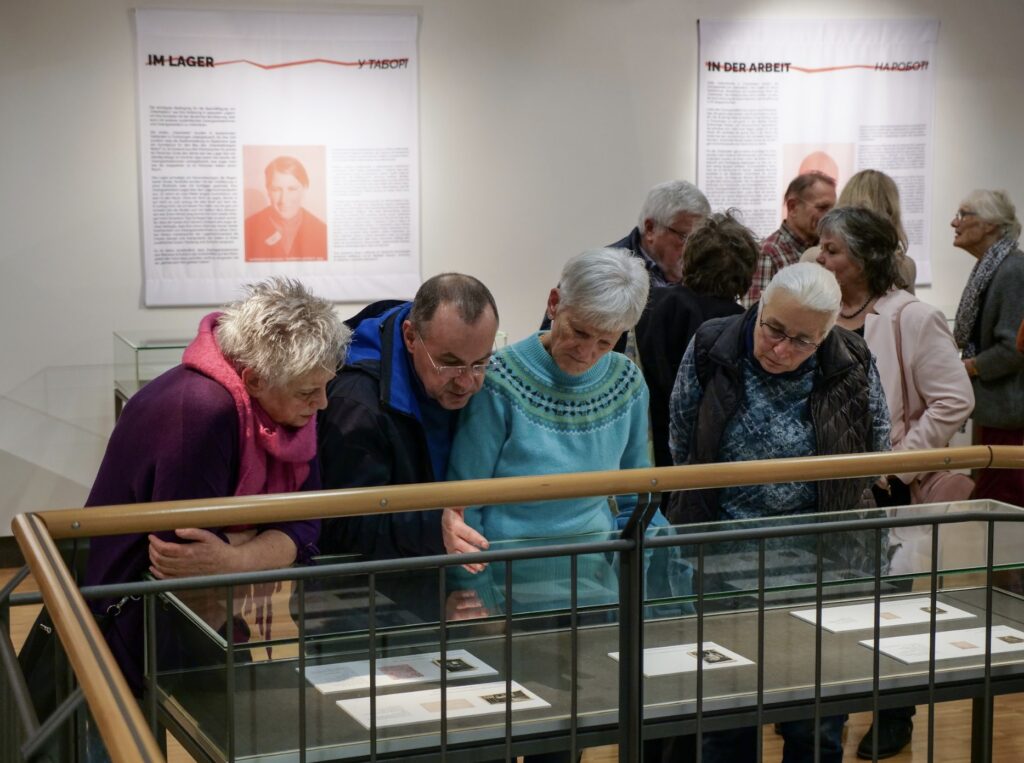
For example, one of the topics we work on is Ukrainian forced laborers in Nazi Germany. In official documents of the time, they were recorded either as “Ostarbeiter”—“Eastern workers”—or as “Soviet Russians,” regardless of their actual origin, and this latter term is repeated even in contemporary books. During one of our exhibitions in Germany, “Where our Blooming Years Passed”: Ukrainian Forced Laborers in Furtwangen, 1942–1945, our German colleagues told us: “But we have to write about everyone, because it wasn’t only Ukrainians who were forced laborers in our town; there were also Russians and Belarusians.” They then gave us a list of all the forced laborers, compiled from documents in the local archive. Anna Yatsenko and I manually combed through the entire list: 99.9 percent of them were from Ukraine, and many clearly identified themselves as Ukrainians. We can trace this through their letters, through the inscriptions on the backs of their photographs, and through the memoirs we managed to find. These were people from Vinnytsia, Khmelnytskyi, Volyn, Poltava, and Cherkasy regions. And, I think, there were only three women from Belarus. So there were no Russians among the forced laborers in that town at the time. When we showed this work to our local colleagues, they were impressed, and now in Furtwangen they speak about Ukrainian forced laborers and offer guided tours of the places where they lived and worked. In other words, concrete, targeted cooperation with small museum, research, and archival institutions abroad works, but very few people in Ukraine are doing this.
I do not know of a single state institution that is now focusing on the Second World War and actively working with it. Who should be doing this? The Second World War Museum in Kyiv? It is increasingly reorienting itself toward presenting the current war. In general, this is a broader problem in the field: colleagues take the places, narratives, and resources through which the Second World War used to be discussed and begin to use them to speak about the full-scale invasion. That is very simple, but it does not work. We shouldn’t conflate them, because every war and every case of mass violence is different. First of all, the conditions are different: the mid-twentieth century and the twenty-first century are completely different times, and wars are fought differently. When we say that it is the same thing, we are engaging in self-reassurance instead of trying to understand what is happening; we are appealing to already existing templates.
We can say that there are many people who are living through the second major war of their lives. For example, those who were children or teenagers during the Second World War are now experiencing the full-scale invasion in old age. We have towns and villages that were effectively destroyed during that war and are now facing destruction and depopulation for a second time. These are things we need to talk about. We also need to say that our society is going through an especially traumatic experience because our collective memory already contains one great war: destruction, mass killings of civilians, shootings in the streets. We don’t know this experience in the way some hypothetical American might know it from a history textbook; we heard about these events from our grandparents, and that is why we perceive certain things more sharply and more emotionally.
Doing History from Below
Please tell us about yourself and about the organization After Silence. Why this name? What does “silence” mean here, and what suggests that the “after” has arrived?
After Silence is an NGO we founded in early 2021. We created it in order to work in public history—as we call and understand it. At first, most of our work focused on oral history research. We are interested in historical events of the mid-twentieth century: the Second World War, the Holocaust, forced labor, and Soviet postwar repressions. Accordingly, there are fewer and fewer people with whom we can record interviews: these are people in their eighties, nineties, sometimes even over a hundred. Even those who are still alive are not always able to tell their stories because of their health. That is why we are now gradually shifting our focus toward working with archival photographs from this period. The name After Silence reflects the fact that we talk about topics that were taboo for a long time, especially in the Soviet period, and many of them do not fit into the current national canon of history either. As a result, people often keep silent about them or speak about them reluctantly. But the time for a serious conversation about difficult topics came long ago. That is why it is “after”: some issues should have been discussed and certain stories documented a long time ago, so we are doing it now, at least belatedly—“after.” In general, we say that our work will be appreciated later. On the basis of oral history interviews, family archives, and documented stories of ordinary residents, we as a society will be able to study what happened in Ukraine during the Second World War.
Last year, we opened the After Silence public history space in Lviv, where we hold exhibitions, presentations, and other public events, record interviews, digitize family archives, and preserve our own collections. After Silence is a genuine civic organization created by people from different fields: I am a historian; Anna Yatsenko, who chairs the board, is a cultural studies scholar; and the team includes videographers, photographers, designers—in general, people from a range of backgrounds, all of whose skills and expertise are very important. In other words, this is not some appendage to a state institution through which money can be siphoned off. Nor is it an NGO created as a branch of a foreign organization.
Many of your projects are the result of cooperation between independent researchers and civic initiatives. How are these collaborations built? How are the expeditions that form such a large part of your work organized? In other words, how do you work and divide responsibilities?
There is work that we do continuously. First, there is the recording of oral history interviews; the second part is the digitization of family archives. This work does not depend on whether or not we have funding for it. Because a grandmother who is, say, a hundred years old will not wait while you apply for a grant, wait for a positive response, and then come to her. She may die in the meantime. Our main goal is to collect as much material as possible, because we are catching the last train, so to speak: this is the last point at which it is still possible to speak with living eyewitnesses of those events. But when it comes to specific public history projects, we obviously spend a great deal of time looking for funding. Anna Yatsenko and I make up the core team. We handle the main managerial work, while distributing other responsibilities among many people based on their expertise.
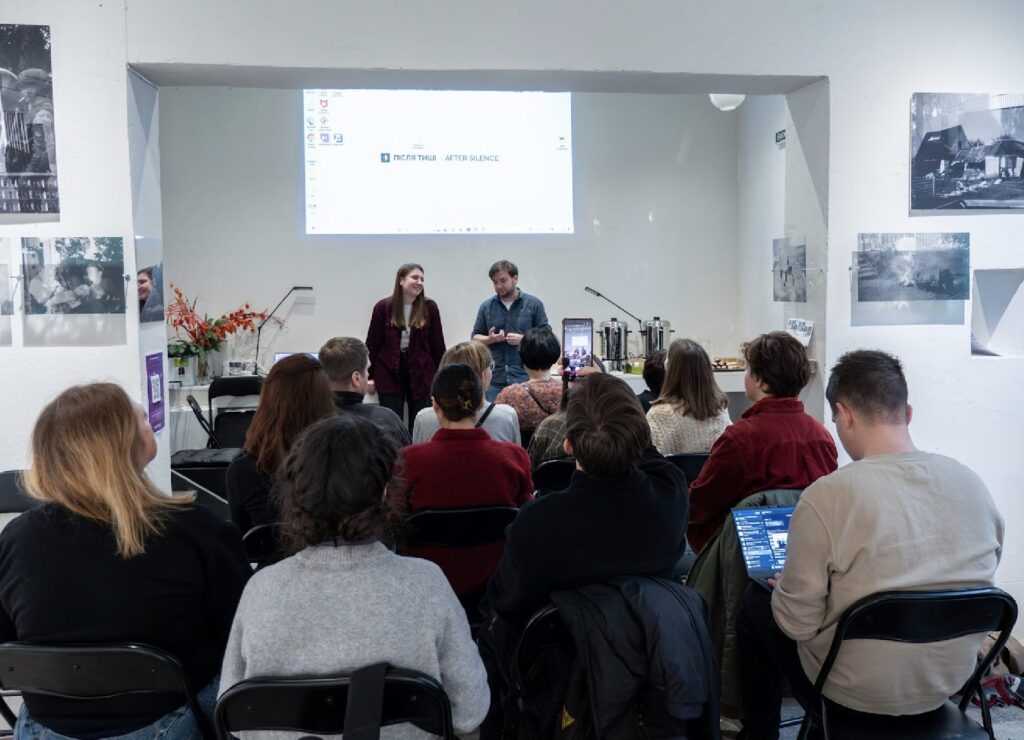
We try to cooperate with various small initiatives. After Silence is also a small initiative, and we try to work with similar ones so that the partnership is on an equal footing—something we maintain in our partnerships both in Ukraine and abroad. When we organized exhibitions in Germany, we looked for small museums or institutions in provincial German towns because it was easier for us to work with them. And one of our rules is that we never enter into cooperation on the assumption that our partners will look for money for us or give us money. We find funding for a project ourselves, write to the people we see as partners, and if they agree, we carry out the project with them. This allows us not to be the “poor relations” who come with a project and expect someone abroad to fund it. In fact, few people work this way; everyone wants to find funding precisely through foreign partners. In Ukraine, too, we work regularly with various institutions. For example, we have collaborated with the Zdolbuniv Local History Museum in the town of Zdolbuniv, Rivne region. We helped them create a new exhibition on Soviet and Nazi violence. There is also the NGO Huliaipole Antiquities, with whom we are now carrying out our second joint exhibition project. One of our most recent larger projects, H-Files: Digitization of Micro-Archives on the Holocaust and Other Nazi Crimes in Ukraine, is being carried out together with the Arolsen Archives—the largest archive containing documents on Nazi persecution, located in Bad Arolsen, Germany. We were looking for different initiatives in Ukraine that could digitize archives on the Second World War, the Holocaust, and forced labor. These were initiatives in different towns and cities and in different formats: small local history museums, NGOs, and simply active people interested in local history who are ready to do something to preserve it. In total, these are thirteen initiatives from Vinnytsia, Volyn, Zhytomyr, Zakarpattia, Zaporizhzhia, Kyiv, Kirovohrad, Rivne, Cherkasy, and Chernihiv regions. Although we are permanently based in Lviv, it is important for us to work across Ukraine and to deal with topics that are not limited to the history of this one city.
Did people ever come to you and offer to help with projects? For example, researchers who saw what you were doing and decided to join you? Are there people who help you find contacts—someone writes, say, “I have a neighbor who wants to tell her story, let’s record her”?
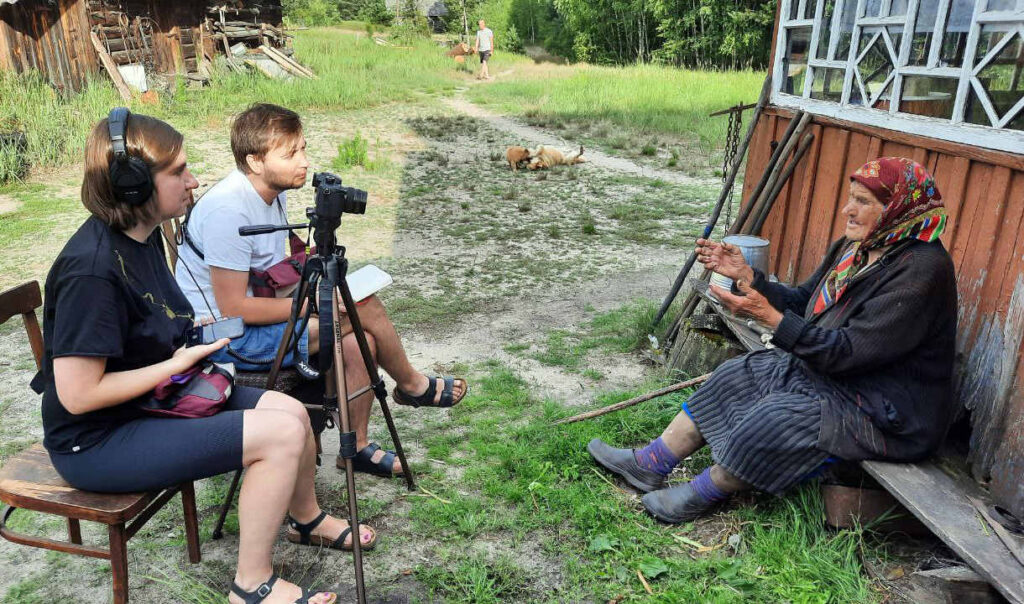
One of the ways we find narrators for our oral history research is through contacts with local activists. This might be a librarian, an employee of a local museum, a teacher—anyone who has contacts and authority among local people. We cannot simply walk in off the street to some elderly woman and start asking her questions. She might just be frightened and not understand that we want to talk to her and document her story. Or we might see on social media or in the media that a village museum has put on an exhibition about Soviet repressions. We contact them, and they tell us: “Yes, we’ll arrange it, come, because we don’t have the means to record this interview in good quality ourselves.” Another example is our very fruitful cooperation with the activist Yuliia Davydiuk from the Ovruch district in the Zhytomyr region. Thanks to her, we recorded around thirty interviews. She was constantly looking for people, arranging meetings with them, and we would come for a few days, travel around the villages, meet with elderly women and men, record interviews, and digitize documents. It seems to me that before us no one had really recorded oral history interviews there. We are active on social media: we constantly write about our findings and research, and people who want to digitize their family archives respond to this. A recent example: a man from Sumy sent us his father’s diary. His father had been a forced laborer in Nazi Germany. It is quite a thick little notebook in which he recorded his thoughts about that time and the events that happened to him—an amazing source, the kind you rarely come across, especially if you work only in state archives. People send us materials, we digitize them, return the originals, and share digital copies with them, along with any additional information we find about their relatives in the archives.
Shared Tools for Working with Materials Rescued from a Wastepaper Collection Point
Personal archives, like individual voices, often remain outside the attention of major state institutions; they are destroyed, lost, thrown away, or sold at online auctions. I remember that this is how you found your first photographs of female Ostarbeiters. How do you work with these materials, which become sources for your research and exhibits in your exhibition space? And how does their endangered materiality affect your work?
These materials are endangered even without the war, because of the indifference of descendants, because people are not used to paying enough attention to preserving their family archives or the testimonies of older relatives. At the same time, although we are now able to record fewer interviews, we are digitizing more and more recordings that people made in the past. Someone tells us, “I recorded my grandfather on cassette.” Fine, we will digitize it and preserve it. So people did preserve these experiences after all, but the war has meant that more people than before have begun to pay attention to their family histories and to the preservation of family archives. The full-scale war became a catalyst. The threat that artifacts in archival and museum collections may be destroyed encourages people to try not to let the Russians destroy family memory as well—this is very noticeable. More and more people come to us for advice: How can I preserve an archive? Where can I find information about my grandfather? Look at my photographs—do they belong to the period I think they do? Could you advise me? And so on. It is encouraging that more people are trying to preserve family memory, because from it, from all these tiny fragments, we will one day piece together, like a mosaic, our understanding of the larger history of Ukraine.
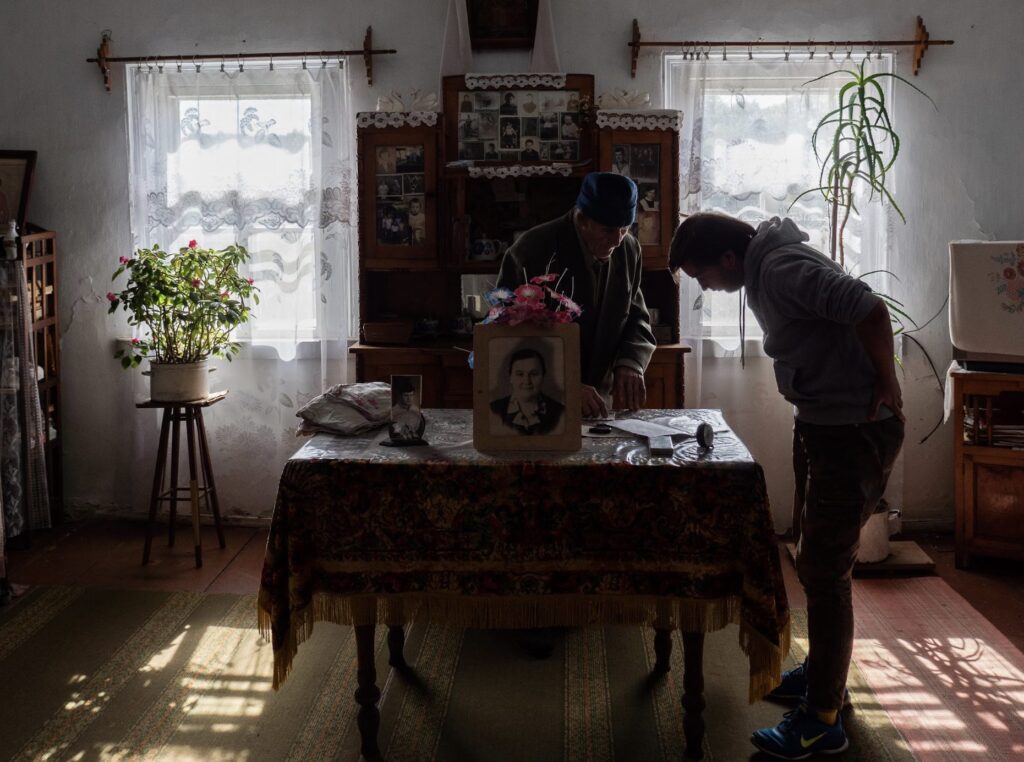
A great many photographs and archives are destroyed not only because of the war. Often it is because of indifference or even superstition—for example, burning a person’s photographs after they have died. Or: I don’t know whose photographs these are, so I’ll burn them. That is the worst thing that can happen. In a better-case scenario, a person dies, their children sell or renovate the apartment, and the builders do not throw these things in the trash but sell them. Then people who are genuinely interested in them see them at an online auction. For five years now, we have been searching for photographs of forced laborers, buying them, digitizing them, and publishing them. The online archive “While staying in Germany” already contains more than five hundred photographs, and this year we will upload around 150 new ones. All these photographs were bought at online auctions.
They once belonged to someone, but that person most likely died, and the photographs entered the commercial market; they lost their story. Sellers can very rarely tell us anything. It is the exception for them to know which village a photograph comes from, and sometimes they can even say who it belonged to. Most either do not know or do not want to say, so we have to do the work ourselves: to look for the link between an individual story and a photograph, often piecing entire archives back together. There may be a photo album, and someone breaks it up and sells each photograph separately. We collect all of this and reassemble lost archives. They are valuable in themselves because they are archives from different regions of Ukraine.
When it comes to Ostarbeiter photographs, they were taken in different parts of Europe. Mostly in Germany and Austria, but also in the territory of present-day Poland, France, and Luxembourg. We even had one photograph from Switzerland. These photographs connect Ukrainian history with the vast history of the European continent, which is why we publish them—and the response has been very strong. More than once, people have recognized their relatives. People used to exchange photographs; that was one of their social functions. “My grandmother gave photographs to an acquaintance whom she never saw again after the war, and now, browsing the website, I see a photograph of my grandmother that I didn’t have.” Or: “I had no photographs at all; I have only just seen one now.” Working with this photographic heritage requires extraordinary attention not only to the photographs themselves, to the inscriptions on their backs and to markings in the images that may be barely noticeable at first, but also to archival work, above all in Ukraine and Germany. Many foreign researchers and museum professionals contact us about photographs that interest them, but they also share their own materials. That is why our online archive is available in two languages, Ukrainian and English.
We also use the archives we find and purchase in our exhibition projects. We have had exhibitions both in Germany and in the Kirovohrad region, in a village museum in Rozumivka. Recently, there was the exhibition From the Siberian Side, based on a family archive that a woman gave us for permanent safekeeping. She was worried that there would be no one to look after this archive after she was gone, whereas now she knows that we will preserve it. And during the exhibition, this archive grew almost threefold. In addition to what she had brought us, she found more materials at home and brought them while the exhibition was already running; later, relatives from other branches of the family also gave us their photographs and various documents. So it turned out that we had reassembled this whole archive, which had been scattered among different relatives. We try to build an exhibition around a single archive, because this allows us to show the history of one family in a more structured way, while also presenting it as an example of a larger history. For example, an exhibition about Soviet repressions based on several people from one family can be more powerful than simply appealing to large numbers.
The most recent item we received for permanent safekeeping was the diary of an NKVD officer, which a librarian found among wastepaper. Someone had handed it in, and she posted about it on Twitter. I immediately wrote to her that we were ready to accept and research it. She did not know what to do with it; she thought it was the diary of a Red Army soldier. When I leafed through the document, it immediately became clear that the man had served in the Soviet NKVD security police. We identified him and just recently received his personal file from the archive of the Security Service of Ukraine (SBU)—four volumes. This diary could simply have been disposed of together with the other wastepaper, even though it reveals the person’s thoughts much better than official documents do. For example, there are entries saying that he personally shot German prisoners of war. Not Germans at the front—he was not fighting. He simply shot prisoners and wrote: “I am not in favor of mass executions, but I did a good job yesterday.”
All of this could have been destroyed, and it shows how much has already been lost. On the second day of the full-scale invasion, the Russians destroyed the SBU building in Chernihiv, and the entire SBU archive in Chernihiv burned down. This means that we will no longer be able to research the history of the Chernihiv region in the twentieth century at the level we could have before 25 February 2022. At least, we can estimate the scale of those losses, because we know how many files were kept there; we have inventories, lists, and so on. But what is kept in family archives, in people’s homes that are being destroyed—those losses are impossible to assess. And this, it seems to me, is the biggest problem when we talk about the fate of archives. Mice eat them, water destroys them, Russians loot them. We had one case in the H-Files project I mentioned earlier. Colleagues from the Makariv Local History Museum were digitizing filtration files on people who returned to the Soviet Union after the war. Everyone who returned to the Soviet Union after the war had to undergo so-called filtration—a check of their political reliability. And then our colleagues found one such filtration file in a trench after the Russians had left. A woman from the Lviv region had been a forced laborer in Nazi Germany, and now her file was found in a Russian trench in the Kyiv region. Most likely, it had been stolen from an archive. Perhaps when these files were being transferred from former KGB archives to state archives in the 1990s, some files disappeared and were sold to collectors, and perhaps this one came from the house of some collector. Why was it there? The Russians were looking for anything they could use to heat their field stoves. This file could have been burned; and even if it had not been burned, it would have been destroyed after the first rain. Vitalii Hedz, the director of the Makariv museum, walked through those trenches looking for everything he could find. He expected to find artifacts of the present war, but instead he found an artifact of the previous war. There is even a small photograph of that woman in the file. We have digitized it and will make it public. So you never know where you might find something.
You run workshops and summer schools where, together with participants, you look for tools for working with family archives. People also come to your space looking for security-agency files on themselves or their relatives, and you help them fill out applications to access this information. What do you think explains this interest? And what is your motivation as researchers?
This is the social component of our work. If we say that archives need to be preserved, it would be strange not to help people who want to do that.
People’s interest also has to do with the Russian full-scale invasion of Ukraine. A great deal has been lost. People did not have time to put family photo albums into their evacuation bags, or they could not do so because albums or framed photographs are very bulky. And then they regretted it: their homes may have been destroyed or ended up under occupation, where they have no access to them. In other words, for various reasons, people have begun to take family histories and their preservation more seriously. Having lost something, they try to make up for it by searching wherever possible: in state archives or in archives abroad, when it comes to forced laborers in Nazi Germany. People who have never had any experience of archival research are very surprised when they write to us saying, for example, that their grandmother came from the Poltava region and survived forced labor, give us a few brief details, and say: “I have only one photograph of her, I’ll send it to you.” And a few minutes later, I can send them a digitized filtration file on their grandmother. It contains an interrogation protocol, an autobiography, and various certificates sewn into the file. Many of these files are now being digitized. It would not be fair to say that nothing has been done in recent years. A lot has been done, often not by state institutions, but these materials have been made accessible, so we can find information on certain regions very quickly. It is worse when we are dealing with occupied territories or with archives that were destroyed or looted by the Russians during the full-scale invasion—Crimea, Donetsk region, Luhansk region, Kherson, for example. So when we have a case from the Donetsk region, it is always difficult: our search options are very limited.
People are interested in methods of working with these materials. How best to digitize family photographs, because: “We are no longer living at home but somewhere abroad, and I’m not going to take ten photo albums with me, but I can take a small flash drive with all of them digitized and send copies to all my relatives, who are now scattered across Ukraine and around the world.” Because of this, people sometimes give us original materials for permanent safekeeping: they have a digital copy, and at this stage of their life that is enough for them. It is easier to preserve, easier to share, easier to look through. There are special archival supplies for storing photographs: acid-free sleeves, acid-free boxes, and so on. Obviously, few people are going to buy these for a family archive. First, in Ukraine they are practically impossible to buy; second, they are very expensive. We use grant funding to ensure proper storage for our collections. But I can already see that there are people using these materials to store their family photographs. These are not isolated cases. They see them in our space, come to us, ask questions, and we advise them.
We run various workshops and summer schools. For example, our workshop on vernacular photography surprised even us. We announced it as an experiment: Would there be a group of people interested in this? More than fifty people applied, and we selected even more participants than we had originally planned. People work with different photo archives: with the legacy of their grandfathers who were photographers, with things they found or bought at a flea market. They are now interested in researching whose negatives and whose photographs these are. And we ourselves are constantly learning useful things from these people, because we discover new stories, original methods, and fresh ideas. We work a lot with those who took part in our summer workshops on public history, Recall, Reflect, Retell, and in the school on vernacular photography; we stay in touch with them and involve them in projects. Our most recent exhibition was Plus Plus: Double Exposure, already about the present war, featuring photo projects by the active-duty soldier Yehor Samofal and the filmmaker Liza Svyrydenko. Liza, in fact, is a graduate of our summer workshops.
A family archive can offer a great deal for understanding larger events or broader groups of people. Correspondence, for example. At one point, we digitized letters written by a man from the Gulag—dozens of them. One could write a separate study based on this material, through the fate of one person, through these ego-documents. You are unlikely to find sources like this in state archives. Sometimes people have a very large body of photographs from a single period—for example, from forced labor in Nazi Germany: dozens of photographs. And it is clear why. These people could not buy food or clothing with money, because everything was distributed through the ration-card system, and Ostarbeiters were almost never issued these cards. But they could have their photographs taken freely, and they paid money for that. Or, for example, a woman gave us the archive of her mother, an Ostarbeiter from the Kyiv region. It contains postcards, photographs, and songbooks from that time. Through them, we can also reconstruct that person’s identity. She wrote postcards in Ukrainian and was photographed wearing embroidered clothes. And most of the songs in her songbook are Ukrainian. We also have another songbook belonging to young women from the Cherkasy region, born in the 1920s—probably Komsomol members, young Soviet women. Their songbook contains the song “Chervona Kalyna”, and the Sich Riflemen are mentioned in it. This, too, reveals these people’s identities, something that is difficult to find in official documents alone.
We do not have professional photograph conservators, but we do have many photographs that have been badly damaged by moisture, mold, or physical impact. There are conservators who can sometimes take a photograph and do a little work on it, but this will not be a fully professional, high-quality restoration. Why? As an NGO, we cannot hire someone full-time and send them to Kraków to study photograph conservation—that is probably the nearest place where one can train in it—while also providing them with a stable, decent salary and the necessary resources to do this work. So who should be doing it? Our archives, our museums? Sometimes we encounter the fact that they simply do not understand the value of photographs if they are not from the nineteenth century but later, especially from the second half of the twentieth century. They say: “These are from the 1950s—what are we supposed to do with them, what are they for?” But the 1950s were almost eighty years ago. And these are not just some superstitious, uneducated people. These are precisely the people who are supposed to be responsible for preserving memory. Fortunately, this is not the case everywhere: there are many excellent museum professionals, especially in smaller cities and towns. The other problem, however, is that these small institutions are now barely surviving.
The Movement of Sources Between the Battlefield, the Researcher’s Inbox, the Public Space of a Village, and the Frame of Collective Memory
You are now writing a dissertation on collaboration during the Nazi occupation and local participation in the Holocaust. You have written about the 1941 pogrom in Lviv, and a few years earlier your documentary film Wordless came out—a very specific case of searching for memory in a small town in the Lviv region. How can one work with places and communities where some crimes are discussed while others are forgotten? Why is it important to talk about collaboration?
It is important to talk about collaboration because it is one of the perspectives through which we can understand the events of the Second World War in Ukraine. Obviously, not everyone was a fighter in the anti-Nazi resistance, and not everyone was a victim of Nazi persecution. There were people who helped the Nazis persecute Jews or others—Roma, members of the resistance, forced laborers, and so on. This is important to study, just like any other topic related to the Second World War. In the history of the Holocaust, it is important because we cannot understand this history by studying only the victims or only the rescuers. Of course, it is more pleasant to talk about victims and rescuers, but we also need to talk about those who committed these crimes. The most interesting thing I encounter is what genocide studies call “contradictory behavior.” These are cases where a person, as part of the police forces, killed Jews or persecuted them in other ways, while at the same time saving some of them—sometimes not just one person, but several. Sometimes that person’s behavior could change within a single day. I studied the case of a local policeman who, on one and the same day, saved a Jewish family he had known before the war and then, later that day, finished off Jews with a shovel in an execution pit. So who is he? Only a collaborator and perpetrator of violence, with blood on his hands? A rescuer, later remembered with gratitude by the Jews who managed to survive? A front-line hero? Cases like this are interesting because through them we can understand a great deal about ourselves, too—about how we may act in extreme situations. And wars do not end; the Ukrainian experience, unfortunately, shows us this. The more we know about the decisions people made in extreme conditions, the more consciously we can understand our own family, local, and broader histories.
The Holocaust is a very well-researched topic, but when we move to the local level, to the micro-level, it turns out that we know very little about how it happened in Ukraine. There are general studies in which everything is very simple: local residents persecuted their Jewish neighbors because, supposedly, they were antisemites. But when you begin to study these specific people at the micro-level, it turns out that there were not that many committed antisemites, and very few of them actually appealed to ideological claims—for example, that Jews should be persecuted because they were all supporters of the Soviet regime, and so on. No. A minority simply remained silent, while the majority of people did what they were told—whether out of conformism or because they could obtain the victims’ property, and so on. Some Ukrainian historians are making their contribution to contemporary Holocaust studies, but not as strongly as they could. And yet we are the ones who have access to the sources and a better understanding of the context and local conditions, especially compared with researchers who may never have been to Ukraine, never worked independently in local archives, never spoken with witnesses, and quite simply never visited the places about which they have written entire monographs.
Documentary film, in turn, is a good tool for speaking to a wider audience about the local history of the Holocaust. We made our short documentary film Wordless back in 2021 as an example of how the history of extreme violence in a specific locality can be studied. After watching this film, a person may realize that there are still elderly people in their own village who can tell their stories. They need to be recorded; they should be asked to show photographs and tell us who is depicted in them. Then one can go to the places people have spoken about and document what they look like now: the houses within the former ghetto, the sites of mass killings, or the destroyed Jewish cemetery. Wordless is, in essence, a kind of guide to how one can study the local history of any extreme violence, not only the Holocaust. It seems to me that this is the greatest positive outcome of our work: more and more people are becoming interested in local histories of that period. Obviously, we cannot cover everything, even if we wanted to.
How does working with so many individual stories affect you as a historian and your research?
In my research, I rely mainly on ego-documents, which reveal people’s individual experiences. We need to write the histories of ordinary people—that is much more interesting than writing the umpteenth book about Stepan Bandera. We need to write a book not about Bandera, but about the Banderites, you see? About ordinary people who, in one way or another, found themselves, for example, in the Ukrainian Insurgent Army (UPA)—why, under what circumstances, what their motives were. Were they all such committed nationalists? Not always. When you go down to the micro-level, you can see that everything is not as simple as we are used to learning from overview studies or books about famous people. We interviewed many people who survived Soviet repressions, and their stories are completely different. Some of them did not speak very positively about the experience of participating in the nationalist movement. Why? That is another question—each individual life needs to be examined specifically. But if we do not examine these individual lives, it is impossible to understand why arguments over Bandera are still taking place in Ukraine. One of the reasons is that almost nothing has been studied in detail beyond the figure of one or two people who supposedly symbolize the entire movement. And this applies to everything. The Red Army, too: did it fight for communism, or did every Red Army soldier fight for communism? That is absurd, yet in Ukraine, unfortunately, it is still customary to view these events through a very simplified lens. I work a lot with criminal case files. They make it possible to look at individual lives, at ordinary people in extraordinary circumstances, and at how they behaved in those circumstances. Every person deserves to have their story written separately. It is difficult, but all the more interesting for that. Unfortunately, the anthropological turn in Ukrainian historical scholarship has not yet fully taken place.
How does what you do change the research process, the production of knowledge, and the development of memory culture?
The work we do is something Ukraine has generally lacked. Before the start of the full-scale war, there were not many research or public history projects that examined Ukraine’s history from the perspectives of its various participants. Take the Second World War, for example. The inhabitants of Ukraine included those who survived the Holocaust, those who rescued Jews, those who fought the Nazis with weapons in their hands, those who helped the Nazis with those same weapons in their hands, those who supported Soviet power or opposed it, forced laborers, prisoners of war, concentration camp inmates, people from burned villages and cities destroyed by bombs. We have still not learned to look at history with an awareness that there were different perspectives—and this is where the problems with collective memory come from. Everyone’s relatives occupied some place in that history, and their stories shaped individual perspectives, which in turn determine what we do or do not want to talk about. But a larger, shared conversation has not taken place. At the same time, it is precisely local history, microhistory, and attention to individual experiences and everyday life that shape a view of war as something more than the movement of troops on a map. We look at the tragedies of ordinary people because we ourselves are, in fact, those ordinary people. Most of those who lived on the territory of present-day Ukraine were not famous military commanders, politicians, or cultural figures. They were mostly peasants or workers. So we look at the war through the prism of these different stories told by our relatives, and that is why this memory often remains confrontational or one-sided: everyone wants to speak first and foremost about their own story.
Once these individual experiences have been equally highlighted and discussed, officials should work with public historians to reach a consensus and think about memorialization. We have not yet arrived at a comprehensive form of memorialization that results from hearing the voices of different groups. For some reason, in Ukraine, the state is the main actor that, through a number of officials, wants to impose what the memory of the war should be. I am very skeptical about this, except when it concerns the burial places of soldiers or civilians who have died in this war. I think it is still too early to erect memorials at sites of occupation, battles, and so on. We have not yet talked through what memorialization of the full-scale war should look like, and there is no guarantee that in a few years we will not be speaking about it differently.
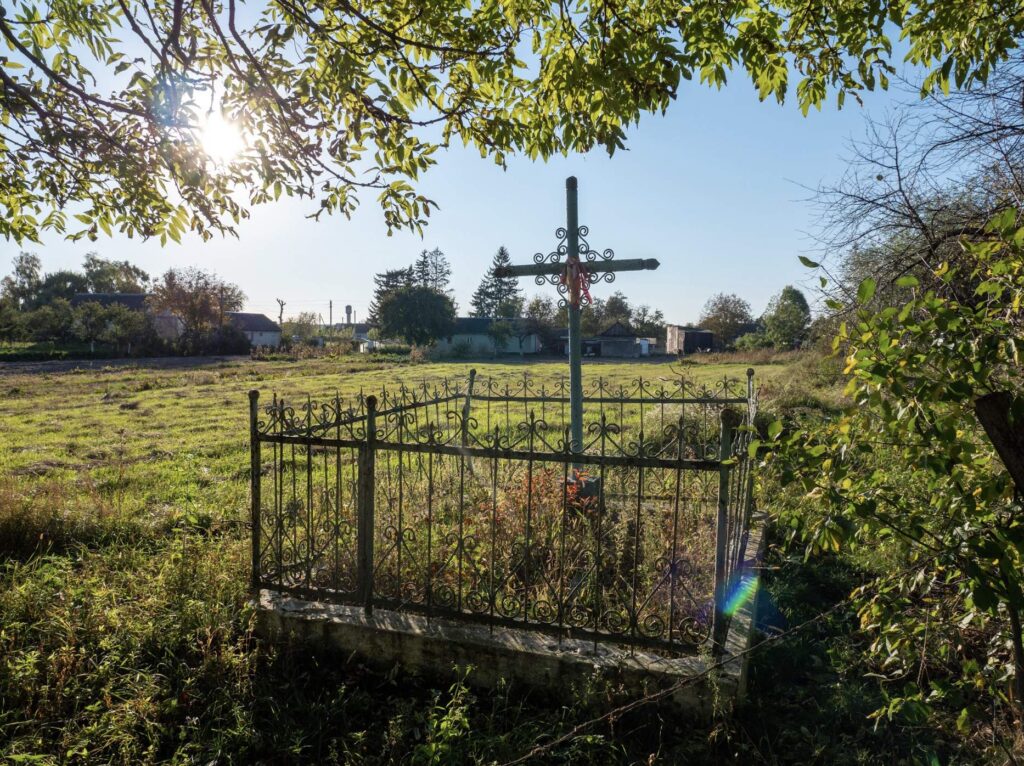
We should pay attention, first of all, to various grassroots practices of memorialization. They usually seem more empathetic and more ethical than what the state wants to do while spending huge amounts of public money. Let us again take the example of the Second World War. How did people preserve memory? They often planted trees in places where there had been burials or where important events had taken place, or they put up handmade crosses. Just before the start of the full-scale war, we were in the village of Remel in the Rivne region. The Nazis burned it down completely and killed more than four hundred people there. Small crosses still stand there in courtyards and gardens. At first, we thought these were the kinds of roadside shrines that are traditionally placed at crossroads. Later, we learned that relatives had put up these crosses at the sites where people were killed, on the burned ruins. Later, those graves were exhumed, and the Soviet authorities created a large burial site in the center of the village. But these crosses have remained, and people look after them. Their children and grandchildren can say very clearly: that cross marks such-and-such a family; there were two little children there, a mother and father; and over there, a grandfather and grandmother were killed. We walked with people and recorded them on camera as they showed us these places and told us the stories. This works better than that pompous Soviet memorial made of concrete. So we can see that alongside official memorialization, somewhere to the side, there is something more understandable and more humane.
It seems to me that the Ukrainian authorities, and the institutions that deal with memorialization, need to pay more attention to society’s reactions and to the forms of memorialization that society itself produces, so that they can draw on them later. When the railway station in Kramatorsk was hit by a Russian Tochka-U missile on 8 April 2022, people simply placed a flower on each train seat where those who were killed were supposed to have sat. This is empathetic. And if it became a permanent act—if on that day each year those seats were marked in this way—it would be a far more productive memorial practice than pouring money into a concrete monument that, in a year or two or three, will no longer say anything to anyone.
We are observing these processes right now. If you walk around Lviv, you will see many monuments, and you will not be able to say clearly what half of them are about. So now we need to wait, observe, talk together about what people want, and look for consensus. And I am not sure this is something that can be resolved in the next few years. Otherwise, it will be like in the Soviet Union: there will be a million almost identical concrete monuments to the unknown soldier, all with the same face.