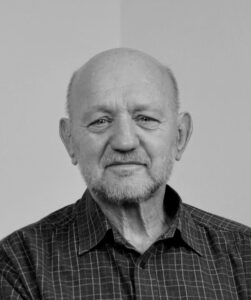
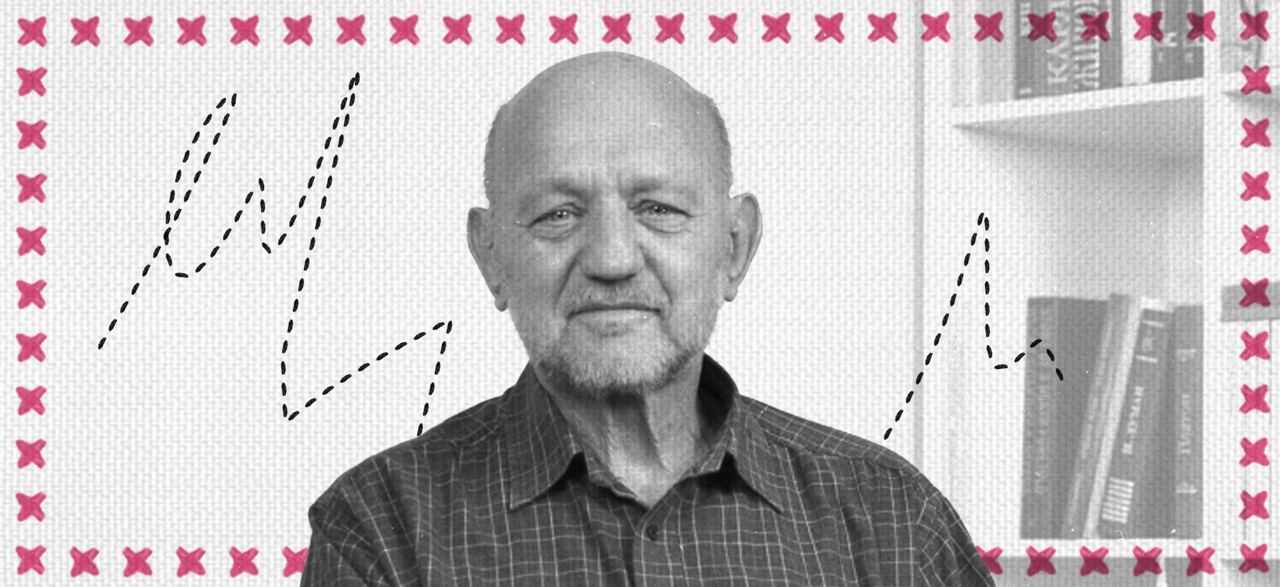
Maksym Kazakov: Marko, in Ukraine you were known as an excellent analyst of contemporary Ukrainian affairs—politics and socio-economic development. Now people have also come to know you as a historian and a researcher of the working class and the national question. But today I would like to ask you about your life and work as a civic activist. You were born in Australia. People arrived in the diaspora by many different paths. How did your family end up outside Ukraine?
Marko Bojcun: My mother was taken to Germany from Slovakia during the war. My mother and her father, Petro Kulchytskyi, were fleeing the front; they reached Czechoslovakia on foot, from where they were deported to Germany. There my grandfather died, and by the end of the war my mother found herself in a refugee camp. My father was a company commander in the SS Division “Galicia.” At the end of the war he was imprisoned while the division was being screened. He was later released and ended up in the same camp as my mother. They got married, went to Italy, and sailed from Italy to Australia in 1949. There they were put into camps again, but separately: my mother in one, while my father was sent to build a railway in the mountains. They lived separately and in camps for another two years, and only then settled in the city of Newcastle, where I was born in 1951. My father worked first on the railways and later in a steel plant. My mother ran our farm: we had a small plot of land. I grew up mostly in the bush on the outskirts of Newcastle. I went to school barefoot almost all year round, until it turned cold for a few weeks. Australia is a hot country. That is how I grew up. The Ukrainian community in Australia was quite small, about 20,000 Ukrainians in the whole country. In Newcastle, there were around 200. My parents became active members of the community: they taught at the Saturday school, built a community hall, and later a church.
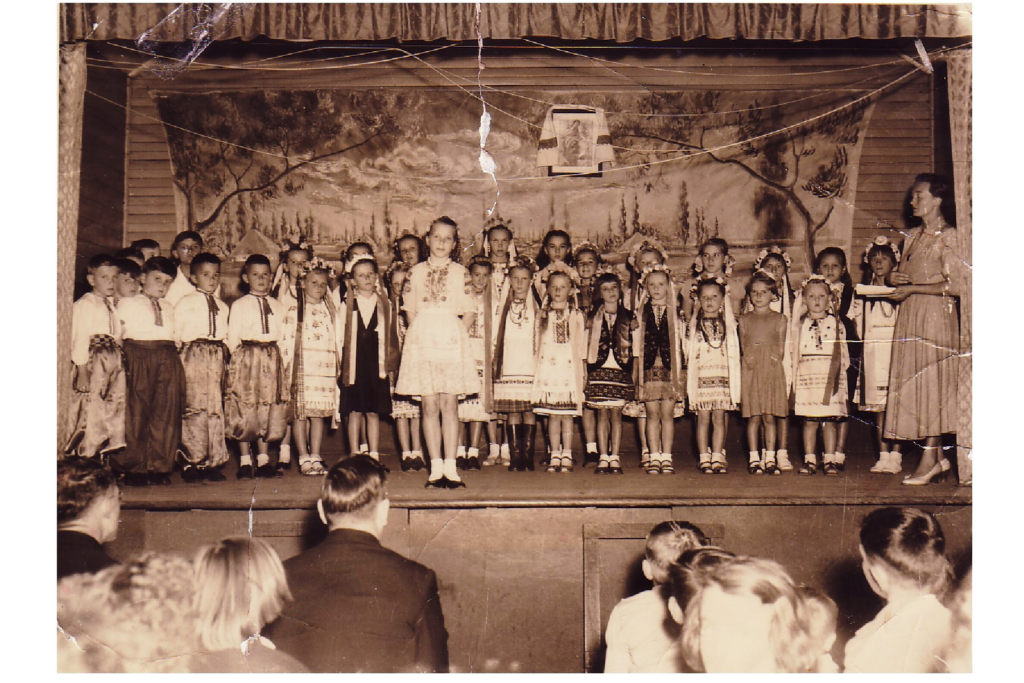
We lived in Australia for twenty years, but in such a small community. My parents decided we had to emigrate once again, this time to Canada, where my father had sisters, and not far away, in the northern US states, he had brothers. They wanted to be closer to family and to belong to a larger Ukrainian community. My parents hoped that their children would become better Ukrainians if they could see what that looked like in a larger community. So we moved in 1968. We sailed from Australia to Canada. When we left Australia, the temperature in Sydney was about +40°C, and when we reached Toronto by train after crossing all of Canada, it was -20°C (laughs). In three weeks, we moved from a semi-tropical country to a semi-arctic one.
MK: You moved in 1968, when the largest student protests were taking place in the United States and the African American movement had reached its peak. In 1969, the legendary Woodstock festival took place. Did you feel that spirit of the 1960s when you arrived in Canada?
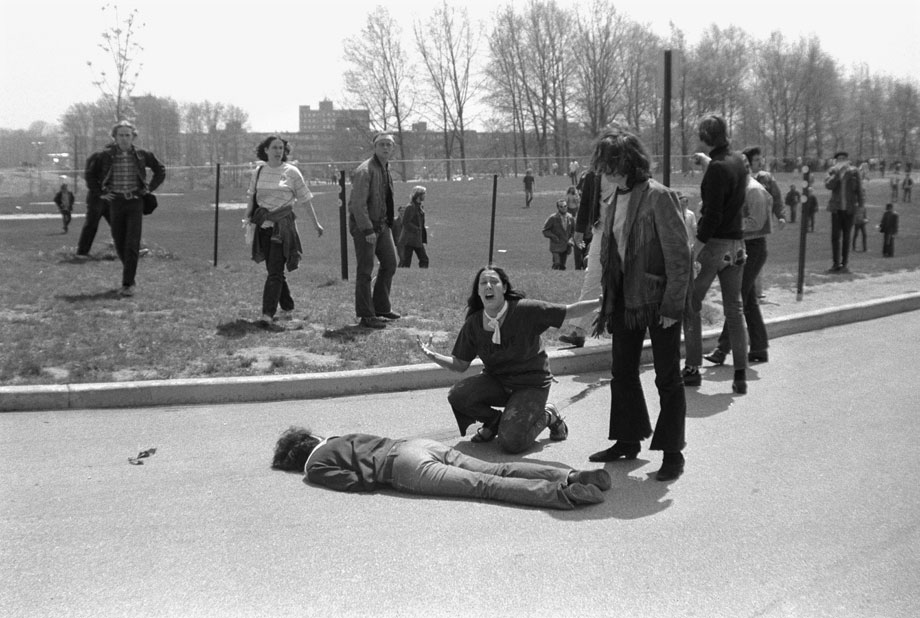
MB: Very much so. I came from the Australian bush to North America and lived in a city for the first time. The Vietnam War was raging on, and many young men were fleeing to Canada to avoid being drafted. The students at Kent State had been shot. The first action I took part in was a protest outside the American consulate in Toronto against the killing of the students at Kent State.
In those years, the first generation of émigrés grew up with the opportunity to study at universities. So I met Ukrainian Canadians at university and very quickly became involved in the Ukrainian student movement. That student movement, both Ukrainian and Canadian, was gradually moving to the left. Within a year, one could say, we had all become socialists. We moved away from the uncritical acceptance of, or acquiescence in, Ukrainian nationalism in which we had been raised… That is, it was not something we had freely chosen, but we had been brought up in that spirit. We moved from Ukrainian nationalism to radical socialism, and some of us to Trotskyism. That is how I joined the Trotskyist movement. We were involved in defending Soviet political prisoners, demanding rights for ethnocultural minorities, and taking part in broader actions against the war and in support of the Quebec people’s right to self-determination. But what was happening in Europe as well—May 1968 in Paris, the Soviet invasion of Czechoslovakia in August of that year—all this, too, felt very close to us.
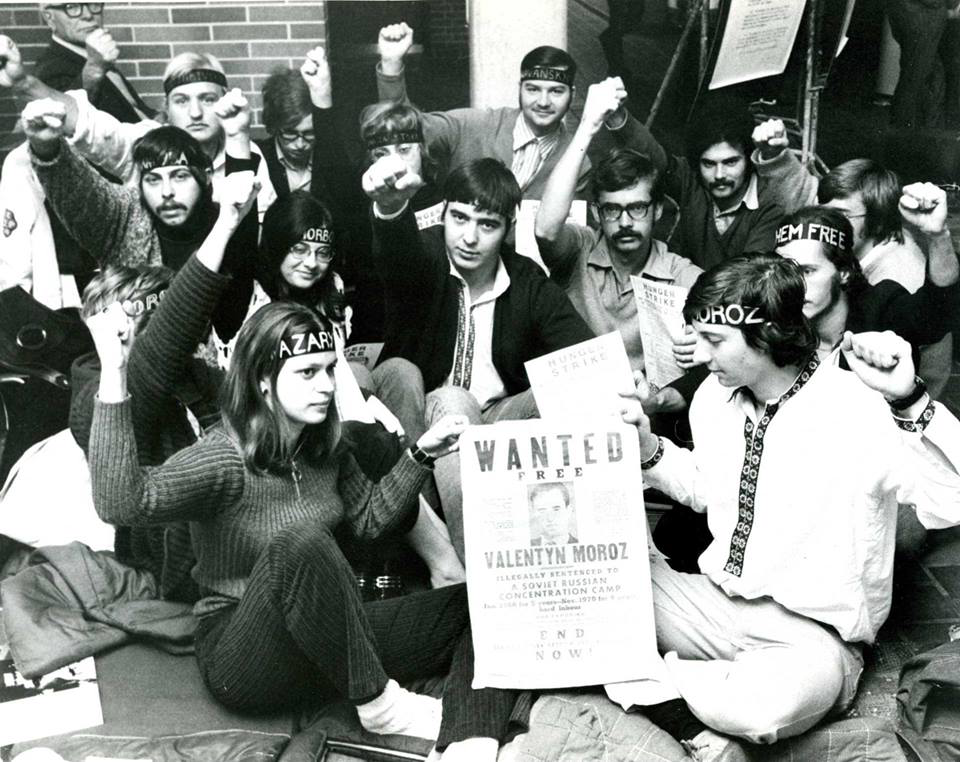
We followed those events, the development of the dissident movement in Soviet Ukraine, and the repressions of 1972. That gave rise to demonstrations. I organized a hunger strike in Winnipeg, if I am not mistaken, in 1972. At that time, we managed to bring Canada’s prime minister, Pierre Trudeau, to us. He was forced to negotiate with us so that we would end the hunger strike. Trudeau agreed that when Soviet Premier Kosygin came for talks with him, he would raise the issue of the repressions and of political prisoners in Ukraine. We ended the hunger strike. So those were the kinds of actions taking place. Many of us were becoming radicalized and moving to Europe to study at universities, especially in Scotland. Bohdan Krawchenko went there first and later founded Critique, a quite influential English-language journal on the history and contemporary situation of Central and Eastern Europe.
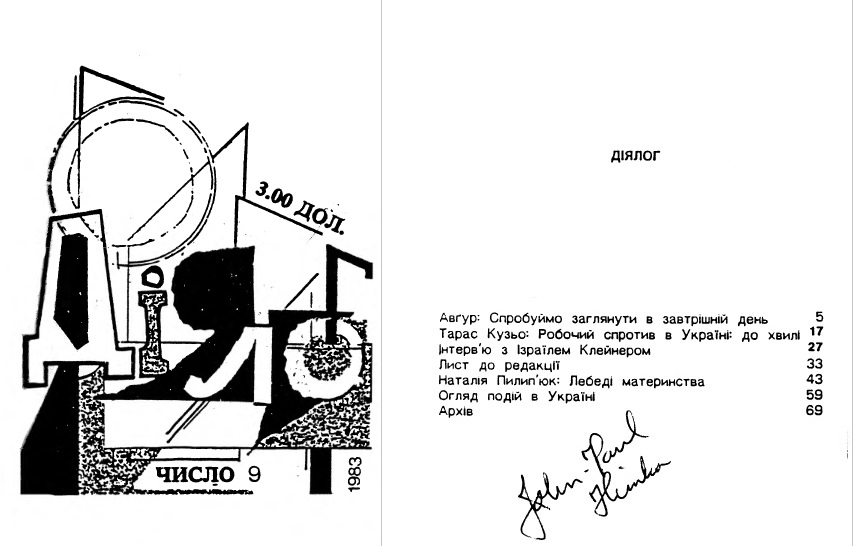
In London, Glasgow, and Paris they were “recruiting” students from North America. In 1975, we launched a new action—smuggling illegal literature into Eastern Europe in support of the resistance movements: Ukrainian, Czech, Polish, and Hungarian. We took part in organizing a network that supplied clandestine literature, typewriters, paper, various forms of material aid, and all kinds of books. In 1975, we also founded the journal Dii͡aloh. An English-language Meta was also published in Canada. Both journals reflected on, commented on, and took part in discussions about political developments in the Soviet Union and Eastern Europe, as well as about Afghanistan and the Solidarity labor movement in Poland. Those were the issues at the center of our attention.
Within the Trotskyist movement, I belonged to the International Majority Tendency in the United Secretariat led by Ernest Mandel. I left it in 1982 because the Canadian section, where I was then living, took an ambivalent position on the Soviet invasion of Afghanistan. I regarded that as a disgraceful step and demanded the immediate withdrawal of those troops.
MK: And how did the older generation of left-wing Ukrainians in the diaspora influence you?
MB: We were friends with them. It was the generation of the Ukrainian Revolutionary Democratic Party (URDP), which had been founded in the displaced persons camps after the war. It was the generation of Vpered, the radical socialist newspaper published by Vsevolod Holubnychy, Roman Paladiychuk, and Ivan Maistrenko. We got to know those people in the 1970s, read their works, received copies of Vpered from them, and tried to continue that tradition, revive it, and apply it to contemporary tasks. I personally met Ivan Maistrenko in Munich in 1975. He was already seventy-five, but he looked very impressive. He wore a Cossack moustache—a genuine Ukrainian SR. When we went out for beer, he put on a leather coat he had brought from Ukraine. The coat was probably still from the time of the Civil War. I met Vsevolod Holubnychy in New York. He had a major influence on our understanding of the history of revolutionary movements and of the Communist Party of Ukraine, of the development of the Soviet Union, of the economy of the Ukrainian SSR, and of the famine of 1932–1933. We learned a great deal from him on all those subjects. He was a unique figure, rare in the Ukrainian émigré community, because he stood on Marxist positions. He truly was one of the leading scholars and in scholarly work surpassed almost everyone of other political convictions, especially the nationalists. He was respected far beyond the Ukrainian community, in academic circles in North America and Europe.
It so happened that the Americans, who occupied western Germany together with the British and the French, did not allow Ivan Maistrenko, and at first Vsevolod Holubnychy as well, to emigrate to America. Maistrenko had been a communist, and Vsevolod Holubnychy was disabled. But Roman Paladiychuk, who was also part of that left-wing movement, that small community in West Germany, managed to move to Canada. All of them were poor and had no funds with which to publish a newspaper. But Paladiychuk was resourceful and knew how to make money when needed. So, he would buy coffee from South America in Canada and send it by mail to Munich. There, the editorial board of Vpered would divide it into smaller packets and sell it to American servicemen and other Munich residents who could afford real coffee. And with what they earned from those sales, they financed their newspaper for ten years. The newspaper was remarkably successful and attracted a great deal of attention.
MK: How was the Ukrainian left organized in Canada?
MB: The circle of leftists itself was small. There were no more than fifty committed people who actively worked on publishing the journal and organizing actions, hunger strikes, and demonstrations, but the actions we organized were much larger. The first demonstrations in Ottawa in December 1970, when Kosygin came, drew up to 5,000 people. We mobilized quite a few through the Union of Ukrainian Students in Canada—it was not a political organization but a student community. In the mid-1970s, it had several thousand members. But the actual left-wing core was rather small. Left-wing ideas were very popular, and that was reflected in newspapers and journals such as Student, Meta, and others, as well as in the content of the actions themselves. This lasted until the mid- or late 1970s, and then a long, long decline set in. Society as a whole became much more conservative. Neoliberal policies took hold in North America and Western Europe. The circle of leftists was shrinking, and by 1985 it was barely visible. Only isolated individuals here and there were still trying to do something. I moved to England in 1985 and stayed there, and I started publishing another journal called Ukraine Today. Together with Yarko Koshovyi, we brought out two issues. Then the Chornobyl nuclear power plant exploded in 1986, the thaw came, along with perestroika and glasnost, and Gorbachev came to power—and the need for clandestine activity receded. Even if there were still people ready for that kind of action, we could now act more openly, travel freely to Eastern Europe and finally to the Soviet Union itself, establish contact with people we had long been trying to reach, and help them. And so matters carried on into the 1990s. By that time, there was no longer any Ukrainian left in the West.
MK: What were relations like between the socialists and the integral nationalists in the Ukrainian Canadian milieu?
MB: When the Ukrainian left emerged in Canada, it created a great deal of friction and tension with the Banderites, and somewhat less with the Melnykites. The Dviykari, especially in New York, very much wanted to be on friendly terms with us, because they were the most liberal wing of the OUN. They even wanted to recruit us into various projects of theirs. They saw that we were active, young, energetic students preaching left-wing ideas, but they thought they could work with us. The Banderites, however, disliked us very much. I remember that sometime around 1973 I was sitting in church, and during his sermon the priest accused me personally before the entire congregation: there are communists among us, he said; this is the black hand of the KGB interfering in the Ukrainian community. My father lost his job because of my activities. He worked for Homin Ukrainy, a Banderite newspaper in Canada. They kept instructing him to question me about what was going on in the Ukrainian student movement, who among us were informers, and so forth. But my father was not the kind of person who would inform on me, even to the OUN. In the end, they forced him to leave his job. After that he worked outside the community. The nationalists put pressure on all the leftists because they were in control, they were dominant in the organized Ukrainian community, and they saw us as a threat to their dominant position. It could be a sharp ideological duel, but a verbal one, never a physical one.
MK: And how did you imagine Soviet Ukraine? What was the Ukrainian SSR for the diaspora left?
MB: Personally, I was strongly influenced by Trotsky and his book The Revolution Betrayed. I did not regard the Soviet Union as a degenerated workers’ state, but as a dictatorship in which the bureaucracy, although it did not possess private property, held the economy and the coercive levers of the state in its hands—in other words, it ruled. We saw the Soviet Union as a milder Stalinist dictatorship, because this was already the period after Khrushchev—the time of Brezhnev and Kosygin. We believed that what prevailed there was not only the ideology of Stalinism, a one-party dictatorship presented as the face of the dictatorship of the proletariat, but also a Great Russian chauvinist party that oppressed the non-Russian peoples of the USSR, who had no right to genuine self-determination except perhaps in mild folkloric cultural forms. The constitutional right to national self-determination was not recognized in practice.
MK: When did you first travel to the Ukrainian SSR, and what impressions did it leave you with?
MB: I first arrived in the summer of 1988, with a great deal of fear. I was sitting on the plane, flying in, and looking down: we had already crossed the border, and I could see the villages, the land. I realized that I had already arrived in Ukraine. I said to myself: when the plane lands, I will get off it and kiss the ground. So I stepped off the plane, and down below there were people standing there with rifles! A whole line of soldiers. I thought, “Damn it, I’m not going to kiss that ground in front of them.” So I just went straight to the airport. I waited until I got to Taras Shevchenko Park in front of the Red University Building, and only there did I kiss the ground. I arrived with a certain amount of fear, but I was already bringing literature in my suitcase. I had two suitcases: in one I was carrying things for the family, shoes, clothes, some sort of tape recorder. That suitcase was stolen from me at the airport. I never found it. In the second suitcase, which I had taken with me onto the plane, I had literature. I complained loudly that the larger suitcase had been stolen, and the border guards did not inspect what I had in the second one. That is how I brought it in and was able to pass it on to people here. That was my first trip. I came with a tourist group. We ended up in Lviv, and I went to see Archbishop Sterniuk of the Ukrainian Greek Catholic Church, who was under house arrest. I visited him. He was not released for another year. In 1989, when I returned again and was driving in by car from Hungary, I was able to meet Vyacheslav Chornovil, Bohdan Horyn, and representatives of various opposition groups that had emerged in Lviv, Kyiv, and other cities. The whole atmosphere had changed markedly. That was when I really began to interact with members of Rukh (People’s Movement of Ukraine). The Soviet Union was already moving toward collapse.
MK: Among those opposition figures whom you met in the Ukrainian SSR, was there a left-wing segment? The dissident movement had begun with a left-wing critique of “real socialism,”but by that time were there still any leftists left in that milieu? Or had they all already become liberals and nationalists?
MB: The ideological spectrum was very broad: from Greek Catholics and Baptists, who were also persecuted, to nationalists, democrats, members of the Communist Party who sincerely demanded reform, and defenders of the Ukrainian language. In 1989, I encountered a couple of left-wing groups in Lviv. One of them was a young group of Ukrainian social democrats who saw it as their duty to guarantee the safety of the demonstrations taking place in Lviv. Huge demonstrations were under way. Those marshals who walked around with armbands and kept order were young socialists and social democrats. It was a separate group. They took me to Chornovil. He liked debating with them and regarded them as intelligent interlocutors. I do not know what became of them later.
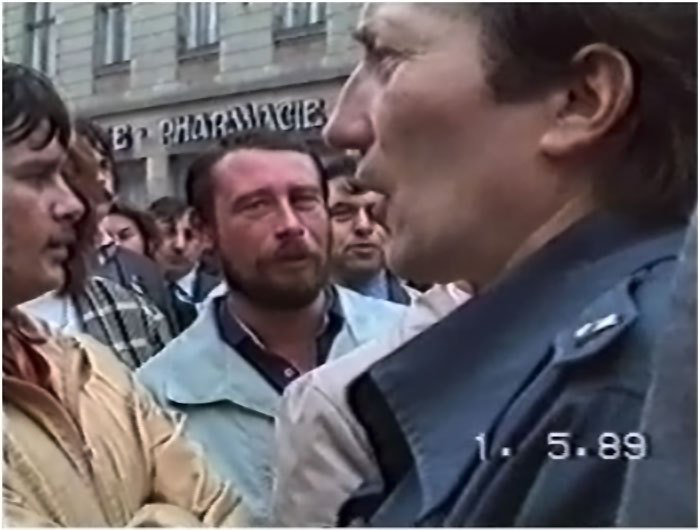
The second group was led by Oleh Olesevych—I would say the first hippie in Lviv. He wore his hair long, and the police were always grabbing him by that hair. He organized the USSR–USA Trust Group, which advocated disarmament. They used the cause of the struggle for worldwide nuclear disarmament as a way of establishing contacts and communicating with like-minded people in Western countries. They were sincere pacifists and leftists. There were such groups in Moscow, Leningrad, and perhaps in Kyiv. There was also the highly influential Memorial group. I would not say they were left-wing, but they were consistent democrats—anti-Stalinists. Within People’s Movement of Ukraine for Perestroika there were many Communist Party members from its lower ranks, and at that point the party was, in effect, disintegrating.
MK: You worked on the subject of Chornobyl. Your first book was The Chernobyl Disaster. How did you study the issue on the ground?
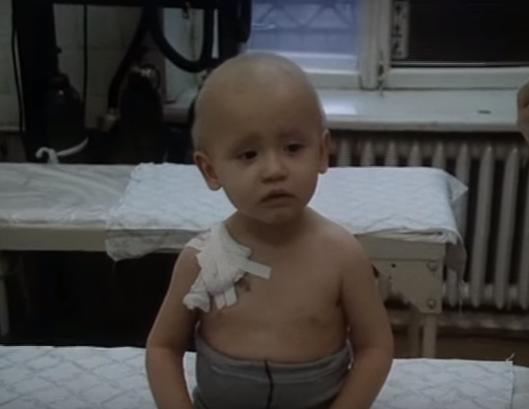
MB: I came in 1989, and in 1990 I was with a Yorkshire Television film crew. They took me along because I knew the Ukrainian language and the history of that region. I got in touch with a man who had been forced by the disaster at the Chornobyl nuclear power plant to leave Chornobyl itself. That was my good friend Anatolii Artemenko. Together we prepared and organized the filming of the documentary Children of Chernobyl. How did we make that film? We took the crew into the Zone, went to the nuclear power plant, and visited people living within the thirty-kilometer zone. We filmed the pediatric oncology clinic in Kyiv, where children were lying ill and dying from the consequences of the disaster. In that way, we made a very substantial film, which won many awards in the West and was shown here many times as well. It is called Children of Chernobyl. It can probably still be found. That was in 1990. The following year we made another documentary, The Unquiet Grave, about the excavation of burial sites of NKVD victims on the grounds of Zamarstyniv Prison in Lviv.
In 1989, I also interviewed Leonid Kravchuk and Volodymyr Ivashko for a documentary film about the elections that took place that year. My impression was that Kravchuk was ready to do anything to become the leader of Ukraine. At that time, he was a very self-confident man. Kravchuk was serving as the ideological secretary of the Communist Party, but it was clear that he was competing with Ivashko for leadership in the CPU. When I interviewed Kravchuk, he was wearing a cowboy emblem on his belt buckle. It was part of his image. When Ivashko learned that our team had interviewed Kravchuk, an emissary was sent to us to say that Ivashko would also like to give an interview. I conducted that interview in the Central Committee building. But in the end Ivashko was outraged with us because we asked him awkward questions about the concealment of the consequences of the Chornobyl disaster in terms of public health and the number of victims. We asked him about Ukraine’s self-determination, and he nearly walked out of the interview, but we finished it and even published it in translation. Ivashko later developed thyroid cancer, and this was a consequence of carrying out his duties in the Chornobyl zone: he had been responsible for the clean-up of that territory and was irradiated there.
MK: In London you became one of the pioneers of Ukrainian studies in those years. You were the first lecturer in Great Britain to teach a course on Ukrainian history.
MB: I taught political science and the history of Ukraine at the School of Slavonic and East European Studies of the University of London starting in 1991. Why was I the first? Before 1991, the British government did not allow universities to study the history and area studies of the individual peoples of the USSR separately. All of that came under the umbrella of Russian studies or Soviet studies. They did not want to offend the Soviet leaders by giving separate attention to Ukraine, Georgia, Lithuania, and so on. But in 1991, when it became clear that everything was falling apart, the study of the history and politics of the individual republics of the Soviet Union began. I was the first person to teach specifically about Ukraine.
In 1993, I moved to London Metropolitan University, where I decided to establish a center that would study the further development of the economy, politics, and international relations of independent Ukraine, and would also promote ties between scholars and students in Ukraine and Great Britain. I organized a scholarship program for Ukrainian students. They came to us for set periods of study and to conduct their own research. This lasted for several years—I found the funding for it. I also organized cooperative projects between European and Ukrainian universities in the field of European integration—relations between Ukraine and the EU, and Ukraine’s aspiration to join the EU. I organized several such projects during the 1990s.
Every year, dozens of students attended my course on the history of Ukraine and were interested in it. More students attended it at London Metropolitan University. Just as in Kyiv there are the Kyiv Polytechnic Institute and Taras Shevchenko University, in London we have the University of London and the Polytechnic of North London, which became a university in 1993. The students there came from different social classes. The University of London mostly attracted the children of the wealthy, who studied for the sake of their careers. But the students at the former polytechnic, London Metropolitan University, had a different motivation. They were genuinely interested in history and politics, were more left-wing, and were more eager to travel to different countries. I used to send our students from London Metropolitan, for example, to study Russian in Russia and Ukraine. They studied in St. Petersburg and Kyiv.
In 1995, I sent three students to St. Petersburg for one semester, after which they moved to Kyiv for the second part of their studies. Among them were a Spanish woman, an Italian man, and an Eritrean named Armando. In both St. Petersburg and Kyiv, the police and Berkut special police abused Armando because he was Black. He was constantly stopped in the street, checked, and physically mistreated. I know for certain that this happened already in St. Petersburg. He became mentally ill, so ill that no airline was willing to give him a seat on a plane to bring him from Kyiv to London. We had a very difficult situation, but in the end we managed to get him home. This was an example of the racism he experienced at that time.
MK: You also worked with Ukrainian civil servants. What kind of program was that?
MB: After the Orange Revolution there was a strong desire to prepare Ukraine’s civil service for the tasks of European integration, for bringing Ukraine closer, at some level, to the institutions of the EU. It was not a matter of full membership, but of Ukraine’s rapprochement with the EU institutions. My colleague Yaroslav Mudryi and I won grants from the British Foreign Office and the European Commission. We were to carry out major projects to train civil servants in such issues as the EU internal market, EU legislation, and the possibility of a free-trade zone between Ukraine and the EU. At that time, the press was full of uncritical views and unfounded hopes for some kind of miracle in foreign trade. We tried to equip civil servants with the analytical tools needed to assess different scenarios, so that at the highest level they could form their own judgment of what the EU and the Russian Federation were offering them and give sound advice to the government. Personally, I saw in the EU’s proposals a desire to open up the Ukrainian market for itself and fill it with its own products and services, including financial services. That is what happened on the eve of the global financial crash of 2008. Ukraine, by contrast, should have protected its own economic sectors and brought its own goods onto EU markets—agricultural goods, metallurgical products, and so on—markets against which the EU stubbornly shielded itself, as it does against any outside competition. Those were the kinds of issues at the center of our professional-training program for Ukraine’s civil servants.
From 2005 to 2010, we sent specialists from West European universities to Ukraine to teach courses for civil servants at the National Academy of Public Administration in Kyiv and at the institutes of public administration and local self-government in Kharkiv, Dnipro, Odesa, and Lviv. This went on for five years. I had the opportunity to speak with a wide circle of people who worked at those institutes, and I was able to get to know those Ukrainian cities. For me it was very interesting and very demanding work. Ukraine was preparing for membership in the EU. There were enormous hopes for this, especially after the Orange Revolution, but they were not realized. I would like to know what became of the courses we organized for the students of those institutes. I think they are still being taught, but the question of European integration looks completely different today. That hope is no longer there. It is unrealistic that Ukraine will join the EU, because the EU itself is in crisis. You yourselves know better what situation Ukraine has found itself in.
MK: In the 1970s and 1980s, open communists and Marxists were leaders of intellectual life in Great Britain. What do you think about the current state of the Marxist left?
MB: I can’t say much about universities because I no longer work at a university. Of course, there are still Marxists of my generation working in different disciplines. But more interestingly, in society as a whole, the era of communist parties and the communist movement, which began in 1917, has already come to an end. The task facing the younger generations is to invent a new way, a new language, and a new form of activity through which to pursue the same ideals and goals that the communist movement once pursued, when it was truly revolutionary, progressive, and egalitarian, rather than Stalinist and degenerate. We face new tasks to restore and renew that emancipatory spirit and impulse. This requires a new language and new forms of activity. That is already becoming visible at the level of new social movements, small initiatives beginning in the defense of the rights of refugees and migrants, in the defense of our healthcare system, which is under heavy pressure from privatization, and in various questions of international solidarity and liberation movements. These new social movements and solidarity initiatives continue to operate, and they are also reflected in the revival of the Labour Party, which has already attracted more than half a million members. These are mostly young people looking for ways to express themselves and become politically active. But this is still at a very early stage.
MK: What does the Ukraine Solidarity Campaign do?
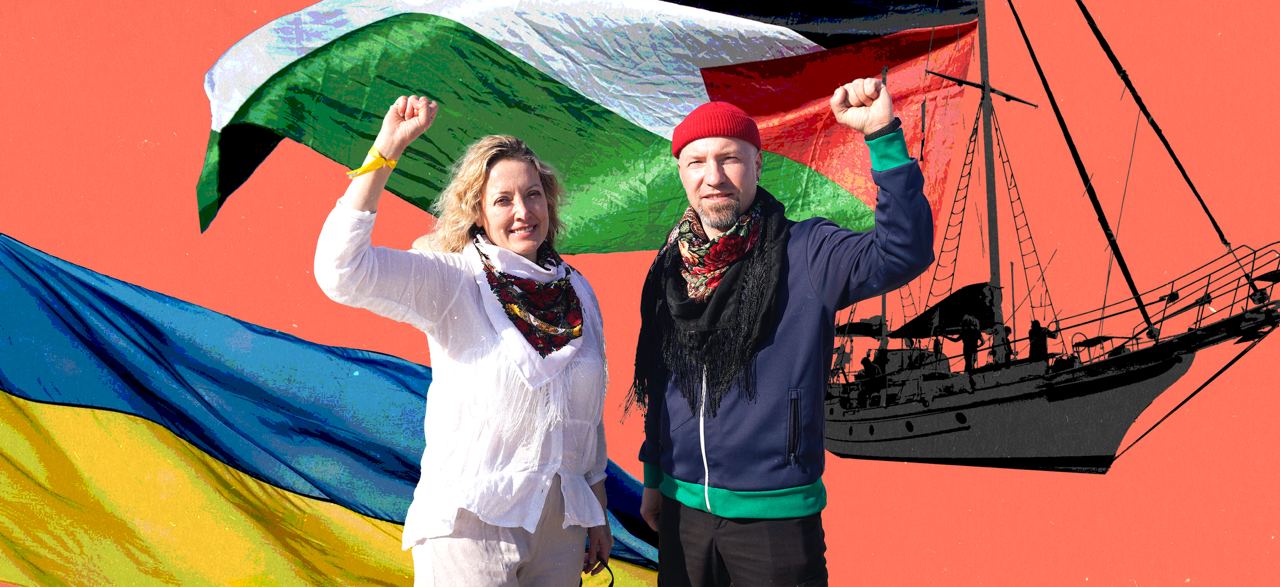
MB: This civic movement arose in 2014, after Russia seized Crimea. It includes trade unionists, Labour Party activists, activists from various left-wing groups, and non-party people. Our principles are these: we support the defense of Ukraine’s democratic rights and national rights of self-determination; we oppose both Russian and Western imperialism. We defend trade unionists, democrats, and social-movement activists, and we try to publicize their fate and defend them in London. We also have the task of criticizing the pro-Putin currents within the left, which are very strong—I would even say dominant—in Western Europe, in France, Britain, and Germany. It is very bad that so-called left-wing movements identify support for Putin’s Russian state with its supposedly progressive image. They believe that defending the Russian state and opposing American imperialism is somehow progressive. They do not look more deeply at how people of good will are persecuted in Russia and Ukraine, so we try to shed light on the situation.
MK: Thank you, Marko.